2026 Asian Cup: Favourites advance as concerns grow over safety of Iranian players
The group stage of the 2026 Women’s Asian Cup has concluded after 18 intriguing matches, which produced interesting results across all groups. Eight teams have moved closer to qualifying for the 2027 World Cup and the ultimate goal of lifting the title, but the seedings of the knockout bracket looks nothing like what was predicted before the tournament.
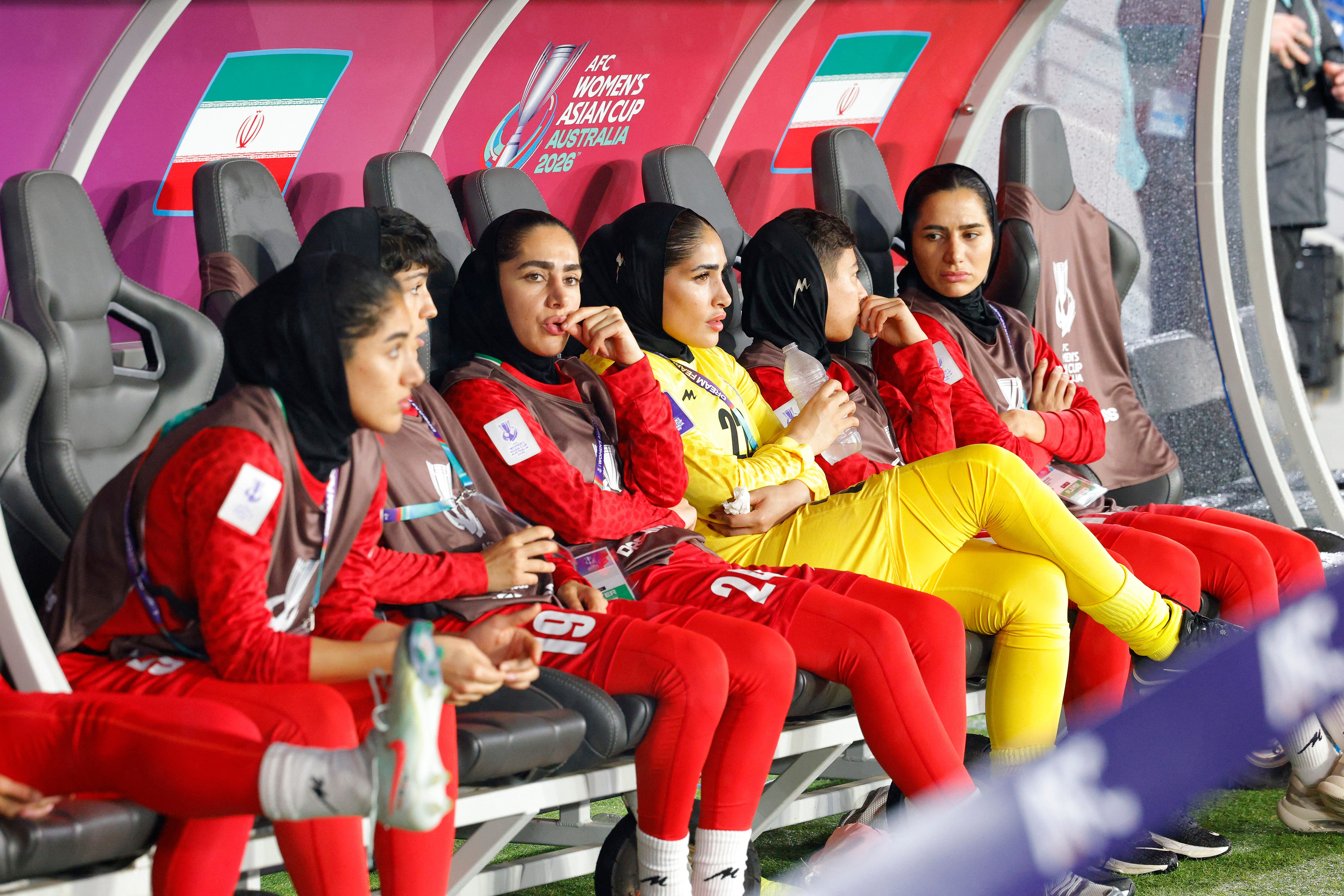
Much of the media coverage of the Asian Cup has focused on the Iranian national team, who were competing in Australia just days after war broke out in the Middle East following the killing of Iran’s Supreme Leader Ayatollah Ali Khamenei by US and Israeli air strikes.
The Iranian team were criticised by Iranian state television and called “wartime traitors” after refusing to sing the national anthem in their opening game against South Korea.
In footage on Iranian state television, Mohammad Reza Shahbazi said: “Let me just say one thing, traitors during wartime must be dealt with more severely. Anyone who takes a step against the country under war conditions must be dealt with more severely.
“Like this matter of our women’s football team not singing the national anthem, and that photo that was published and so on, which I won’t get into. These people must be dealt with more severely.”
Days later, the team sang the national anthem and displayed a military salute in their final fixtures against Australia and the Philippines.
Iran lost all three of their group games and did not progress to the knockout phase and it can’t be ignored that the team were competing under unimaginable circumstances, while also facing public threats.
There are now huge fears over the safety of the players as they look to return to Iran. Players’ union FifPro’s Asia/Oceania regional division put out a statement “calling on AFC and FIFA to ensure the safety and wellbeing of Iran’s Women’s National Team players.”
Guardian Australia has reported that seven players in total have stayed in Australia to seek asylum with five of them already being granted visas.
The rest of the squad has travelled to Malaysia following the end of their tournament. Iran’s airspace is currently closed due to the ongoing war in the Middle East.
This is a fast-moving story and The Cutback will look to update this piece as more information emerges.
Here is our round-up of what happened across the group stage of the 2026 Asian Cup.
Group A: South Korea pip the hosts to top spot
Australia kicked the tournament off in Perth with close to 45,000 fans in attendance. The Philippines came up against the Matildas in Joe Montemurro’s first competitive match in charge.
The hosts were dominant from the off, and soon made it count on the scoresheet. None other than all-time top-scorer Sam Kerr found the back of the net, scoring her first international goal in over two years. The Matildas continued to threaten, but they couldn’t find a way past Olivia McDaniel again and ultimately had to settle for a 1-0 win.
Australia would go on to win their second game 4-0, but even that was not enough for them to have the edge going into their final group game against South Korea. The Taegeuk Ladies had a superior goal difference after winning their two games with six unanswered goals, so they only needed a draw to seal first place.
Supported by a record crowd of over 60,000 in Sydney, the Matildas looked to come out on the front foot. However, they found themselves trailing after 13 minutes as Mun Eun-ju converted South Korea’s first attempt of the match at the end of a quick break. Having taken the lead, they dropped further back to try and put a lid on proceedings, but conceded an equaliser after a corner with 32 minutes on the clock. Kerr clinically capped off a quick attack on the stroke of half-time to put her side in the lead, but there were more twists to come.
Shin Sang-woo’s half-time substitutions worked wonders as South Korea grew their attacking threat and quickly turned the game around. Kim Shin-ji equalised from the spot eight minutes after the break, before going on to feed Kang Chae-rim for a precise finish three minutes later. The visitors’ defensive block held much firmer thereafter, while Australia struggled to build serious pressure until the very end. Alanna Kennedy netted her fourth goal of the tournament to equalise in stoppage-time, but the Matildas remained in second place.
Group B: North Korea push China, Uzbekistan create history
Group B was neatly split between two strong contenders in China and North Korea, and two newcomers in debutantes Bangladesh and an Uzbekistan side making their first appearance in 23 years. Unsurprisingly, then, the top two were level on six points going into the third matchday.
North Korea had a one goal difference advantage that would help them avoid a quarter-final showdown against Australia if they drew with China, but they showed no signs of settling for a point. The three-time champions contributed to quite an intense start to the match, which often became quite end-to-end as both teams looked to be direct in their attacks.
North Korea opened the scoring after such a move as Han Jin-Hong perfectly set up Kim Kyong-yong. Chen Qiaozhu instantly equalised with a pinpoint strike from the edge of the box after an improved corner routine, and Wang Shuang put China in front after another set-piece on the stroke of half-time. The defending champions saw out the win in the second half, earning themselves a relatively easier knockout path.
Although both Uzbekistan and Bangladesh were well beaten in their first two games, they had both shown some encouraging signs. They both retained a chance of advancing to the quarter-finals ahead of their meeting, but could only do so with a big win given the other third-placed teams’ respectable goal differences.
Bangladesh’s high defensive line was exposed from the get-go, as they gave up quite a few quality chances before conceding to Diyorakhon Khabibullaeva in the 10th minute. They reacted by making some successful adjustments that limited their opponents’ attacking threat, quietening the game down. Half-time substitute Dildora Nozimov scored Uzbekistan’s second goal after the hour mark, jolting them back to life as they sensed an opportunity. She quickly scored a third, but the all-important fourth came with just a couple of minutes left on the clock through Nilufar Kudratova.
With that, Kotryna Kulbyte’s side secured their Asian Cup knockout debut in Australia, with just over three years to go before the next edition of this tournament comes home to Uzbekistan.
Group C: Japan dominate, Vietnam fall short
Pre-tournament favourites Japan were expected to enjoy smooth sailing in Group C, and so it proved. They were made to work hard for their opening goal as Chinese Taipei kept a shutout for an hour, but Nadeishiko Japan’s dominance was finally reflected on the scoresheet thereafter thanks to Momoko Tanikawa’s strike. Kiko Seike doubled her side’s lead in stoppage-time, and they never looked back since.
Nils Nielsen’s side went on to score 15 unanswered goals in their remaining two games, most of which came in an 11-0 decimation of India. Even so, the Blue Tigresses had some positives to take away from the tournament. They suffered heartbreak in their opener after conceding a stoppage-time goal to lose 2-1, having very much given the second seed in the group a run for their money.
Amelia Valverde’s side retained a chance of advancing to the knockouts ahead of their final group, but it was their opponents Chinese Taipei who had the edge. The three-time champions registered an all-important 1-0 win over Vietnam on the second matchday, so and they added to their tally with a hard-fought 3-1 win over the Indians to go through in second place.
Vietnam, meanwhile, needed to avoid losing by multiple goals to be sure of advancing as one of the better third-placed teams. They were on track at half-time, but a second-half blitz from Japan dashed their hopes of having a shot at qualifying for a second consecutive World Cup. Instead, the Phillippines joined Uzbekistan as the two third-placed teams to advance.
Looking ahead: Quarter-finals
North Korea and Australia will kick the knockouts off with a blockbuster showdown in Perth. The hosts showed some signs of weakness in their 3-3 draw with South Korea, which their neighbours will surely closely analyse. North Korea’s fast passing and direct style of play could well cause problems against a depleted defence, but the Matildas will count on their own attacking firepower to make the difference.
The other headline fixture sees China take on Chinese Taipei, also in Perth on the following day. The defending champions will be the favourites, but Taiwan’s defensive solidity throughout their group stage games suggests that they could well cause problems for Ante Milicic’s side.
The other two quarter-finals — both in Sydney — are expected to be more one-sided affairs. South Korea will be confident that their slick passing play can overwhelm Uzbekistan in their first major international knockout fixture, while Japan will back themselves to overpower the Philippines.
The four winners of the quarter-finals will earn a direct ticket to the 2027 World Cup, while the losers will compete for the two inter-confederation qualification play-off spots on offer in the play-in matches.


