Business of Women's Football Download
A snapshot of the big deals and business stories from across women's sport

Welcome to the latest edition of The Cutback’s women’s football business newsletter.
The Business of Women’s Football Download will tell you about all the big deals and headline moments from the previous month, including media rights, sponsorship and more.
In this month’s issue: Mercury13, Frauen-Bundesliga goes it alone, sisterhood sells at the Winter Olympics
1. Mercury13 loses Reynal as Avenue Sports takes control
Mercury13 co-founder and co-chief executive Victoire Cogevina Reynal left her position after three years at the helm, less than six months after the group completed the high-profile acquisition of WSL2 side Bristol City Women and just over a year after Avenue Sports became the majority owner.
Mercury13 said its board and Avenue Sports will “oversee the transition” while a search begins for a new chief executive.
Reynal’s departure is a shock but not a surprise. She had been the public face of Mercury13 ever since its inception in 2023, driving a largely insignificant investment group to the forefront of women’s football through sheer force of personality and a knack for generating publicity.
Mercury13 was pitched to the media as a purpose-led organisation, rather than as a pure investment opportunity for a fund. However, Mercury13 was acquired by Avenue Sports in December 2024, after which Mercury13 made one more acquisition, Bristol City Women in September 2025. Avenue’s sports fund announced its closure to new investors that same month, switching its focus from expansion to maintaining and managing existing investments. Mercury13 has held a majority stake in FC Como Women in Italy since 2024.
Sportico reported this week that Avenue is set to invest $40 million into the North Carolina Courage in the NWSL. It would mark the first move for Avenue outside of Mercury13’s clubs.
With the expansion work done and the maintenance work about to begin, Reynal’s skillset is a lot less useful. Reynal hinted via a statement on Instagram that her race with Mercury13 was run, and that a new project would be in the works.
“What began as a founder-led vision evolved into a platform that reframed women’s football as a compelling investment opportunity, which now continues under the majority ownership of Avenue Sports.”
She continued: “We were told the sky was the limit. We proved otherwise. We made it to the moon. And now, it is time for Mars.”
Reynal is a founder at heart and is clearly good at building projects, selling a vision and getting them to the capital investment stage. The work of maintaining Mercury13’s portfolio will likely fall to someone with significant operations experience, or to Reynal’s former co-CEO, Mario Malave, who is still in his position.
2. Frauen-Bundesliga rejects DFB control, goes it alone
Clubs in the Frauen-Bundesliga finalised their decision to become an independent commercial entity on 5 February after turning down the Deutsche Fussball-Bund’s offer to run the league as a joint venture.
This final parting of ways has been brewing since November, after a breakdown in negotiations between FBL stakeholders, clubs and the DFB over a more expansive joint venture deal that would have seen €800m invested in women’s football from the DFB and the FBL’s 14 clubs.
That deal collapsed after several club presidents claimed the DFB had either ‘questioned’ the deal’s ‘cornerstones’, or that the deal had been materially changed once drawn up into contract documents. In any case, FBL club presidents were so insulted that they immediately changed course to run the league themselves, setting up an entity in December without the DFB’s involvement.
Katharina Kiel, president of the FBL and director of Eintracht Frankfurt, said that clubs would now be able to take control of how they invest in themselves and the league.
“For us, the crucial point is that the future of the Women’s Bundesliga must be shaped where the sporting and economic engine lies – with the clubs,” Kiel said in a statement.
“They bear the greatest responsibility for investment and implementation and therefore need clear responsibilities, a high degree of operational capability, and governance that accelerates growth and increases competitiveness.”
The DFB has been responsible for selling the league’s media and sponsorship rights until this point. For the current cycle, domestic media rights to the FBL were sold in a combined tender with Germany’s third-tier men’s competition, the 3. Liga.
In its 2024-25 season report, released last month, the DFB said the FBL had generated €43.3m in total revenue, the highest figure in the competition’s history, and that revenue had more than doubled over the past three years. The same report said average club revenue had risen to €3.6m.
The FBL and its clubs will now be solely responsible for growing those numbers, without DFB support.
3. Aflac signs record front-of-shirt deal with NWSL’s Atlanta franchise
Health insurance company Aflac signed a seven-year deal to become the front-of-kit partner of Atlanta’s incoming NWSL expansion club, in an agreement the club described as the “largest women’s sports jersey or front-of-kit deal”.
Sportico reported the deal to be worth $4m per year, beating the Portland Thorns’ deal with Amazon-owned Ring and Bay FC’s deal with Sutter Health.
Atlanta’s NWSL franchise won’t kick a ball until 2028, but will do so as part of Arthur Blank’s Atlanta sports empire, which includes Atlanta United of MLS and the Atlanta Falcons of the NFL. Blank also donated $50 million to US Soccer for the construction of the new Arthur M. Blank U.S. Soccer National Training Center in Georgia.
The new NWSL franchise will also play at Mercedes-Benz Stadium, albeit at a reduced capacity of just over 42,000.
Atlanta’s capture of Aflac is unsurprising given that the healthcare industry now sees the NWSL platform as highly reliable for getting a return on sponsorship investment. The league offers an affluent, suburban, middle-class audience that skews heavily female, the key target demo for health insurance providers.
4. Project Level raises $250m to invest in women’s sport
The dedicated women’s sport fund of Ariel Investments, Project Level, has reached the quarter-billion dollar milestone as it looks to expand beyond its investments in the NWSL’s Denver Summit and the League One women’s volleyball property.
Project Level is the second specialist women’s sports fund to publicly announce it has received backing of $250m or more after Monarch Collective, which owns minority stakes in three NWSL teams and a significant minority stake in Viktoria Berlin.
The backing underlines the fact that women’s football is becoming a playground for specialist high-risk, high-yield funds that see women’s sport as a solid long-term investment that can be sold short-term, if needs be.
Sport is a highly attractive asset class for private equity, but funds are locked out of major investments in NFL and NBA teams due to those leagues limiting the size of stakes that can be taken by PE firms. Women’s sport becomes the next best thing for those funds, who are seeing NWSL valuations skyrocket as investors rush to get in on somewhere close to the ground floor.
5. Bay FC appoints Stacy Johns as chief executive
Bay FC appointed Stacy Johns as chief executive officer in February, giving Bay FC an experienced sports executive at a point when the NWSL’s biggest clubs are moving past the startup stage and into something approaching maturity.
Johns arrives with a strong mainstream sports background, including a 16-year stint with the Indianapolis Colts, senior commercial work with LAFC and more recent experience at Grasshopper Club Zurich through the same ownership network.
Bay FC is reported to be one of the NWSL’s richest franchises and has one of the league’s biggest front-of-shirt sponsorship deals. Its owners, Sixth Street, are one of sport’s biggest investors, owning minority stakes in the San Antonio Spurs, the Boston Celtics and FC Barcelona’s media rights income.
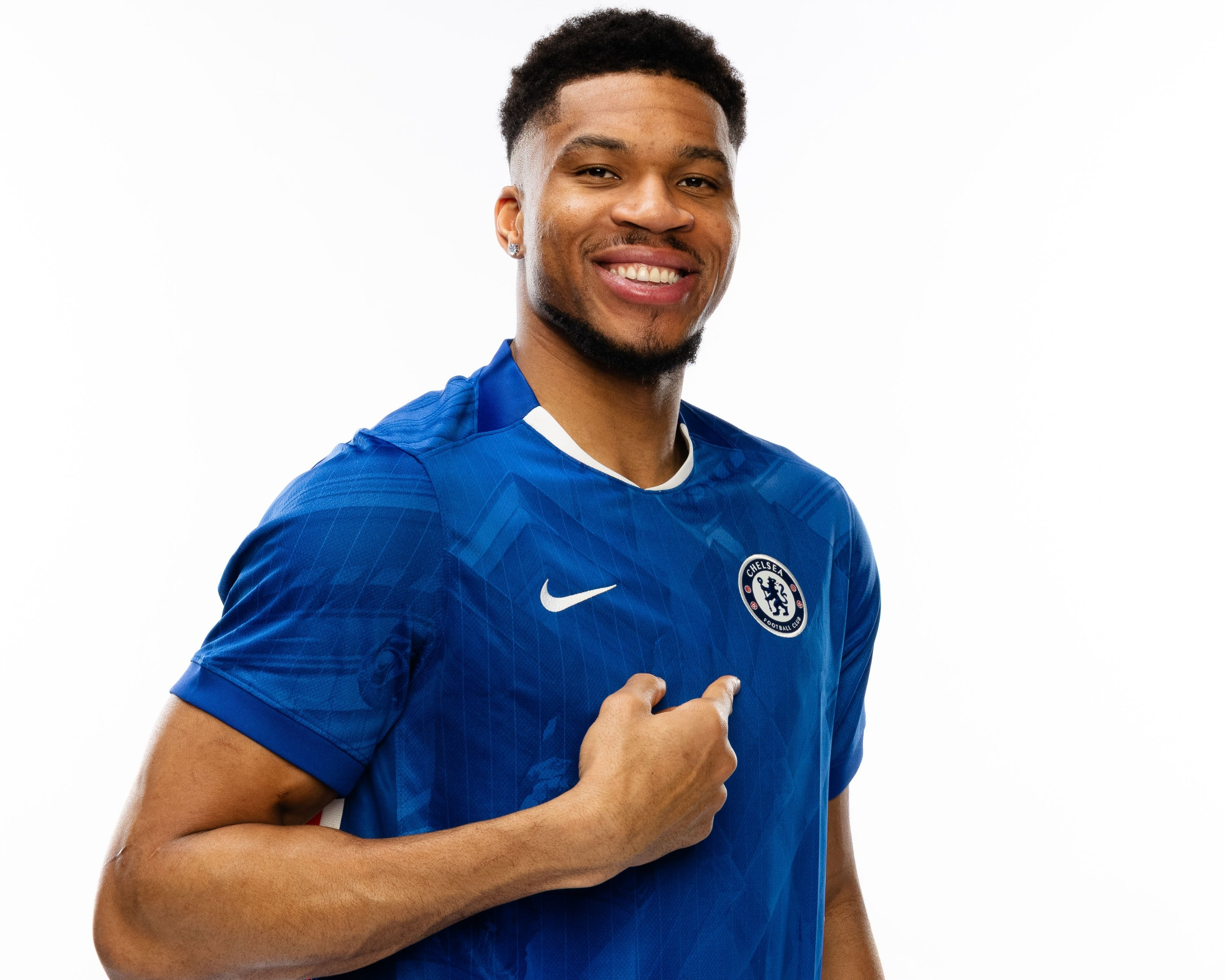
6. Giannis joins Chelsea Women as the celebrity capital keeps flowing
NBA star Giannis Antetokounmpo joined the Chelsea Women ownership group in February, tagging along with his friend and business partner Alexis Ohanian, who bought roughly 10% of the club last year for about £20m.
US celebrity investments in football clubs are nothing new, but Antetokounmpo is the first to put his money into women’s football.
It would be fair to say Antetokounmpo isn’t the kind of ‘purpose-led’ investor discussed above. Antetokounmpo also took a chunk of controversial prediction market/betting platform Kalshi in February and will act as an ambassador for the company, despite warnings that his promotion of the platform could lead him and the NBA down a dark path, given the platform’s burgeoning reputation for insider trading.
The negative publicity generated by that deal led NBA president Adam Silver to defend the deal, explaining that Antetokounmpo’s deal is a “miniscule investment” and did not violate the NBA’s collective bargaining agreement.
Antetokounmpo also shares a WhatsApp group with Ohanian entitled ‘Legacy’, which, for want of a better phrase, is incredibly cringe.
7. Winter Olympics show that sisterhood sells
The women’s figure skating at Milano-Cortina produced one of the most interesting sports stories in years as a previously niche Olympic competition turned into a global phenomenon across social media – thanks to the personalities of its participants.
Alysa Liu’s carefree stardom, Amber Glenn’s tearful failure in pursuit of gold and Kaori Sakamoto’s kindness in the face of defeat captured millions of imaginations and generated a new generation of figure skating fans in the space of a fortnight.
The skaters – not the IOC, the ISU or their national teams – drove this success by themselves, and they have done it by creating a sporting culture where conflict and rivalry takes a back seat.
It’s no surprise that these games delivered huge numbers for NBC in the US. Largely in part to a more favourable timezone compared with the last two winter games in Asia. NBC averaged a combined 23.5 million viewers on its linear channel across the games, with 11.7 million tuning in for Liu’s gold-medal skate. It’s the highest number for NBC since the Sochi games in 2014.
Figure skating was the main story of the games on social media too, with a big part of that success down to how carefree and unafraid the athletes were. They appeared joyful, emotionally vulnerable, visibly supported one another throughout the competition, and showed grace in defeat.
Women’s ice skating has not always had that kind of culture, and Japan’s Sakamoto is largely credited with leading the change, with a commitment to treating her competitors with respect and even love. This, along with the excellent on-ice product, is a big part of why figure skating was such a central part of these Olympics.
There is plenty women’s football can learn from that.


