


Welcome to the latest edition of The Cutback’s Business of Women’s Football Insider newsletter.
This is where we fill you in on all the big deals and headline moments from the previous month, including media rights, sponsorship and more.
In this month’s issue: Liga F’s international rights, Frauen-Bundesliga, European attendances, and NWSL on Twitch.
Liga F closes in on international distribution deal
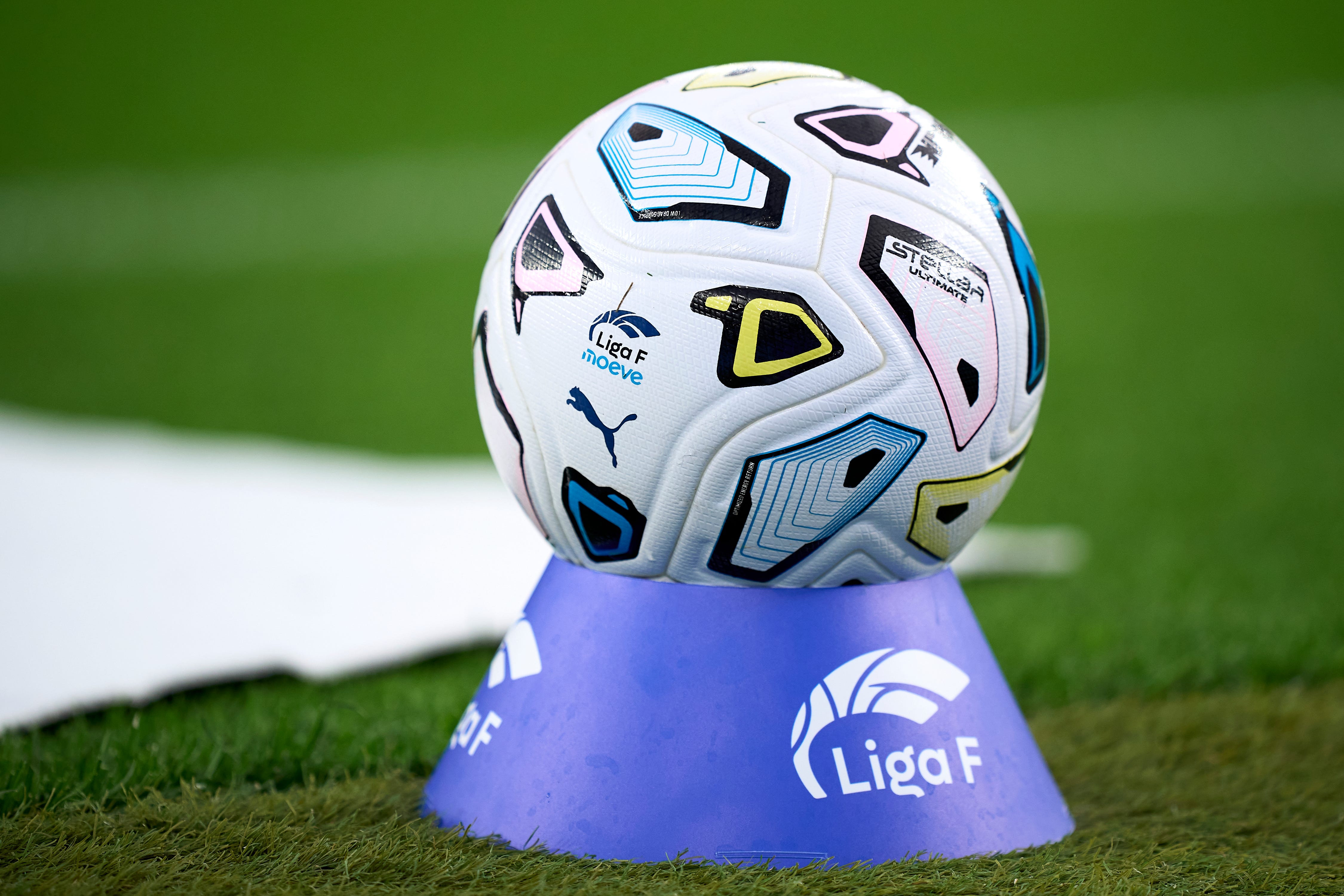
The Cutback understands that Liga F is close to announcing an agency to handle its international media distribution after five matchweeks without coverage, with Spanish sports marketers Mediapro in line to take on the task.
Mediapro currently handles the international commercialisation of LaLiga rights in most overseas markets and is thought to be working on expanding its portfolio of women’s football rights. The agency is also working on international deals for France’s Premiere Ligue, which is also currently without international TV deals.
Liga F’s international rights have remained unsold after its initial broadcast rights tender failed to produce an award. The league had placed a reserve price of €800,000 per season on exclusive rights across the European Union before deciding to negotiate privately with agencies.
Though Liga F has been slow on the international front, the league started its new domestic deals by reaching more than 450,000 viewers across DAZN, TVE and 3Cat/TV3 across the first matchweek of the season. This was more than four times the total audience recorded for last season’s opening weekend, but it doesn’t equate to the kind of peak or concurrent average viewership statistics commonly used to evaluate television ratings.
The league is simply promoting that it reached 450,000 unique viewers at some point across its eight matches. How long those people watched for, or how many were watching at the same time, is unknown.
The league’s strategy under its new broadcast deals is to improve its reach and engage new fans. DAZN is showing all eight matches each round, with four also available on free-to-watch platforms through TVE and 3Cat/TV3.
Liga F has not published another aggregate audience figure since the opening weekend.
Frauen-Bundesliga goes back to market
The Frauen-Bundesliga is the latest women’s football league to opt for a free-to-air focus in their domestic market, as they launched a two-season domestic media rights tender built around greater exposure.
German sports industry outlet SpoBis revealed yesterday that the league is deliberately keeping their next media rights cycle short, encompassing 2027-28 and 2028-29 only, ahead of Germany hosting Euro 2029. The league believes that the tournament will rejuvenate public interest in women’s club football and intends to sell against its popularity.
Since 2023-24, subscription platforms DAZN and MagentaSport have carried every Frauen-Bundesliga match behind a paywall, while Sport1, ARD and ZDF have provided a smaller free-to-air window. Those deals did a great job for the league at the time they were struck, increasing income 16-fold to €5.2m per season.
However, the league hasn’t grown in popularity at the same rate as the WSL in England, and the newly independent FBL is putting greater emphasis on reach to fix that. At least 37 matches per season will be offered in a guaranteed free-to-air package, with another 20 Friday night games potentially available to a free platform.
Four showcase rounds of fixtures will be staged on weekends without Bundesliga, 2. Bundesliga or DFB-Pokal matches to maximise public interest, while five Sunday fixtures will also kick off simultaneously to create a weekly ‘Konferenz’ programme akin to the NFL’s RedZone.
The league has explicitly said it is taking a long-term view when it comes to growing the league’s commercials, and that it will not prioritise short-term revenue. Media income currently accounts for only around 10% of club revenues, so a reach-first strategy isn’t such a risk.
European attendances are… not up?
Chelsea recorded the lowest attendance of the opening Women’s Champions League matchday, with just 846 spectators watching their game against Austria Wien at Cherry Red Records Stadium. The figure was down almost 70% on the 2,752 that attended Chelsea’s first home game of last season’s competition, against Paris FC, at Stamford Bridge.
Across the nine UWCL matches played in the opening round, the average attendance was 2,465, down a broadly meaningless 6% from 2,628 at the same stage last season.
Early domestic league figures are also running below last season, although the samples remain small and women’s football attendance stats are easily influenced by stadium availability, marquee fixtures, kick-off times and external events.
The WSL has averaged 5,780 across the 23 matches for which attendances have been published through four rounds, down 15% from 6,827 at the same point last season. Arsenal have played the same number of home games in both samples, with crowds of 23,900 against Crystal Palace and 29,853 against Manchester United among the largest gates so far.
Liga F’s average through five rounds is 855, compared with 1,361 last season, but the comparison is heavily distorted by several large crowds in 2025-26.
It’s also distorted by some abysmal crowds. Only 76 people were there to see Raquel Gil Villar’s 96th-minute winner for Granada against Badalona last weekend, which can only be described as a shame. Thankfully, the TV product was saved by some clever microphone placement by DAZN and a man with an air horn.
The Frauen-Bundesliga has averaged 3,979 through five rounds, down from 4,725. That comparison is similarly affected by major one-off crowds, including Bayern’s 57,762 attendance against Bayer Leverkusen last season and Werder Bremen’s 26,814 against Hamburg this year. The German median has actually risen from 2,154 to 2,500.
There isn’t a great deal to gain by reading too much into attendances from four or five matchweeks of the season, but two things are for sure: they certainly haven’t increased and, if they had, clubs and leagues wouldn’t hesitate to shout about it.
Amazon shows NWSL matches for free
At the other end of the scale, Amazon is continuing to make some of its NWSL matches available free on Twitch in the US and Canada, but you wouldn’t know about it.
The Friday night Twitch streams derive from Amazon’s 27-match NWSL package, which forms part of the league’s four-year domestic media rights agreements through 2027.
Kansas City Current’s match against Orlando Pride on Friday, 11 September was streamed live by Football Manager creator Zealand alongside Alixxa, a content creator with esports organisation and content collective Team Liquid.
The pair hosted the match in a watchalong format for their existing audiences, but did not market or promote the fact the stream was happening. Zealand promoted the stream only to his live Twitch audience the previous day, explaining that the match would only be available for viewers in North America.
Of course, viewers able to travel very, very quickly to the US or Canada – perhaps via some kind of virtual, private network – were also able to enjoy the game without paying Amazon a penny.
The lack of promotion for a scheme that ostensibly exists to reach new audiences is strange, but Amazon probably prefers NWSL viewers to pay for Prime Video instead.
WSL turned to YouTube and Eleven TV in Spain
The WSL moved to a digital-first distribution model in Spain after declining to renew its agreement with pay-TV broadcaster Movistar.
One match per round was set to be shown by Eleven TV, the new media venture launched by Alexia Putellas and her agency Team YouFirst, while the remaining WSL fixtures were made available through the league’s own YouTube channel in Spain.
Movistar had carried one exclusive match per week during the previous season, with that agreement preventing the WSL from streaming its other matches on YouTube in the market.
The new arrangement debuted with Putellas’ first WSL appearance for London City Lionesses against Manchester United. The match was streamed through Mundo Maldini’s YouTube channel, which had more than 1.3 million subscribers, and reached a peak concurrent audience of around 3,500 in Spain.
Eleven TV said it was building its own broadcasting infrastructure for the remainder of the season, with plans to combine live WSL matches with interviews, analysis and original programming.
The full story was published by The Cutback on 4 September.
A-League Women still without formal pay deal
The A-League Women remained without a player pay agreement at the end of September, with the new season due to begin on 17 October. Brisbane Roar and Matildas goalkeeper Chloe Lincoln said players still wanted the competition to reach full-time professional status, with 12-month contracts and wages that did not require players to rely on other work.
The season can begin without a collective bargaining agreement in place, but strike action isn’t out of the question. The dispute dates back to the expiry of the previous collective bargaining agreement on 30 June, and relations between the player union and the league have deteriorated over the summer.
Corinthians Women still without pay, period.
Corinthians players entered the 2026 Brasileirão Feminino final against São Paulo while being owed bonuses and image rights money stretching back to 2025.
Brazilian media outlet UOL reported that eight instalments of payments were owed from the club’s 2025 Copa Libertadores title, as well as two runners-up finishes in the Fifa Women’s Champions Cup and the Supercopa Feminina.
Players met with club president Osmar Stabile in August after two months of image rights payments went unpaid, with those arrears only cleared on 15 September, hours before the first leg of Corinthians’ Brasileirão semi-final against Bahia.
The dispute is part of a wider history of payment problems in Brazilian women’s football. Former Corinthians players Fernanda and Ju Ferreira filed employment claims in 2025 that included unpaid bonuses, while Real Ariquemes players refused to face Santos in the 2023 Brasileirão after going at least three months without their salaries.