Chelsea Subway Cup final preview: Journey to the final, tactics, key players
A look at Chelsea’s run to the final, their setup under Sonia Bompastor and the players who could decide it against Manchester United
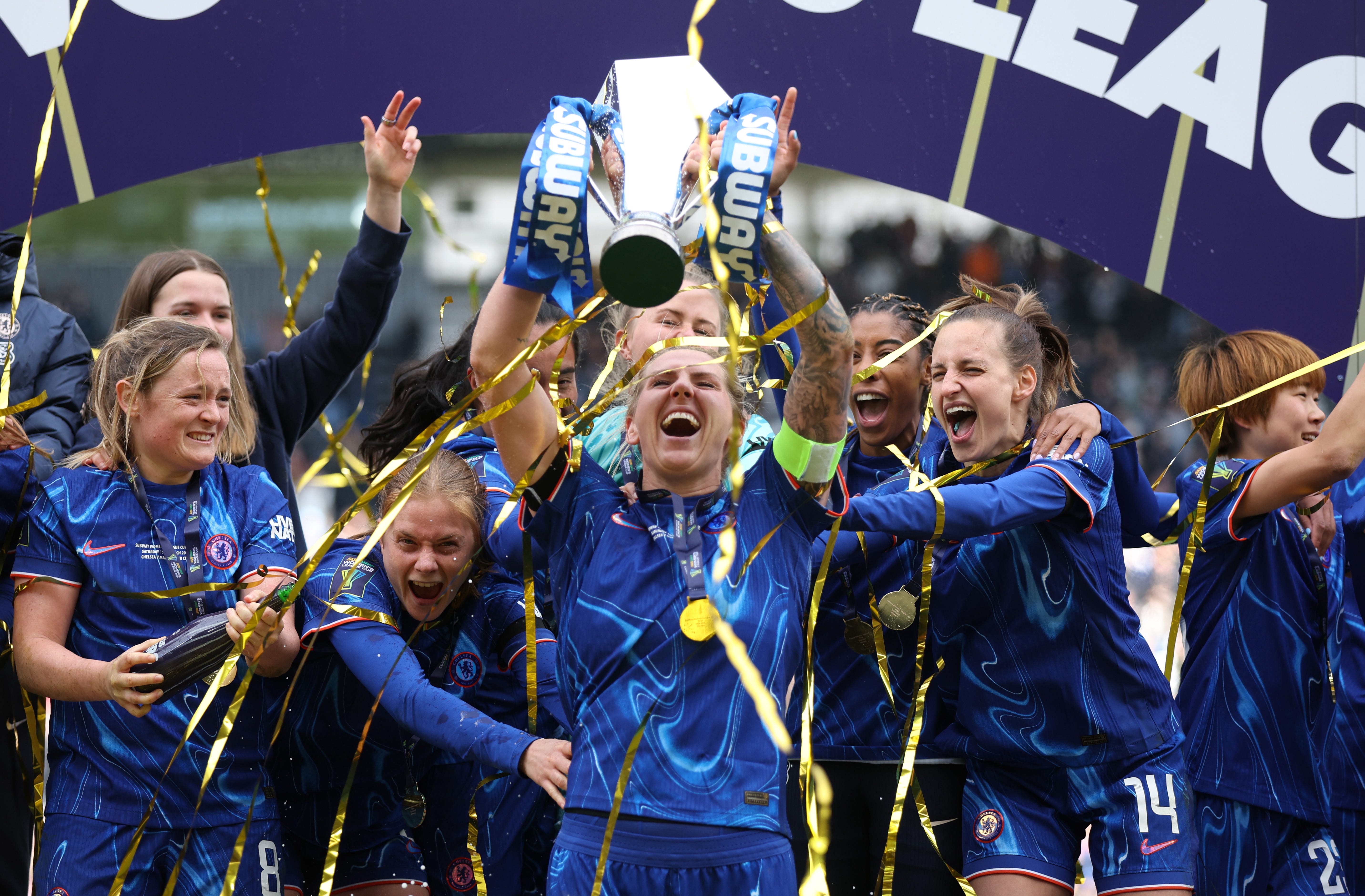
Chelsea return to the League Cup final for a seventh consecutive time this Sunday. They have won three of the last editions, losing to Manchester City and Arsenal on the other occasions.
It has been a turbulent campaign for Sonia Bompastor’s side, but they will be hoping to kickstart their season with victory over Manchester United at Ashton Gate.
Here is The Cutback’s preview of all things Chelsea.
Route to the final
Chelsea’s path to the Subway Cup final has been defined by two very different types of performances: one dominant, the other gritty.
They entered the competition at the quarter-final stage and immediately made a statement with a 9–1 win over Liverpool. It was a comprehensive display in every phase of the game. Chelsea overwhelmed Liverpool with relentless attacking, particularly exploiting wide areas and second-phase situations. The scoreline reflected both their depth and their ability to sustain pressure for long stretches.
The semi-final, however, was a completely different challenge. Against Manchester City, the game was tight, tactical and defined by small margins. Chelsea operated with greater caution, maintaining compactness and limiting space between the lines. The decisive moment came from a set piece: a second attempt delivery after a corner that found Kaptein, who rose to score with a well-timed header. In a match largely controlled through structure rather than volume of chances, Chelsea showed their ability to manage tempo and capitalise on key moments. The 1–0 victory underlined their maturity: a team capable of winning both open, high-scoring contests and cagey, tactical battles.
Historical record in the competition
Chelsea’s relationship with the League Cup has been one of highs and lows.
Their first final appearance came in the 2019-20 season, and they won it. That triumph marked the beginning of a remarkable run of consistency: since then, Chelsea have reached the final every single season. Including this year’s edition, they have now made seven consecutive final appearances.
Out of the six finals already played, they have lifted the trophy three times (2019-20, 2020-21 and 2024-25). That record speaks to a team that not only competes consistently at the highest level but thrives under pressure and knows how to navigate knockout football. However, they have experienced heartbreak in the final, losing to Manchester City in 2022 before suffering defeat to Arsenal on back-to-back occasions in 2023 and 2024.
Reaching seven consecutive finals requires superior talent, structural stability, tactical adaptability and a strong competitive identity. Regardless of opponent or tactical setup, Chelsea have made the latter stages of the League Cup their natural habitat.
Formation and style of play
This season, Chelsea have predominantly operated with a back three, most commonly in a 3-5-2 shape. Against lower-ranked opposition, they have occasionally shifted into a 4-2-3-1 for more attacking traction, but the three-centre-back structure has been the reference system in high-level matches.
Out of possession, Chelsea do not press extremely high, especially against teams of similar quality. Instead, they prioritise compactness. The forwards, often just the two strikers, sometimes supported by one central midfielder, are tasked with screening central passing lanes and directing play toward the flanks. The defensive block is generally mid-to-high, allowing the team to maintain vertical compactness without exposing space between the lines. The distances between units are short, and the team stays narrow centrally, forcing opponents wide and defending crosses with numerical superiority in the box. This approach allows them to remain balanced while preserving energy for transitions.
In possession, however, the structure expands significantly. The wing-backs play a crucial role in providing width and are often isolated in one-on-one situations. Chelsea frequently look to create wide overloads before delivering crosses into the penalty area, particularly targeting late runs from the central midfielders. The timing of those third-player runs is a key feature of their attacking identity.
Another important element is the involvement of the wide centre-backs in build-up. With a mid-to-high defensive line in possession, Chelsea push their structure forward, allowing the outside centre-backs to step further forward and support circulation, even with overlapping runs or early crosses at times. This ensures territorial control and sustains pressure in the opponent’s half.
The overall picture is a team that balances patience and structure with targeted aggression in wide areas. They are not defined by constant high pressing or relentless passing among midfielders, but by organisation and efficient use of wider half-space channels.
Chelsea will be without right-back Ellie Carpenter and striker Sam Kerr for Sunday’s game as they are competing for Australia in the Asian Cup.
Key players
Alyssa Thompson: Chelsea’s top scorer in the WSL this season, Alyssa Thompson has been central to their attacking output. Her versatility allows her to operate both as a left-sided forward in the front two and as a winger when the system shifts. From the left channel, she can cut inside onto her stronger foot to finish directly, but she is equally effective at holding width and creating space for midfield runners. Her ability to stretch the back line horizontally and vertically – thanks to her pace – is crucial in Chelsea’s wing-oriented attacking approach.
Hannah Hampton: Hannah Hampton has been one of Chelsea’s most influential players. Not only is she the goalkeeper with the most clean sheets in the league this season, but her role extends far beyond shot-stopping. Hampton effectively acts as the team’s first playmaker. Comfortable with both short distribution and long, accurate passes, she initiates build-up phases and helps bypass opposition pressure. Her composure under pressure allows Chelsea to maintain their structure even when pressed. In the semi-final against Manchester City, she delivered a decisive performance, making five saves and completing 96% of her passes – a statistical reflection of her dual defensive and constructive importance.
Tune into The Cutback’s live Subway League Cup Final watchalong on Sunday 15 March. We’ll be joined by former England international and WSL legend Toni Duggan. Join us on YouTube at 2pm.


