


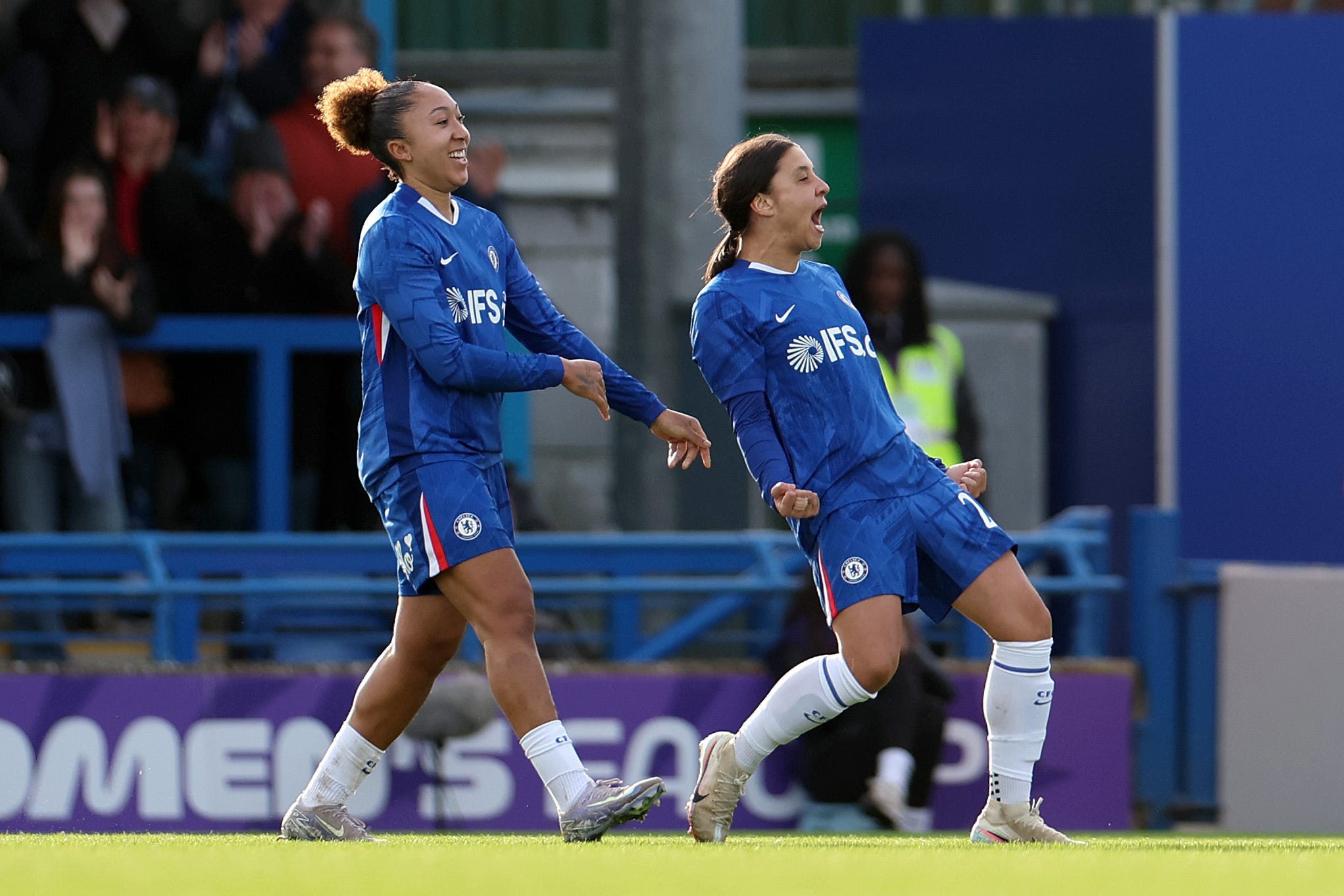
Chelsea entered this FA Cup tie on the back of renewed momentum following consecutive league wins, while Manchester United arrived in equally strong form, having not lost in 12 games, making this quarter-final feel like a heavyweight collision. The two sides have frequently crossed paths in decisive domestic knockout matches in recent seasons, and this encounter carried the same sense of familiarity. The result was a tense, finely balanced contest where neither side fully controlled proceedings for long stretches. Instead, the game swung through phases, moments and adjustments, ultimately requiring extra time to produce a winner.
Early balance
Chelsea approached the game as usual, leaning heavily on wide progression and late runs in the box. Direct balls from Hannah Hampton or the centre-backs into depth toward the flanks appeared early, while Lauren James often dropped short to connect play before spinning into space. When attacks reached the byline, the far-side winger attacked central zones alongside the central midfielders, creating the familiar Chelsea picture of multiple runners flooding the penalty area.
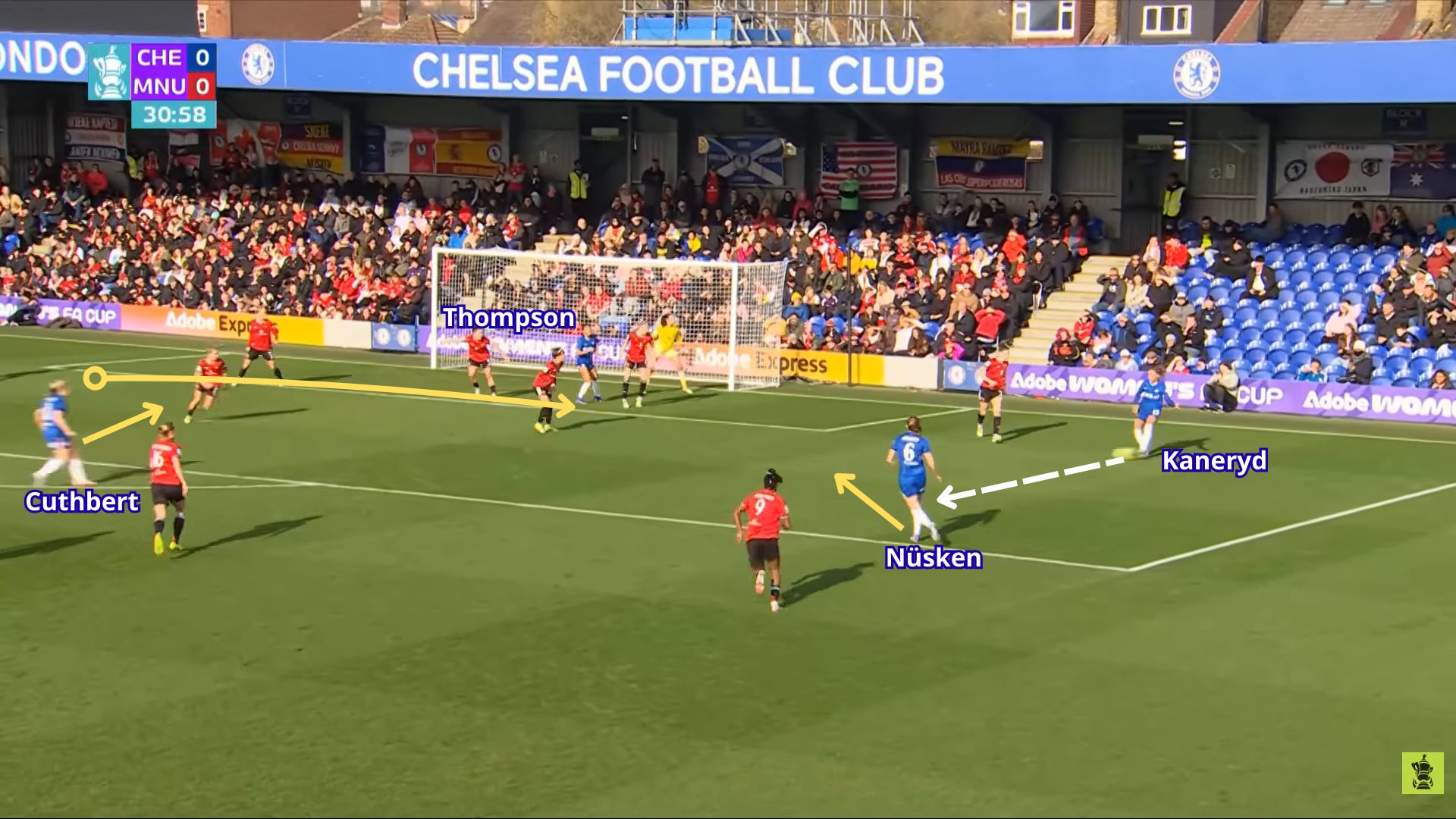
This structure produced several promising openings, including a major chance for Erin Cuthbert, and ensured United’s back line was constantly forced to defend crosses and cutbacks rather than simply protecting central space. Set pieces also emerged as an immediate source of danger, underlining Chelsea’s preparation for a match expected to be decided on margins.

