Eder Maestre's London City Lionesses: Formation, style of play and key players
Tactical deep dives on all 12 Barclays Women's Super League sides from The Cutback and Football Manager
The Cutback has partnered with Football Manager to deliver a series of articles that go deeper on the tactics and gameplay of the world’s leading football management simulation game ahead of Football Manager 26’s release.
This year, women’s football features in Football Manager for the very first time, so to get fans ready for a brand new experience, The Cutback has put together the ultimate insights on FM26. Find out about the secrets of building FM26, dive into the tactical details of all 12 Barclays Women’s Super League sides and hear about the next gen talent that will feature in the game.
The next team to be profiled in this deep dives series is London City Lionesses.
Formation
Formation: After starting the season under Jocelyn Prêcheur with solid mid-table results, last season’s Barclays WSL2 winners London City Lionesses made a managerial switch in January, appointing Spanish coach Eder Maestre in an attempt to raise both performance level and long-term ceiling.
While Maestre has initially retained the 4-2-3-1 structure the team had already settled into, the interpretation of the shape has shifted, reflecting his preference for positional structure combined with greater fluidity and collective understanding. Rather than a rigid positional framework, Maestre’s setup prioritises players’ ability to interpret spaces, rotate intelligently and maintain compact distances between units. Up front, Isobel Goodwin continues to operate as a Target Forward, using her physical presence to secure first contacts and connect play. On the right, players like Freya Godfrey or Nikita Parris operate as an Inside Forward, running channels and cutting in centrally, while on the opposite wing are deployed players happy to maintain width, like Lucia Corrales.
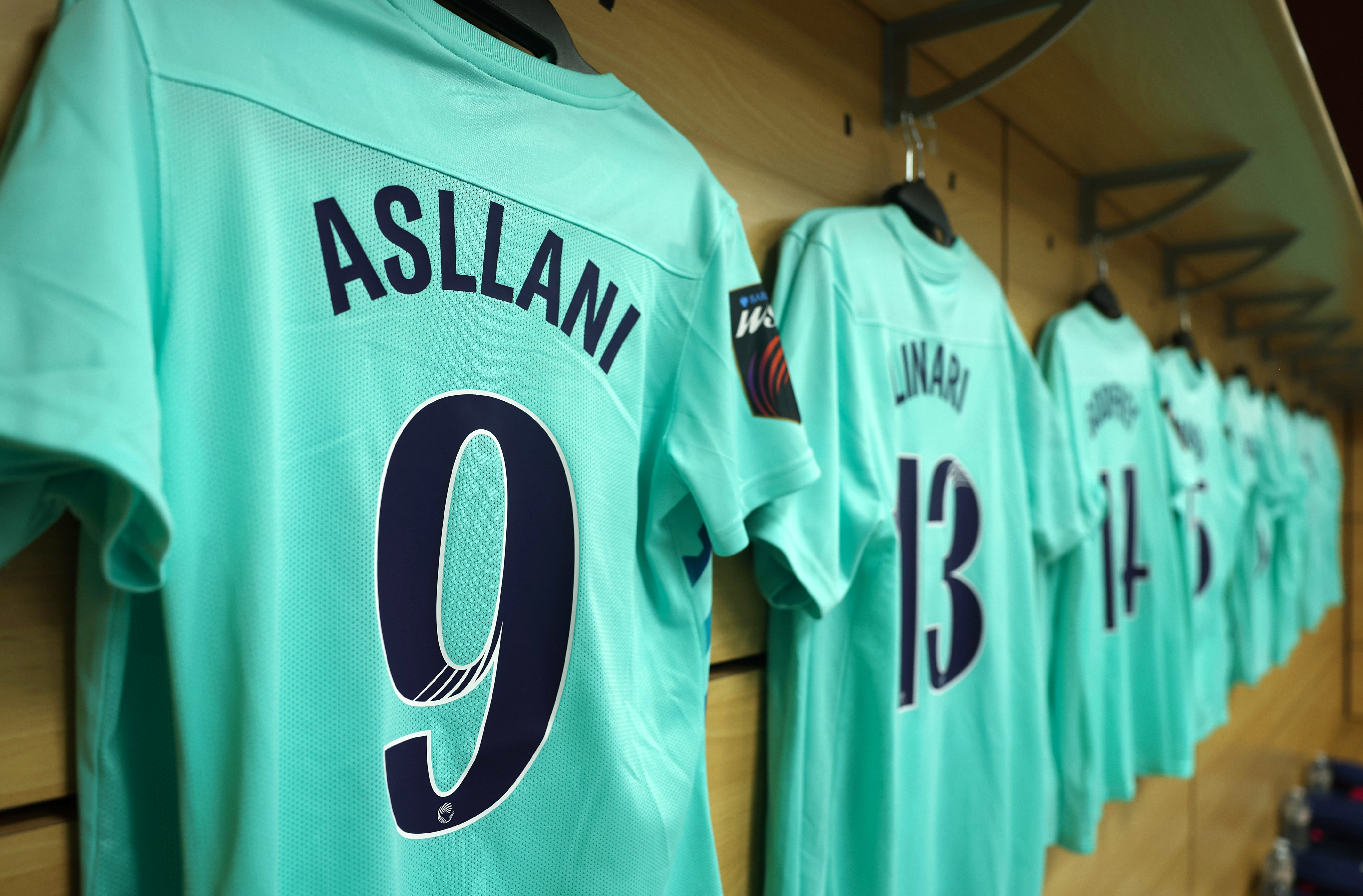
Kosovare Asllani, captain and attacking midfielder, remains central to the system. Under Maestre, the No. 10 role is interpreted much more aggressively and dynamically. Asllani still drops to link phases and occupy pockets between the lines as an Advanced Playmaker, but she is also encouraged to attack the box, while also acting as a second striker on occasions. Her contribution is not limited to playmaking: she presses high, initiates counter-pressing actions, and frequently makes late runs into the area, adding goal threat.
In some matches, Grace Geyoro has also been used higher up the pitch, effectively occupying the No. 10 slot. In this interpretation, the attacking midfielder role becomes highly situational and profile-dependent: Asllani offers technical quality and spatial awareness, while Geyoro provides intensity, physicality and vertical aggression. When Geyoro operates in this role, her task is to attack the box relentlessly, exploit second balls and arrive with power in central zones, complementing the striker rather than simply supporting build-up.
This flexibility underlines Maestre’s idea of the attacking midfielder as a box-attacking presence, not just a static playmaker.
The double pivot remains functional and balanced rather than purely creative. Saki Kumagai or Maria Pérez act as the positional reference, protecting the defence and ensuring circulation stability, while midfielders like Julia Roddar or Geyoro herself bring intensity, forward momentum and pressing energy. Full-backs continue to play a crucial role in providing width and progression, while centrally, the pairing of Alanna Kennedy and Wassa Sangaré offers physicality and structure to a squad still developing.
In possession: Under Maestre, London City aims to develop a clearer positional play identity, rooted in controlled possession with a strong emphasis on recognising and exploiting space.
Build-up structures largely resemble those used earlier in the season, often forming a 3+1 or 3+2 base, but the intention behind them has subtly changed. Rather than simply circulating to relieve pressure, possession is used as a tool to provoke opponents, manipulate their block and create superiority in key zones. Circulation is patient, but not passive. Players are encouraged to scan, adjust positioning and recognise moments to accelerate vertically, either through central access to Asllani between the lines or through sharper combinations involving the front three. The full-backs remain important outlets, but progression increasingly depends on collective spacing and timing, not just positional occupation.
All attackers can act as reference points. Goodwin’s physique makes her a natural target to hold up play, while Parris and Asllani, through their technical quality, combine neatly in tight spaces and lay the ball off to advancing teammates. Together, they give the team multiple ways to bring others into the action and climb the pitch, whether through direct holds, quick one-twos, or clever layoffs between lines, accepting a degree of risk in order to preserve structure and access central zones. A recurring pattern observed in games against Liverpool, Sunderland and Manchester City sees making early connections with the striker, followed by a lay-off into midfield and the activation of a third-man run, usually from a winger or the attacking midfielder, attacking depth or space behind the opposition line.
Out of possession: Defensively, Maestre promotes a more proactive and collective interpretation of pressing, built on compactness and shared triggers. London City still alternate between a 4-4-2 medium block and higher pressing shapes, but the emphasis is less on selective moments and more on synchronisation between lines. Asllani and Goodwin are key to initiating pressure, supported quickly by midfielders stepping forward to compress space. The press is designed to funnel opponents centrally, where numbers can converge due to the narrow structure of the team, and turnovers can immediately be turned into attacking transitions.
The approach reflects the manager’s principle of “pressing in the right moments” rather than constant aggression. It can disrupt rhythm, but timing and compactness are critical. Against Arsenal, earlier in the season, there were glimpses of success when the block pressed together, pinning play centrally and recovering high. Yet the fragility of execution was equally visible. Russo’s movements into space between the lines caused problems, and the diagonal runs of Arsenal’s wingers, either in front of the defence or behind the wing-backs, were especially damaging. Three of the four goals conceded stemmed from these patterns, exposing how risky it is to invite pressure into central areas without perfect coordination. Against sides not in the top 4, this aspect improved, with the team’s first goal in the 2-1 away win to Everton directly coming from a well-executed press. And even in their recent clash against Manchester City, Godfrey’s goal stems from a winning press in central areas.
It is an identity still in construction as the club completely rebuilt the team after promotion, and even more so in January. The pressing framework is clear, but automatisms will need weeks of repetition before they become a reliable weapon in both phases of play.
Key players
Kosovare Asllani – Asllani remains a central figure in the team, combining technical quality, vision, and timing in attacking the penalty area. She links the phases of play both in possession and in vertical transitions, often arriving late in the box to create scoring opportunities. Her experience at the international level and tactical intelligence make her a guide for the side.
Freya Godfrey – The young English winger has already claimed a starting spot on the right flank, demonstrating goal-scoring ability, intelligent off-the-ball movement, and direct attacking contributions. Her pace, creativity, and finishing instincts make her a key outlet for Maestre’s vertical and positional play. Her rapid progression and performances have made her a joint top scorer and a rising talent in the squad.
Delphine Cascarino – Cascarino brings even more explosiveness, dribbling, and finishing ability to London City Lionesses. A seasoned France international, a player of incredible quality and former OL Lyonnes star, she is capable of creating danger from wide or central positions, stretching defences, and contributing both in goals and assists. Her arrival adds tactical versatility to Maestre’s system, providing a reliable outlet for transitions and enhancing the team’s attacking options.
This is a paid partnership between The Cutback and Football Manager.


