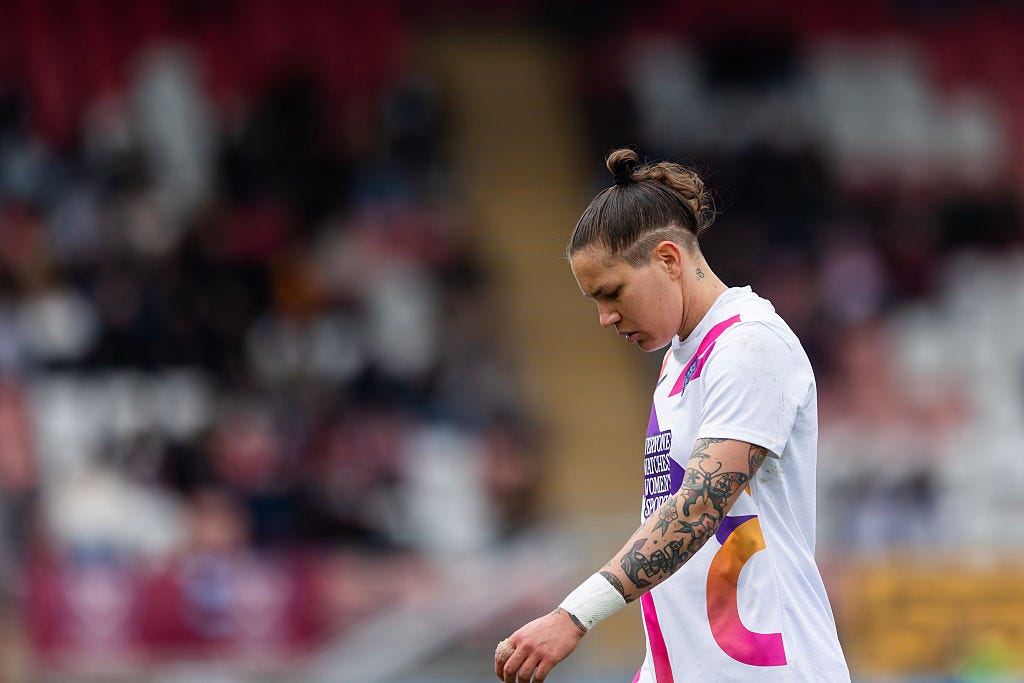
Elena Linari on climate change and football: 'One player can make the difference'
London City Lionesses player calls on football world to join climate fight during 2026 World Cup
“Honestly, I would love to hear a male football player speaking publicly about the situation”, Italian defender Elena Linari defiantly tells The Cutback. “Men have a bigger platform than we do. Just one player can make the difference.”
The London City Lionesses player is speaking just as the 2026 World Cup kicks off across North America and and as endless headlines fill the news about extreme temperatures and hydration breaks.
Linari, who has become one of the most prominent player advocates on environmental issues in football, believes male players have the influence to force meaningful change. The 2026 World Cup will be played across 16 cities in the United States, Canada and Mexico. Several host venues are expected to experience very high temperatures, while the expanded format requires teams to travel thousands of miles between matches. Across most of the host cities, temperatures have already hit mid-30 degrees celsius and they will be expected to stay that high throughout the tournament.
Linari worries that the hot conditions could pose significant risks to players: “They will be playing in extreme temperatures, and the three countries are so big that it’s like travelling all around the world. They are having to readapt themselves to different temperatures, altitudes and time zones every couple of days. After very long, hard seasons already, how can your circadian rhythm understand where it is?”
Beyond player comfort, research has linked extreme heat to increased risks of dehydration, heat illness, fatigue and soft-tissue injuries. Linari argues the quality of football itself could suffer: “I believe football can bring happiness to people, but at the moment, I don’t think the player is coming first before the money. These are human beings who need to be healthy and be safe. How can the game be good if players have no energy, if it’s too hot or if they’re getting injured?”
Her fear is not new. Linari was one of 106 players who signed an open letter during the 2023 Women’s World Cup urging Fifa to reconsider its sponsorship deal with Aramco, the Saudi Arabian oil company. The fossil fuel entity is currently a sponsor for the 2026 and 2027 tournaments.
Addressed to Fifa president Gianni Infantino, the 2023 letter read, “as the largest state-owned oil and gas company in the world, Saudi Aramco is one of the corporations which is most responsible for burning football’s future”.
She adds, “we even have a group chat called the ‘Aramco girls’ and we are not happy about the situation.
“When we wrote the Fifa letter in 2023, it was all women and I thought that maybe no men would follow us. Instead, some did. Unfortunately, these players are not the most popular male players in the world- they’re not a Ronaldo or Messi- but they are using their voice. I hope more male players will join us”.
Three weeks ago, Linari signed a new petition along with several men’s footballer to bring attention to this issue once again.
Last month, 20 international scientists joined the call for action another warning that Fifa’s current heat safety guidelines for the 2026 World Cup are '“inadequate” and exposure players to dangerous heat stress. They have called for Fifa to improve cooling facilities, lengthen cooling breaks and make the rules clearer for delaying or postponing matches due to extreme weather.
Concerns are not limited to researchers. During the 2025 Club World Cup in the US, Chelsea’s Enzo Fernández described the conditions as “very dangerous” after suffering dizziness while playing in extreme heat. The risks identified by players and researchers are already being felt on the pitch.
Linari says time is running out to intervene, “when the World Cup happens, we will likely hear people complaining about the extreme weather, but complaining after or during is too late. You need to do it before.”
The 32-year-old is also an ambassador for Football for Future, the non-profit using football as a vehicle to tackle sustainability issues. Through interactive workshops, they deliver climate education to players and clubs across all levels of the game. They released the Pitches in Peril report, which included over 100 pages of research and findings into the climate issues of this World Cup, including the detailed risks facing the tournament’s host venues. Their conclusions show that “14 of 16 World Cup stadiums already exceed safe-play thresholds for at least 3 major climate hazards- including extreme heat, unplayable rainfall and flooding.”
For Linari, the conversation extends beyond a single tournament. She believes football is only beginning to confront the long-term consequences of climate change and argues that governing bodies, clubs, players and fans all have a role to play in responding to the challenge. At her own WSL club, she has encouraged small but significant sustainability initiatives, from reducing unnecessary laundry loads to holding conversations with nutrition and catering staff about food waste.
Looking ahead, football is under threat. According to Football for Future, around 120,000 grassroots matches are cancelled in England each year because of adverse weather conditions, raising questions about how climate change could affect participation in the sport and player development over the coming years.
Linari emphasises the future in her advocacy: “I’m not working for myself, I’m doing it for the younger generation. We need to educate people.”
She pauses before returning to the responsibility she feels as a player. “I want to help. If I have to be one of the firsts, I will be there for my teammates, future football players whether that’s men or women. As an athlete, honestly, I think this is my role.”


