


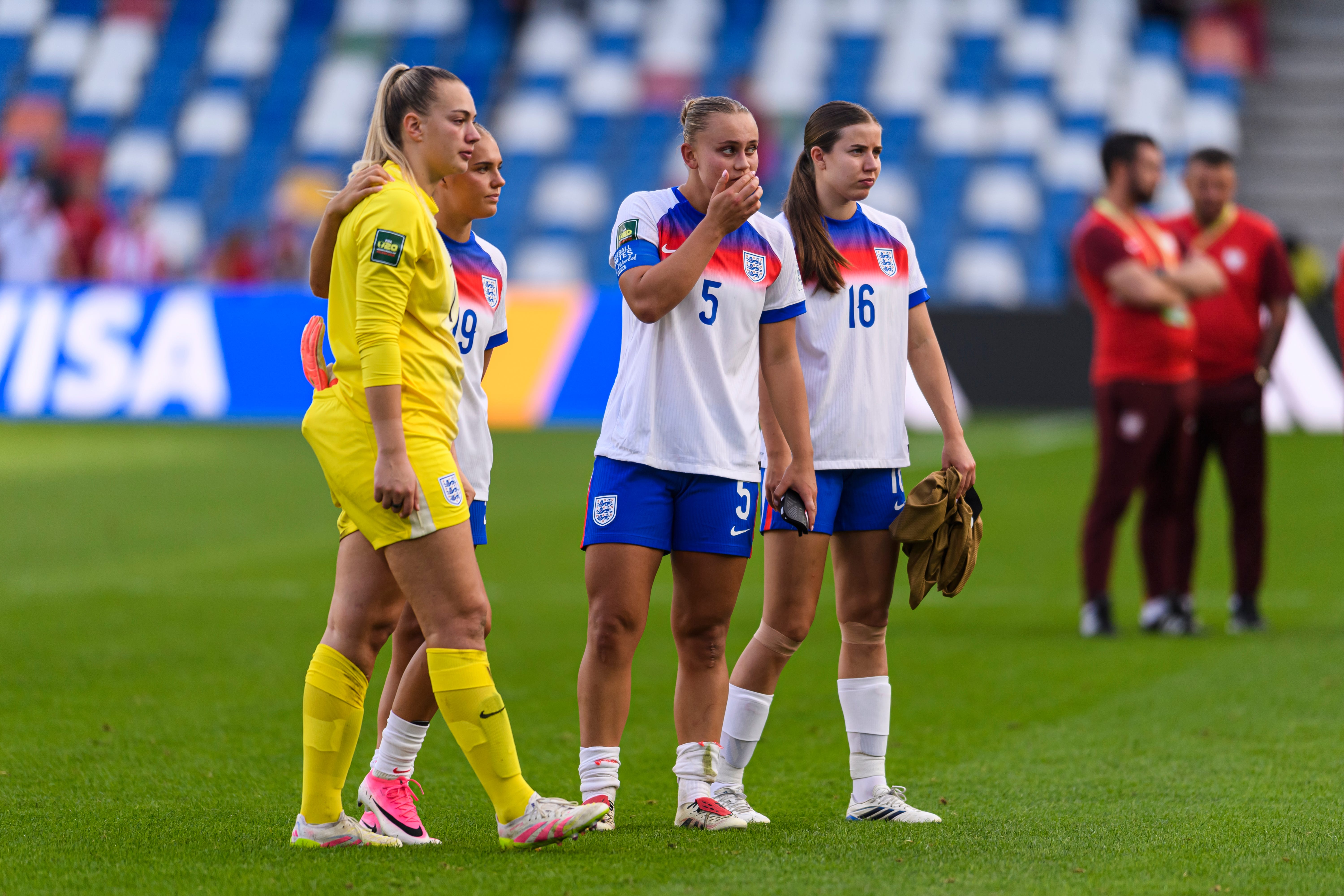
The Young Lionesses are out of the U-20 Women’s World Cup after a 3-0 last-16 defeat that encapsulated much of what we had already seen from them in Poland.
England produced flashes of good football and several players showed they could be ready to take another step. But familiar problems also resurfaced: sloppy mistakes, missed chances and, eventually, a team that looked beaten.
Nigeria took the lead after just seven minutes through Tosin Rafiu, immediately giving England another difficult start to recover from.
For much of the first half, England looked capable of doing exactly that. Princess Ademiluyi caused problems, Vera Jones was lively and Rachel Maltby continued to find space down the left. England stretched the pitch and, once they settled, began to impose their own tempo.
The problem was the final action. Ademiluyi missed a one-on-one chance with Nigeria goalkeeper Christiana Uzoma, and England’s set piece routines started to become predictable.
Their best chance to get back into the game came from a penalty after Ademiluyi was brought down in the box. Maltby, who had already scored three penalties at this World Cup, stepped up to the spot and struck it sweetly, but Uzoma held firm in the centre of her goal, tipping the shot onto the bar and recovering the rebound.
Nigeria went into half-time ahead and scored again almost immediately after the restart. From that point, the game slipped away from England.
The same problems came back
England had already shown in the group stage that losing possession in the wrong areas could hurt them. Canada exposed it and Brazil punished it. Nigeria did the same.
Goalkeeper Katie Cox looked less comfortable playing out from the back as the pressure grew, while Nigeria’s pace and physicality repeatedly caused issues for England’s defence.
Chloe Sarwie was one of the few who seemed to enjoy that battle. The Chelsea defender has been one of England’s quieter success stories at this tournament. She defended aggressively, was comfortable stepping forward with the ball and, against Nigeria, stopped several attacks that could easily have made the scoreline worse.
Vivienne Lia also gave England more creativity when she came on at half-time, while Jones kept trying to make things happen.
But as a team, England lacked the clinical edge. By the time the third went in, Bedford’s side looked deflated. Bedford introduced more attacking players with less than 10 minutes remaining, but the changes did little to alter the game.
This tournament was about more than the result
A round-of-16 exit is disappointing, especially after England went into the tournament talking about being in Poland for seven games. But these tournaments are not just about how far you go.
Maltby leaves Poland with four goals and an assist, having played at full-back and further forward. Her missed penalty against Nigeria should not undo what was an excellent tournament.
Ademiluyi showed how dangerous she can be running in behind but still needs to work on staying composed in front of goal. Lia provided creativity from wide areas and Sarwie looked comfortable against players older and stronger than her.
All of this bodes well for the future. This competition has been an important part of the England pathway, with 32 senior Lionesses having played at an U-20 World Cup. England’s bronze-medal-winning squad in 2018 included Lauren Hemp, Alessia Russo, Georgia Stanway, Chloe Kelly, Niamh Charles and Esme Morgan.
Not everyone in this squad will make that jump and some may still be years away, but youth tournaments give young players a taste of what is to come.
England need the next generation
The senior Lionesses are already going through change. In the past couple of years England stalwarts Mary Earps, Fran Kirby and Rachel Daley retired from international football. More recently Millie Bright retired from football completely. Between those four, England have lost 300 caps.
There are other big decisions coming. Lucy Bronze is still a huge part of this England team, but she will be 35 by the time the 2027 World Cup arrives. She has previously spoken about being in the “final few tournaments” of her career, and Sarina Wiegman said earlier this year that Bronze still wants to make the World Cup and remains important to the team.
Replacing a player like Bronze is not something England can do overnight, and neither is replacing the experience lost through recent retirements. The pathway needs to produce players who are not only talented enough, but ready for the demands of senior international football.
Sarina Wiegman has already started bringing younger players into the senior picture, but there is a huge gap between excelling at youth level and being ready to play international football.
England has built the U-23 programme specifically to help bridge it. Bedford, who also leads that group, has already described this season as important with the 2027 World Cup on the horizon.
The majority of the players leaving Poland do not look ready for a step up into the senior squad, but have all gotten a taste of what might be on the horizon. Some of the names we have watched at this World Cup will be the ones England eventually turn to when this current generation starts to move on.
Nigeria showed just how much work is still required, but this year’s U-20 World Cup has shown England have players that are worth working with.
