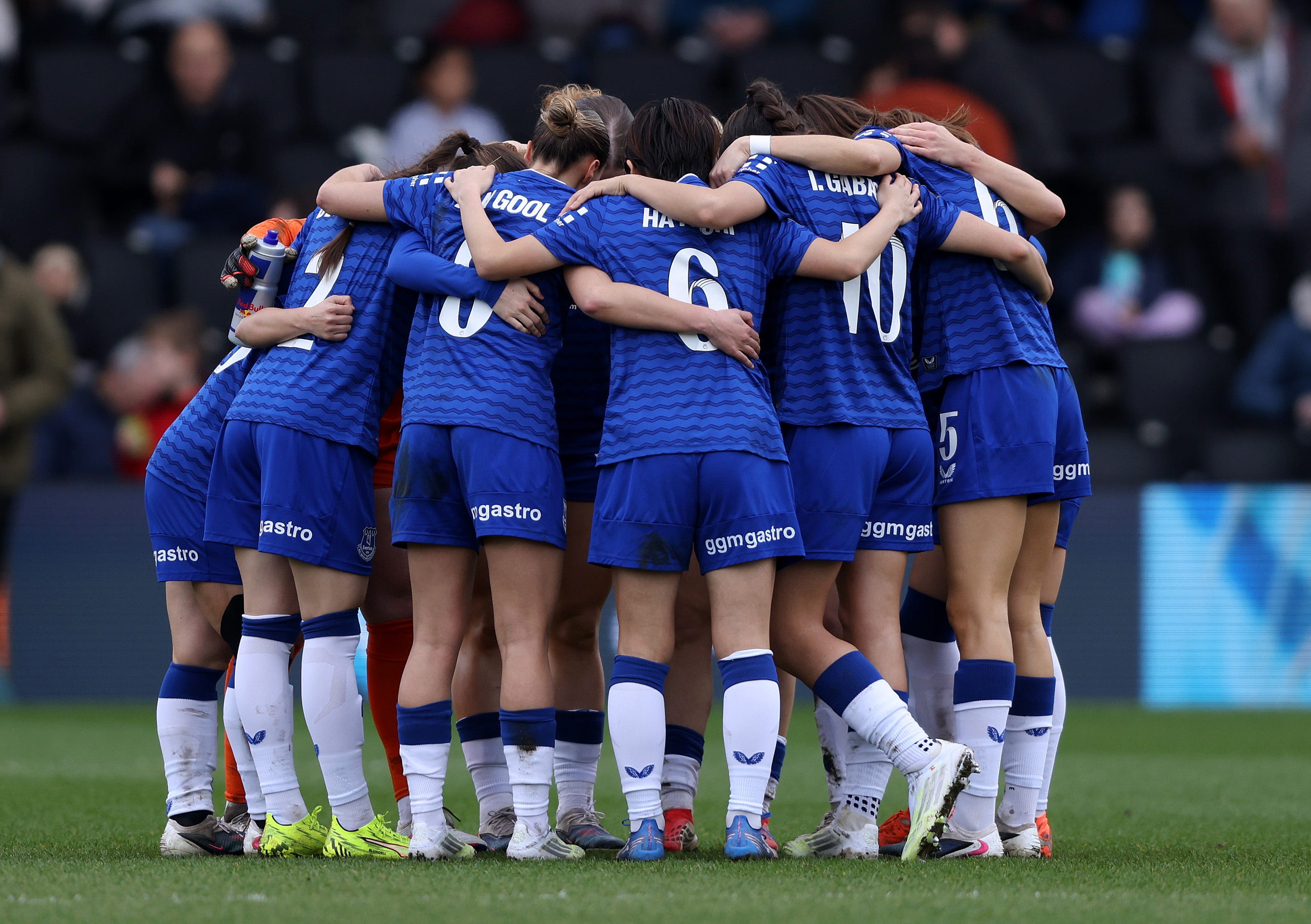
Everton: Formation, style of play and key players
Tactical deep dives on all 12 Barclays Women's Super League sides from The Cutback and Football Manager
The Cutback has partnered with Football Manager to deliver a series of articles that go deeper on the tactics and gameplay of the world’s leading football management simulation game.
This year, women’s football features in Football Manager for the very first time, so to get fans ready for a brand new experience, The Cutback has put together the ultimate insights on FM26. Find out about the secrets of building FM26, dive into the tactical details of all 12 Barclays Women’s Super League sides and hear about the next gen talent that will feature in the game.
The next team to be profiled in this deep dives series is Everton.
Formation
Everton started this season under the guidance of Brian Sorensen, who had been in charge since 2022. In January, the club opted to go in a new direction and parted ways with the head coach after securing just three wins in the WSL. Scott Phelan has taken over as interim head coach until the end of the season.
Everton recently reshaped their tactical setup, moving away from the back three of last season to a 4-2-3-1 that gives them clearer reference points in and out of possession.
The back line is anchored by 2 ball‑playing defenders, in midfield, the double pivot balances roles: Rosa van Gool acts as the deep-lying playmaker, taking on the build-up duties to circulate possession and provide a passing lane, while her partner Ruby Mace operates more as a ball‑winning midfielder, pressing, covering ground, and protecting the back four. Ahead of them, Katja Snoeijs has been repurposed as the No. 10. Naturally a striker, she uses her physicality and awareness to act as a shadow striker, holding up play and connecting with the wings, while still posing a threat by arriving late into the box.
On the flanks, Yuka Momiki plays wide on the left and Honoka Hayashi on the right. Both act as traditional wingers on their stronger foot, staying wide, delivering crosses, and working tirelessly in both phases. Their width is key to stretching defences and opening inside channels. Leading the line, new signing Ornella Vignola has taken on the advanced forward role. Quick, direct, and relentless in attacking depth, she provides the vertical outlet that defines Everton’s direct identity.
Even though Sorensen is no longer head coach, Everton’s underlying identity remains consistent: a team that seeks control through fast wide progression and disciplined collective work.
In possession: Everton’s build-up begins with their centre-backs, as both Martina Fernandez and Rion Ishikawa are strong passers. They are tasked with drawing in opposition pressure, while Courtney Brosnan remains an old-fashioned goalkeeper, rarely involved in short circulation, so the ball usually moves through the defenders or van Gool dropping in as a third option. This creates a triangle that allows Everton to attract a press before escaping down the flanks.
Progression is designed to flow wide. The full-backs are the first outlets, receiving either directly from the centre-backs or from van Gool. From there, Everton create quick vertical combinations: full-back to winger, then into either a midfielder or directly into the striker’s feet or behind the opposition’s defensive line. The goal is to release the wide player early and open space centrally for the striker or attacking midfielder to exploit.
When deploying a back 3, Everton build from the back using a 5-player structure. This 3+2 setup typically comprises the backline and the two defensive midfielders. One of the midfielders, usually the ball-winner, moves closer in a secondary phase, acting as a free 3rd man and providing a reliable vertical passing option before looking to deliver the ball into the wide spaces occupied by the wing-backs.
The opening match against Liverpool showcased the danger of their new centre-forward, Vignola. Quick and decisive in her movements, she thrives when attacking depth and can challenge defenders one-on-one. Her equaliser came from a direct ball out of defence that she chased down, and her later run in behind created the platform for the fourth goal. Overall, Everton’s attacking play is a wing play, cross-heavy system. Both wingers and full-backs look to deliver early, with Snoeijs and Vignola occupying central defenders with players like Hayashi providing runs from midfield or the wings, adding extra bodies in the box.
Out of possession: Without the ball, Everton’s structure is a 4-4-2 mid-to-high block. The striker and Snoeijs form the first line, working to screen central access and push play wide. The wingers drop into line with the double pivot, keeping the team narrow and compact. Once the ball is shifted wide, the press triggers: the winger closes down the full-back, while the striker and Snoeijs cut off the route back inside, forcing play long or toward the flank.
This system, fairly more aggressive than last season’s one, was still clearly in development in the Liverpool opener. Early on, a mistimed press from the right full-back left space that Liverpool exploited for their opening goal. The distances were not yet clean, with pressing cues sometimes late. As the match wore on, though, Everton’s timing improved: the block became harder to bypass, and their physicality in midfield began to tell. Their intention in press is clear, use their work rate and narrow structure out of possession to funnel opponents wide, then trap them with aggressive pressing on the flanks where they have numbers.
Overall, Everton are a team that defends frequently and effectively, last season they ranked in the top 6 for the fewest goals conceded and boasted defensive statistics well above the league average. The team excels particularly in clearing crosses and dealing with aerial balls, showing great resilience and confidence when defending inside their own penalty area, often putting their bodies on the line to protect their goal. Another key aspect to their defensive record is the crucial role of Brosnan, who provides great stability and assurance between the posts, ranking among the best shot-stoppers in the WSL.
Key players:
Ornella Vignola – A new arrival who made an immediate impact with a hat-trick in the Merseyside derby, Vignola gives Everton a striker who can threaten in behind and punish defences with her pace, acceleration and dribbling. She offers directness that stretches opponents and creates space for her teammates. Her movement is a constant reference point for Everton’s vertical play, and her finishing instincts could be the difference in tight games.
Ruby Mace – Everton needed more bite in midfield, players able to compete in direct duels and protect the defensive line, and in Mace they secured one of the most promising young English options available. She brings poise on the ball and a natural sense of positioning, rarely rushed in her decisions and comfortable in playing simple passes to recycle possession. What makes her stand out is not flashy skill but consistency: her anticipation, discipline, and balance can improve most team’s stability.
Katja Snoeijs – Though naturally a centre-forward, Snoeijs has adapted selflessly to the attacking midfielder role, and even played wide when needed. She combines physical presence with leadership and vision, offering a platform for Everton’s attacks. Able to hold the ball under pressure, link wide players, and arrive in scoring positions, she is central to the team’s attacking identity and embodies their willingness to adapt roles for the collective good.
This is a paid partnership between The Cutback and Football Manager.


