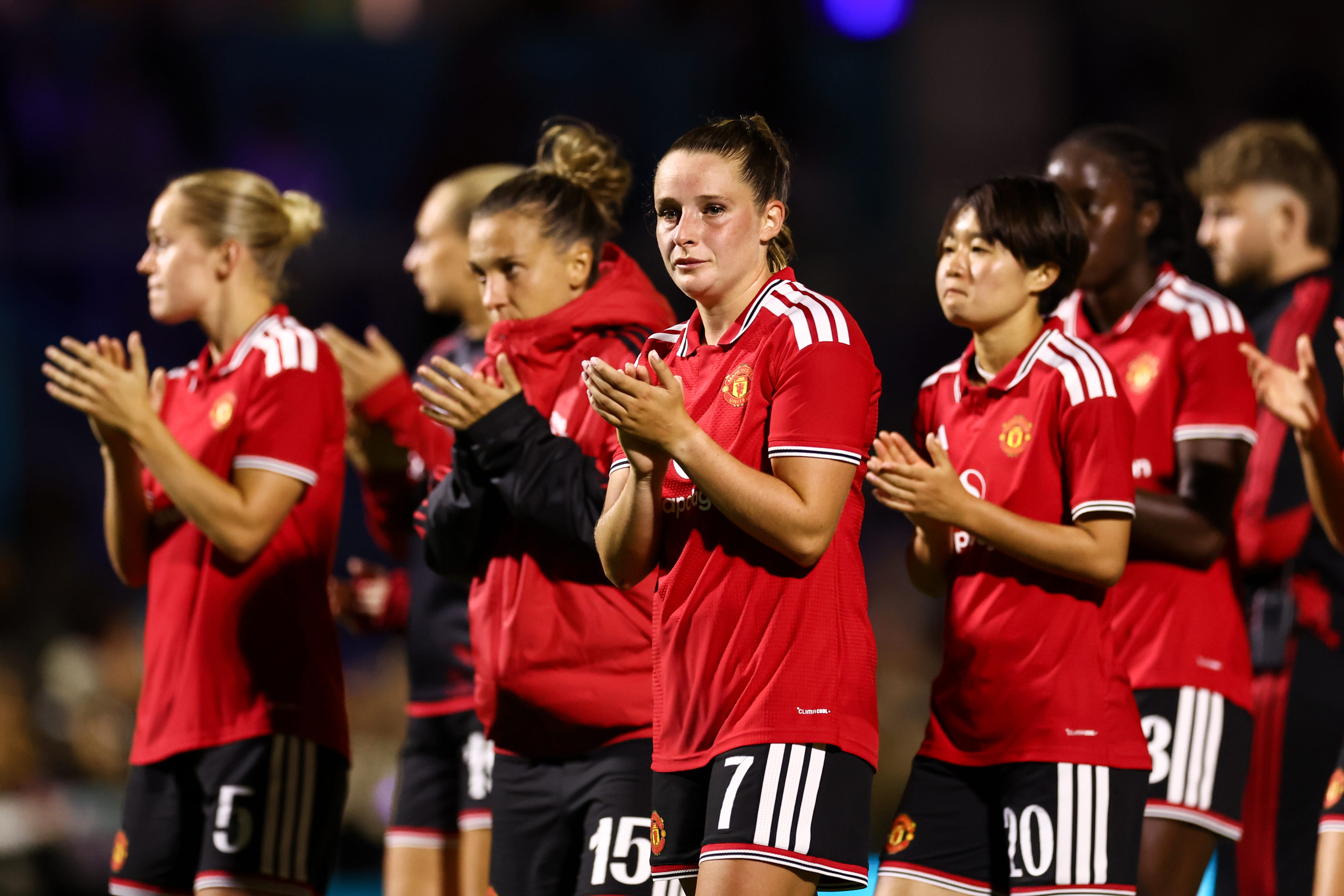
Friday night’s WSL opener saw Manchester United fall a long way short of big summer spenders London City Lionesses.
The 2-1 scoreline was kind to United, who failed to register a shot until the 78th minute. An own goal from Julia Zigiotti Olme and Danielle Van De Donk’s gorgeous flicked finish – both from set pieces – was enough for London City to get the three points.
Across the 11 shots London City registered, it should have been a lot more. Simi Awujo’s late goal gave United fans something to cheer on what was an extremely disappointing night in Bromley.
This is five things fans can take away from the game:
Anna Sandberg’s position
Anna Sandberg played pre-season and this fixture in the left wing position, rather than left-back, where she has played her entire time at United.
Sandberg had her full breakthrough season in 2025-26 and was widely considered one of the best full-backs in the league last season. Her ability in one-on-one defensive situations was essential to United’ ability to stop attacks down their left side last campaign.
In this new role further forward, Sandberg no longer gets to use that strength anywhere near as much. Her main job in her new role is to pick up the ball on the half turn and beat a player down the line – not something she has looked comfortable at so far.
Sandberg was one of the best performing United players last season and her loss at left-back is noticeable defensively and offensively. Moving her back to a left-back role to utilise her strengths more will benefit her, and the team overall.
Options against a high press
One of the biggest threats in the London City attack came from suffocating United in their own half with a well organised press.
Eva Olid spoke to the media in the post match saying that “in the first half, we could feel like the players were not believing in having the ball”. This showed when United tried to play out from the back. On one occasion United tried to play out from the back into midfield, it resulted in a backpass from Maya Le Tissier to Phallon Tullis-Joyce, who just kicked it straight out of play. This just about summed up the first half.
To beat an organised high press, teams need movement off the ball, creating options and quick passing with confidence to get around the opposition. No United player did what was required, certainly in the first half.
This lack of options forced Sandberg and fellow winger Jess Park into much deeper positions, but without any real movement off the ball it gave them no attacking outlet. Untied often lost possession or hit it into the channels, where Elisabeth Terland chased each ball, but with little success.
United have players who are comfortable on the ball, so this lack of movement and dysfunctional passing came as a surprise. The belief needs to come back to the players over the next couple of fixtures where they are likely to face a good pressing team again.
Subs making an impact
The few positives in the game from a United point of view came from the bench. New signing Monica Jusu Bah and goalscorer Awujo injected the energy and possession further up the pitch United desperately needed.
Jusu Bah came on and stretched the play on United’s left side, getting the better of the opposition full-back a number of times and getting the ball into good areas in the box. That pace and one-on-one ability gave United a much needed outlet.
Awujo came on and added composure to the midfield, often picking the ball up in deeper areas and driving forward with the ball on her own. She also added much needed physicality to the team, which was noticeably lacking in the first hour of the game.
With those two substitutions, United looked more of a threat in attack and more comfortable on the ball. Both have made a strong case for starting against Chelsea next weekend.
No attacking outlet
The biggest cause for concern is the lack of attacking output United showed in the game. United registered four shots in total, all of which came in the final 15 minutes of the game. One of those four was a shot on target – the Awujo goal, which was the final kick of the game.
United’s inability to beat the London City press was the primary issue, but their decision making when they got into the London City half was also well below an acceptable standard. On the few occasions United got forward, there was a lack of idea on how to attack, with players getting in each other’s way, often losing the ball by a loose pass or an overhit one out of play.
The lack of movement from the forwards and midfielders was noticeable in the first hour. A striker like Terland needs service into the box by getting the ball out wide and getting the crosses in for her to attack. With Park and Sandberg pinned back in defensive roles, this attacking outlet was gone, making Terland’s role redundant at times.
On paper, there is a lack of goals when you look at this United side, however the players on the pitch Friday night are better than they showed.
Patience needed
It was always going to be a tough start to the season for new manager Olid, however the performances need to show something positive for fans to hold onto.
This game raised big alarm bells, but also a realisation that it’s going to take time and patience to turn this side into a sustainable, successful team. A new style is going to take time to implement, with multiple players learning a new way of playing and needing to have the belief on the ball to play forward.
The biggest task I believe for the manager and coaching staff is to get the players believing in their own ability on the ball, and to believe in the attacking philosophy they want to implement, which is not going to happen overnight. United’s first win might not come until game week four, with tough fixtures against Chelsea and Arsenal next up. If that becomes the reality, the pressure will quickly start to rise.
There is a real desire amongst supporters to see this attacking football Olid has spoken a lot about in the media, but for this to become reality, it might take more tough games to watch before the ideas Olid has for this team to show themselves.


