


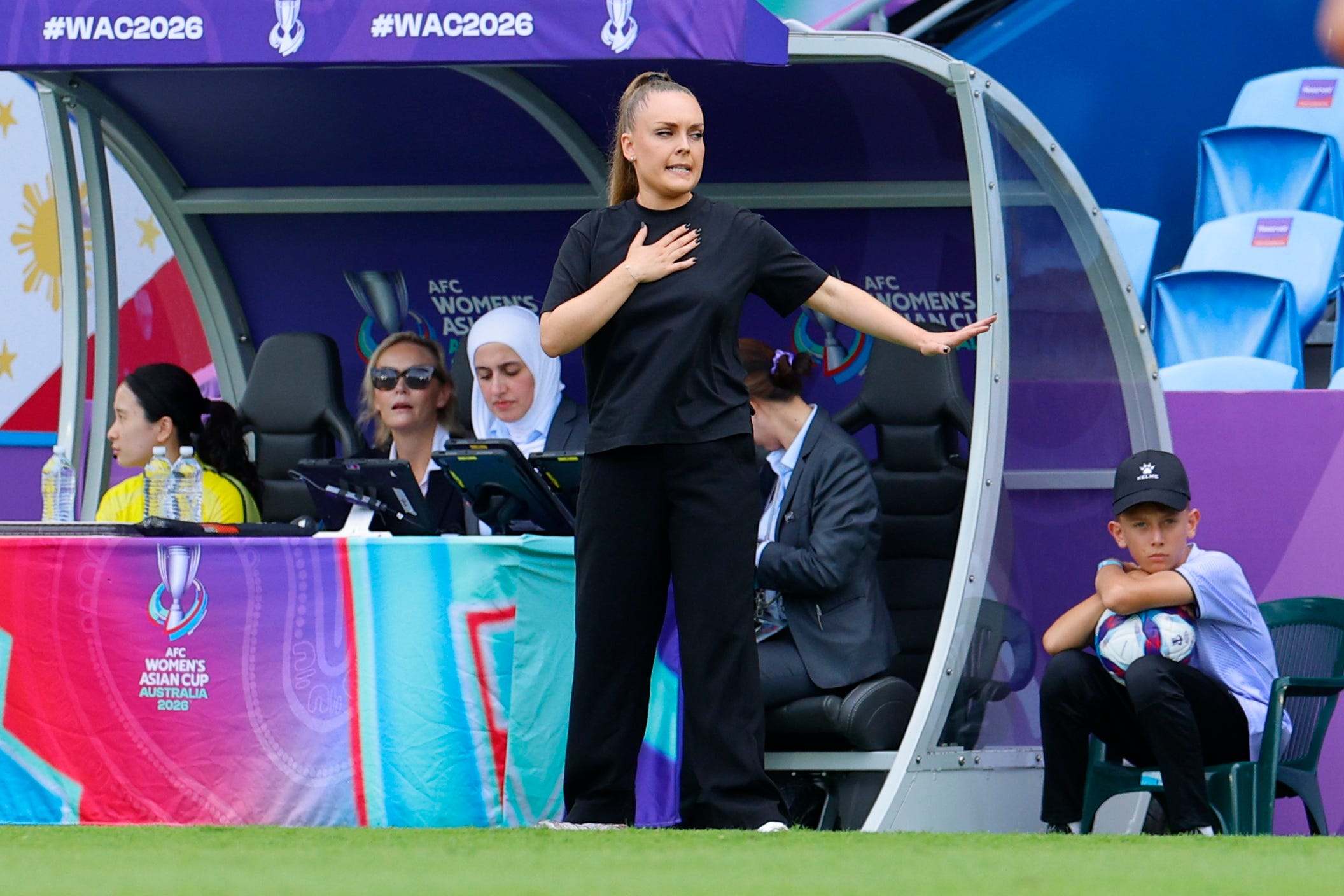
February 2022, was a special day for Kotryna Kulbytė. It was her first game in the Lithuanian senior national team dugout after being given an assistant coach role earlier in the year. As she watched her side put up a good fight but lose 1-0 to the higher-ranked Uzbekistan, little did she know just how pivotal this day would be in her career.
After the match, Kulbytė became acquainted with Yuliya Panina, the head of women’s football at the Uzbekistan Football Association (UFA). Close to three years later, the Lithuanian coach received a call as the UFA searched for a successor to Japanese coach Midori Honda. Kulbytė had just the profile they were looking for – young yet experienced, driven and crucially understanding of the culture, having herself grown up in a post-Soviet state.
This appointment quickly proved to be an inspired choice. In her first senior head coaching role, Kulbytė led Uzbekistan to their first Asian Cup in over two decades, and then went one better by securing their first-ever progression to the knockouts. They even came within touching distance of the World Cup, but a loss to the Philippines in their play-in match set them on the scenic route via the inter-confederation play-offs.
Speaking exclusively to The Cutback about her career so far and the challenge ahead, Kulbytė said, “We know that it’s not [an] easy task as we are first time[rs] in the playoffs and everything is like a lot of first time[s]. But, you know, we need to set goals high and try to reach them.”
Setting goals high and reaching them has very much been the story of Kulbytė’s career so far. Born in the city of Jonava in Lithuania, sports were always a big part of her childhood – she enjoyed swimming, and her father was a boxing coach. But she took her first steps in the world of football relatively later, having already entered her teens. Like many young girls of her age at the time, she had to start by playing with the boys in the local academy, since there was no women’s club for her to join.
Soon enough, her talents attracted the attention of the federation, who called her up to the national under-15 training camps. So, she would make the 90-odd-kilometre one-way trip to the capital Vilnius on the weekends after training at her local academy during the week, all while juggling schoolwork. She continued playing as she entered university, but quickly realised that her prospects as a player were incredibly limited by the fact that the Lithuanian top-flight and even the national team had not been professionalised.
So, Kulbytė made a conscious choice to pursue coaching at a very young age, already starting to gain some experience as a 20-year-old. She then started to work towards earning her coaching licenses while continuing to get more hands-on experience.
The route Kulbytė was taking was far from a well-trodden one. She recalls, “I never had [a] female coach in my life when I was a player. So for me, it was like, I just want to learn, I just want to study, I just want to be better. No matter, I never felt like I’m alone in the room as a woman – it was never like that. I don’t know, maybe it’s my personality but I never put myself as a female, I put myself more as a professional.”
After about a decade of work, Kulbytė’s studies culminated with her becoming the first Lithuanian woman to earn a Uefa Pro License, the highest coaching qualification attainable. “I was very happy about that as well to open the door, let’s say, for the next generation and to show that, okay, you can do [it] if you want.”
Even more so than her education, Kulbytė cites her experiences in diverse coaching roles early on in her career as a key foundation of her success. By the time she turned 30, she had worked with little kids starting out in academies, youth national teams, served as a head coach for a top-flight club, and also dabbled in video analysis and coach education with the Lithuanian federation, besides doing some individual coaching in Brazil. In the process, she naturally worked with a lot of different people, whom she credits with shaping her as a coach through their different perspectives. “I believe it’s so good to touch different paths in your life, and then you can say, ‘okay, this path, I can choose’.”
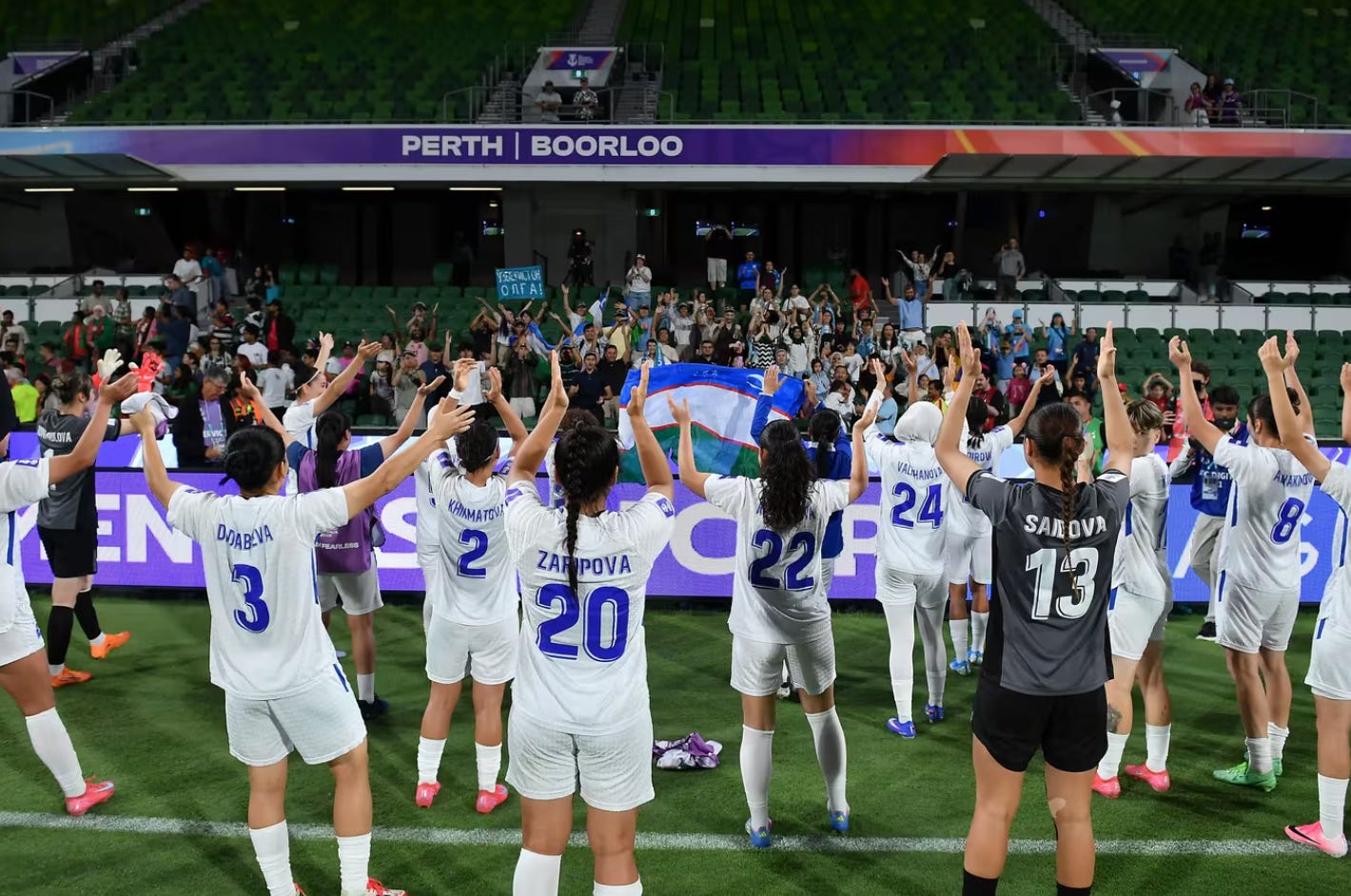
So, despite her young age, Uzbekistan were getting a very experienced coach when they hired Kulbytė in 2025. Herself a very goal-oriented person, she says she was attracted by the ambitious nature of the UFA’s project, with targets including qualifying for the Asian Cup for the first time in 23 years, and then preparing the team for the first Asian Cup to be held in Uzbekistan in three years’ time.
Having already exceeded expectations at the Asian Cup, Kulbytė is now hard at work as she focuses on both the fixtures and challenges in the immediate term as well as working towards the big-picture objective. So, besides leading the national team training camp and fixtures, she is also very involved in the development of women’s football in Uzbekistan. Sharing her assessment of its current state, she says that they have built a good pyramid, “But now we want to go more to the quality in each league. We are a huge country here, so regions are kind of far away. So [we are focusing on] how to strengthen the football in each region – especially in the youth football – how we can make bigger competition in the top league.”
For the next couple of weeks, though, she will turn her full attention to Papua New Guinea, Ghana and South Africa – Uzbekistan’s opponents in the first round of the World Cup qualification inter-confederation play-offs.
“When you climb the mountain, there is another mountain. So at the moment, I’m climbing until [the] World Cup and let’s see what happens next,” Kulbytė concludes. “I want to see how far and how high I can go.”