


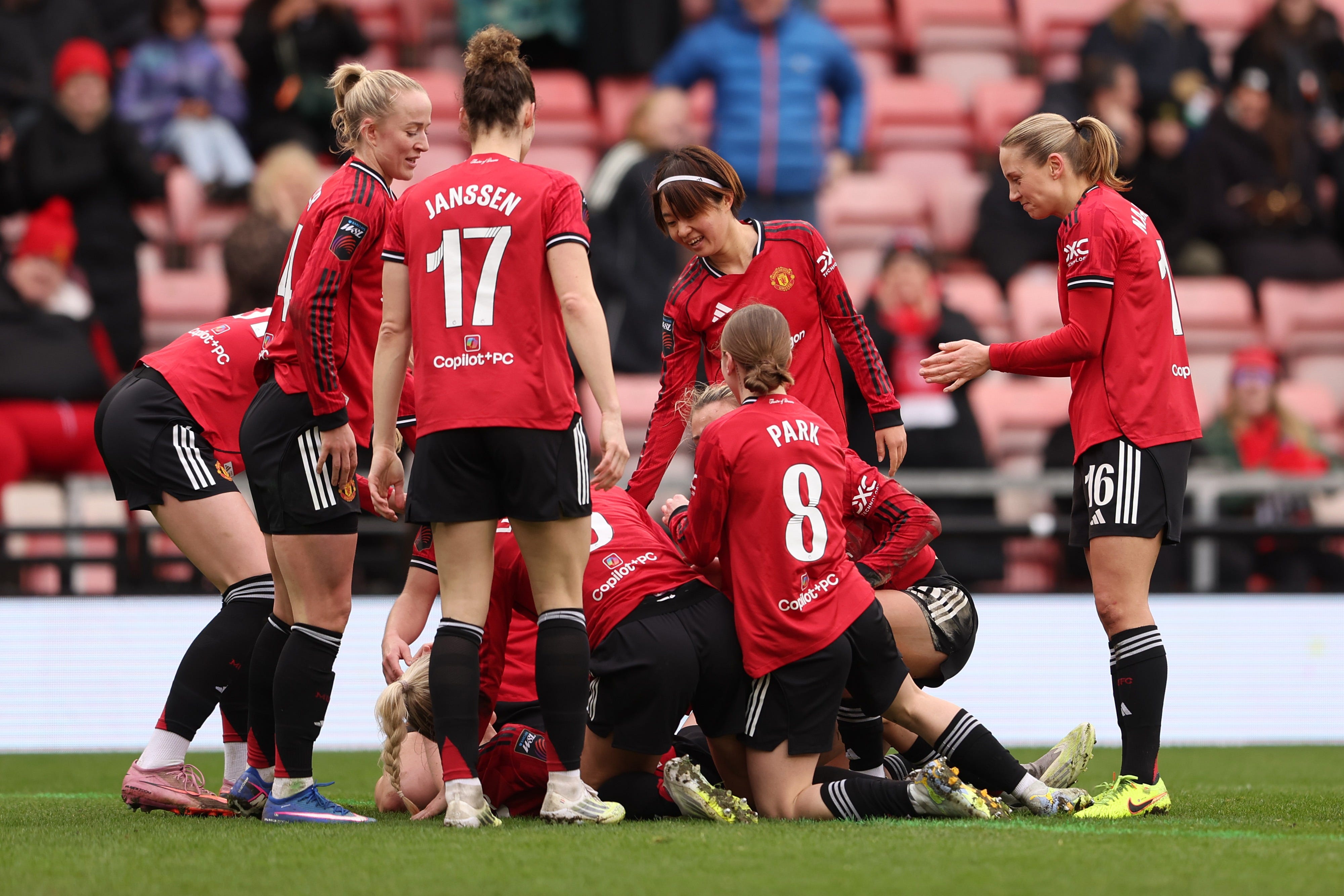
On Sunday, Manchester United beat London City Lionesses 2-1 in a cagey, back-and-forth affair at Leigh Sports Village. Another goal-of-the-month-worthy strike from Jess Park and a header from Millie Turner secured the three points for United after former striker Nikita Parris had given London City the lead after five minutes. After a week of Champions League action, United returned to the WSL hoping for another three points to keep them inside the top three and secure Champions League qualification again next season. With London City being a potential banana skin for Marc Skinner's side, the most important outcome was the win and points on the board – but what else can we take away from the overall performance?
Lack of control and attacking output
Against London City, United recorded one of the lowest expected goals in any of their WSL games this season, creating an xG of 0.28 from five shots (two on target). This compared to London City's xG of 1.02 from 10 shots (three on target).
The most important stat is of course the scoreline, but the performance did raise concerns: when the starting XI was rotated, the stability of the team and the overall structure looked a shadow of recent performances. As the games go by without Julia Zigiotti Olme featuring in the starting XI, her absence becomes more and more noticeable. In this game, Hinata Miyazawa was alongside Lisa Naalsund and Simi Awujo in the more advanced position, however neither managed to make an impact on the game.
Zigiotti Olme was missed in the first half as United lacked any control of the midfield battle, winning just 41% of duels in the first half compared with 52% in the second after she entered the field. Her ability alongside Miyazawa to control the tempo and stop the line-breaking passes that bypassed United's midfield was sorely missed.
United also massively missed the attacking output on the left usually provided by Melvine Malard and Anna Sandberg, who both missed out through illness and injury respectively. With much of United's build-up play relying on the creativity of Park picking up pockets in a deeper role and driving the ball forward, she would often find the pass out wide to Malard or Sandberg on the left. But with Park starting on the left and Gabby George – traditionally more defensive-minded – at left-back, those options were not there and attacks often broke down in the middle of the pitch as it became congested centrally.

