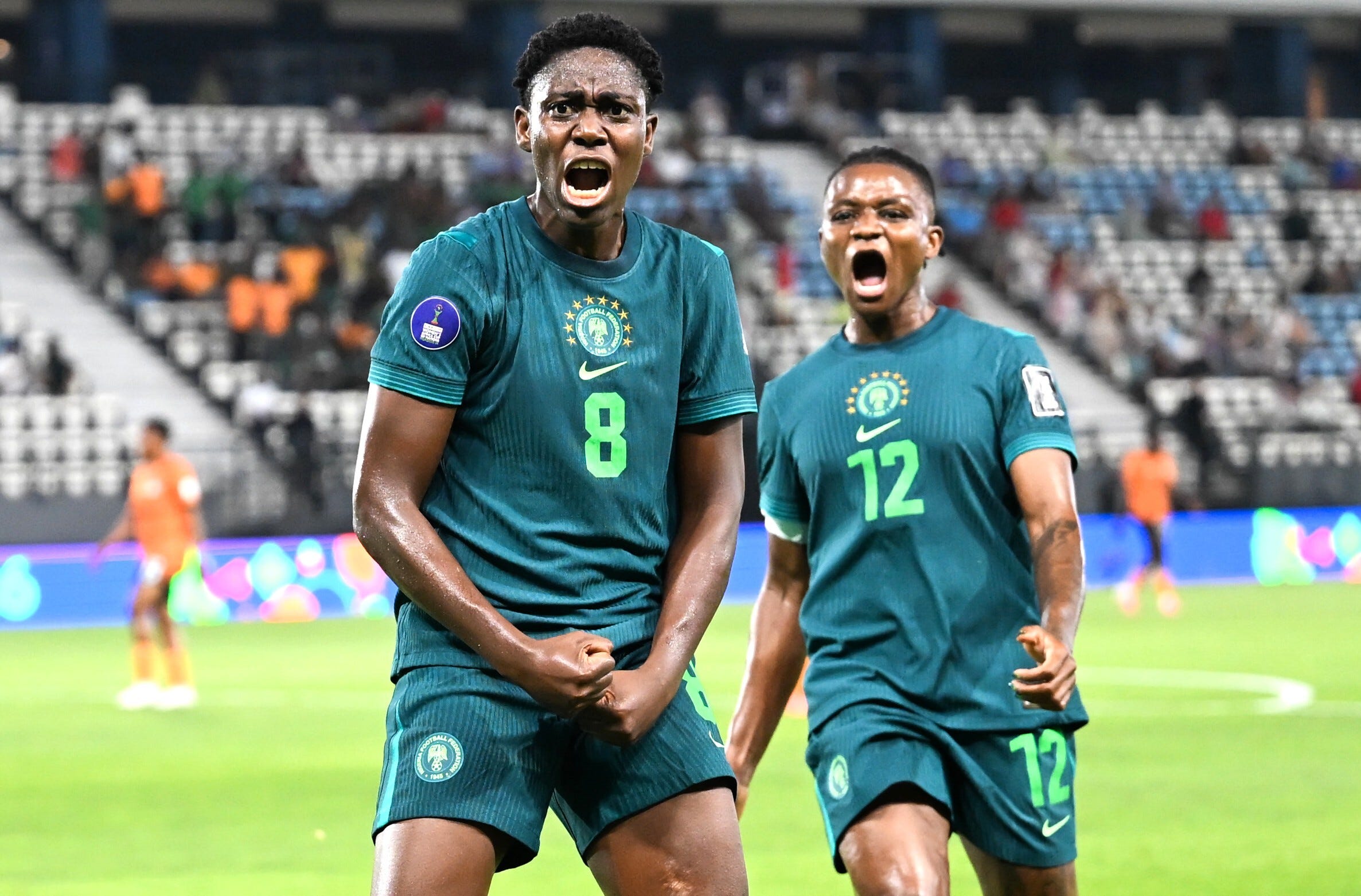
Analysis: The factors that led to Nigeria’s earliest-ever WAFCON exit
What caused the Super Falcons' disastrous WAFCON performance?

Nothing short of the title would have been enough for ten-time WAFCON champions Nigeria, but an exit in the first knockout round is particularly surprising. Worse yet, it also puts them at risk of missing the World Cup for the first time.
WAFCON 2026 has been a tournament of surprises, and no one will understand that better than Nigeria. Always the team to beat, the Super Falcons got off to a shaky start with a shock loss to debutantes Malawi. They managed to recover well enough to get out of the group stage but are now defeated for good after a loss to Cameroon in their quarter-final.
This marks the first time that Nigeria have failed to reach the semi-finals of WAFCON in 14 editions of the tournament. Their dominance has been eroded in recent years as other nations catch up, all while the Nigeria Football Federation (NFF) isn’t adequately supporting the team. Their quarter-final loss was a matter of when rather than if.
Indeed, the signs were there even in the Super Falcons’ title-winning campaign last year. Sub-par displays in the group stage weren’t punished then, and it took a dramatic turnaround to rescue the final from a two-goal half-time deficit. There were no such heroics this time, though, as Nigeria received what might be their harshest reality check yet.
In analysing what went wrong for the 10-time champions, both on-field and off-field issues have to be taken into consideration.
Lack of control in midfield
For any dominant side looking to win a major tournament, establishing control in midfield is among the critical keys to success. Nigeria hardly ever managed to do that at this WAFCON, failing to find a formula that would give them a balance between control and attacking threat.
Justine Madugu’s side kicked their campaign off in a 4-3-3 setup against Malawi, using two attack-minded midfielders on either side of Halimatu Ayinde. The Scorchers found a hole in this approach by playing forward quite directly and using the spaces that opened up in midfield to pick up second balls, with their attacking midfielder Faith Chinzimu doing a particularly excellent job. Nigeria lost further control as the match wore on, and were punished by the opposition’s superstar forwards in a 2-3 defeat.
Learning from his mistake, Madugu switched to a 4-2-3-1 formation against Zambia and introduced the defensively solid Deborah Abiodun into the side alongside Christy Ucheibe, earning a clean sheet. Then, needing goals in the final group game against Egypt, Nigeria reverted to a 4-3-3 in their 6-2 win.
In the quarter-final against Cameroon, the Super Falcons started with the same setup that they used against Zambia. They were undone by Myriam Nyadjou’s 30-yard screamer in the first half, but ultimately lost the match with second-half substitutions that imbalanced the midfield in search of goals. Left alone in the middle of the park, there was only so much Abiodun could do to stop Cameroon’s counters. As a result, Nigeria never managed to build any sustained pressure in search of an equaliser at the end.
Constant attacking rejigs
This theme of chopping and changing impacted Nigeria’s attack. They may have been the tournament’s joint top-scorers at the time of their exit, but this is largely due to their dominant win over Egypt. The Super Falcons couldn’t find the back of the net even once when they needed it the most, underscoring issues at the sharp end of the pitch.
Reflecting on the loss to Cameroon, Madugu pointed towards a lack of clinical finishing on the day as a decisive factor.
“If we had converted the chances that came from the wings, would the result have been the same?”, he asked in the post-match press conference. In isolation, a fair assessment. But a wider context paints a more accurate picture.
Nigeria made at least two attacking changes in each of their four matches at this WAFCON, which prevented their forwards developing chemistry with one another. With that in mind, it should not come as a surprise that Gift Monday struggled to get on the end of Rasheedat Ajibade’s deliveries as well as she ought to against Cameroon, since the two did not play together in the front three at any prior point of the tournament.
Inadequate preparations
Madugu’s position is to be scrutinised after failing to score against Cameroon, but it is worth remembering why he is in the job in the first place.
The former assistant assumed head coaching duties following his predecessor Randy Waldrum’s resignation. The American tactician cited his wife’s health as the official reason, but later also raised questions over incomplete financial trails and a lack of support from the NFF. Such financial issues have been directly impacting the players for many years, including at the last World Cup.
Beyond that, there is the matter of the federation’s lack of basic attention to ensure the team could best prepare for such a major tournament. The NFF scheduled friendlies against three African opponents ranked outside the top 70 earlier this year, while sides like Malawi and Côte d’Ivoire sharpened themselves against international opposition in the FIFA Series friendlies in April.
While she explicitly referred to the officiating, winger Uchenna Kanu perhaps also alluded to these matters after the loss to Cameroon. Speaking to SportyTV, she said, “A lot of things went into this game – a lot of factors that we couldn’t control.” She went on to add, “We’re very disappointed, we’re very tired.”
The Super Falcons’ success has always been despite the NFF rather than thanks to them, but they can no longer be expected to dominate in Africa without even receiving the bare minimum support. Given how deep-rooted those issues are, change may take a while to come.
Tellingly, while their national teams are at risk of missing consecutive World Cups, the NFF is embroiled in a political saga of its own as former men’s national team captain Segun Odegbami has raised questions over their electoral process. It would seem that only a complete reset can bring Nigerian football as a whole back to where it belongs, but the odds of such a transformation are, sadly, quite low.
Nigeria must now scramble to try and qualify for the 2027 Women’s World Cup. The first step is a playoff game against South Africa on Thursday night. A victory will see them enter the preliminary phase of the World Cup qualification inter-confederation play-offs, where they will play three games. Should they advance to the final round, they will have to win a straight knockout match to earn a ticket to Brazil.
*Stats from FotMob.


