What effect did the 2026 men’s World Cup have on NWSL attendance?
There were plenty of venue changes, challenges and potential for increased attendance as the NWSL wrestled with a World Cup in the United States.
With the Men’s 2026 World Cup being co-hosted by the United States, the 2026 National Women’s Soccer League season was always going to be presented with unique challenges and, in some cases, opportunities.
As the NWSL returned from its mid-season break on 4 July, the men’s World Cup was entering its Round of 16 stage, commanding huge TV ratings in the US. Could the NWSL pause play for a month and still lure in new fans thanks to a surge of local interest in soccer? Or would the World Cup steal all of that fresh curiosity for itself?
With the tournament now in the rear-view mirror, now is a good time to look at the NWSL’s attendance figures since its return.
Data notes1
What was the effect on attendance?
The 2026 World Cup has had a huge positive impact on the average attendances of two NWSL clubs: Gotham FC (+15,858) and the Seattle Reign (+5,474).
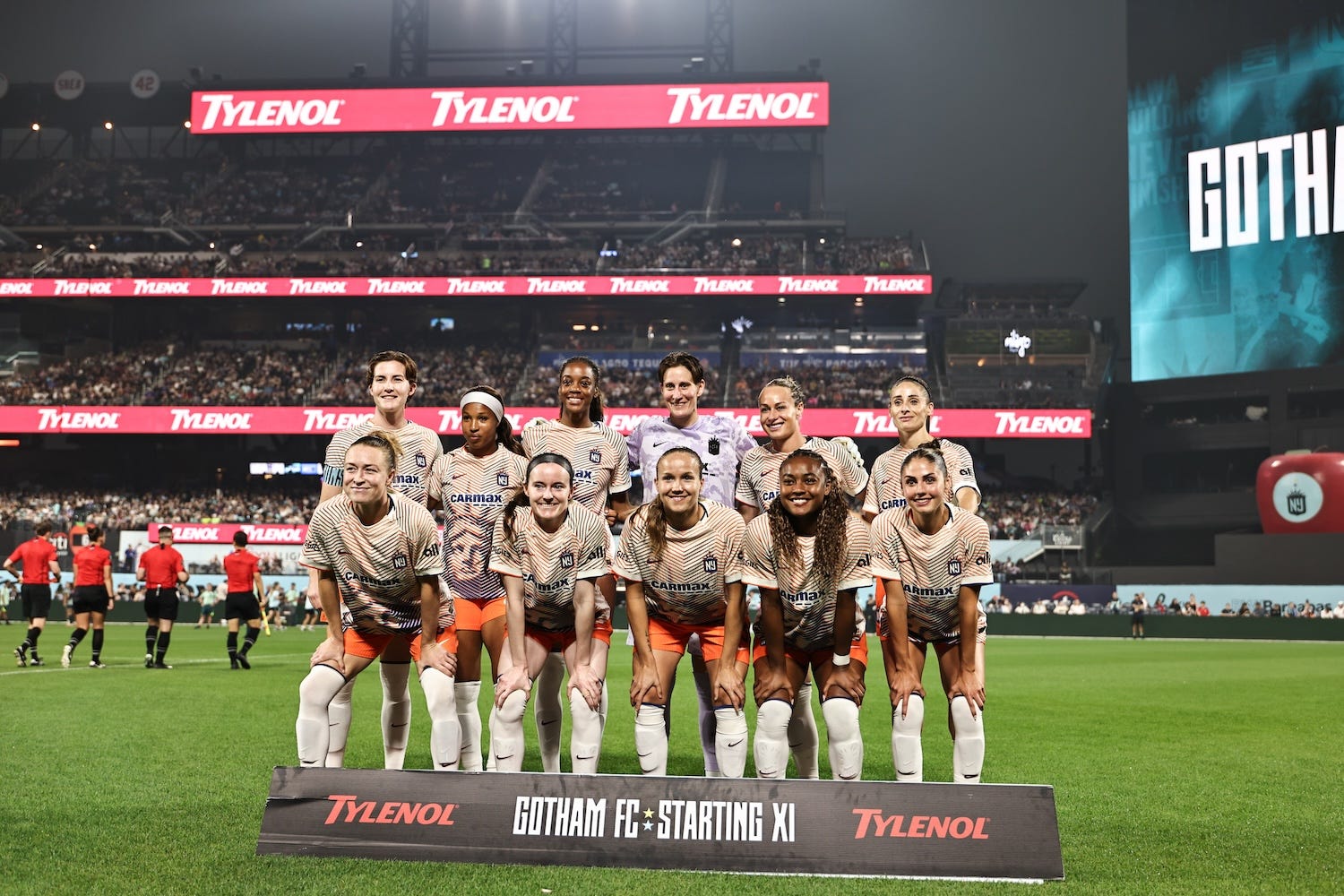
Gotham broke its club attendance record by bringing 42,175 people out to Citi Field, home of Major League Baseball’s New York Mets. That’s a huge increase from the average attendance of 8,148 that regularly attends the Sports Illustrated Stadium in Harrison, New Jersey.
Gotham’s first-ever NWSL match in New York City was dubbed the ‘Queens Classic’ and was a majorly marketed event. It was also played just four days before the World Cup final, and in the same metropolitan area.
There’s no doubt that the buzz and proximity of the World Cup played a factor in Gotham’s enormous attendance. That said, it’s fair to ask how repeatable that sort of surge going to be.
Marketing, records, and must-see-event feel are huge factors in these numbers, as is the venue itself. Just three days after the ‘Queens Classic’, Gotham drew a meagre 4,738 people to the pokey Icahn Stadium in Randall’s Island, New York.
Still, between Citi Field and Icahn Stadium, Gotham’s post-World Cup attendance average was up by 15,858. Gotham plans to move to New York City permanently in 2028, when they will ground-share with NYCFC in Queens. They are already taking season ticket deposits and perhaps the real benefit from the summer of 2026 will be how they have laid the table for new fans to return in the coming years.
In Seattle, the attendance bump was a pure as it gets, with no venue changes or or one-off events to get bums on seats. Their attendance of 14,793 on 12 July was at their home stadium of Lumen Field, which also hosts Major League Soccer’s Seattle Sounders and the NFL’s Seattle Seahawks.
It was the Reign’s biggest attendance since 16,598 showed up to watch Megan Rapinoe have her number retired in August 2024.
So, how did the Reign get the boost?
Seattle was one of the U.S. men’s national team main locations during the 2026 World Cup. The USA played two of their five matches there, including the Round of 16 defeat to Belgium that became one of the most-watched soccer matches in U.S. history. This likely helped charge up the local soccer-going contingent.
The Reign also played their Cascadia Derby rivals the Portland Thorns, which always drives interest for both sets of supporters. Seattle boasts one of the best atmospheres in U.S. sport and it feels like the Reign has potential to build momentum from the World Cup.
For good and for bad, venue changes have made these attendance numbers complex to understand and highly contextual.
Seattle Reign chose to host three home games 280 miles away in Spokane to start the season due to Lumen Field requiring maintenance ahead of the World Cup. The club’s attendance dropped to 3,613 for those three games. When Gotham FC couldn’t play in New Jersey, they went big and small in NYC.
But for the Boston Legacy, Gillette Stadium’s use at the World Cup has meant the 2026 expansion team has been playing home games 40 miles away in Pawtucket, Rhode Island since May.
Average attendance has come down by 3,382 since the World Cup break but that doesn’t necessarily tell the whole story. Boston’s inaugural home match — which unlike Denver was at their regular home stadium — drew 30,207 fans. Attendances have been declining since then.
With a capacity of 10,500, Centreville Stadium in Pawtucket has produced comparable attendances to those seen at Gillette as the NWSL entered its World Cup break. The Legacy average 12,490 at Gillette and 8,713 at Centreville.
However, the ceiling on the capacity at Centreville means that Boston didn’t go bold like Gotham and spend big on a game at a different major league venue, such as Fenway Park in Boston. The Legacy could have, at the very least, tried to get the kind of World Cup host bump that Seattle had.
While Denver wasn’t a host city at the 2026 Men’s World Cup, they have seen their attendance suffer from venue changes unrelated to the World Cup. Attendance at the Summit is down 1,698 since the World Cup began.
In July, the Summit moved from the 18,000-capacity Dick’s Sporting Goods Park to a brand new, club-built, 12,500-capacity temporary stadium. While this gives the club full control of their home venue, attendances have slid from 16,467 to 12,372.
The majority remain unchanged
The rest of the NWSL remain largely unchanged from the impact of the men’s World Cup. Both in terms of positive or negative growth, 11 clubs in the NWSL saw less than 800-fan difference from before and after the World Cup.
It’s almost impossible to tell if there is any effect on attendance at all for these clubs, especially when quality of opposition, home team form, weather, date and time are considered. The simplest conclusion is that there has been no effect on attendance for the majority of the NWSL.
For 2026 host cities like Los Angeles (-389) and Houston (+632), this will be disappointing. Those NWSL teams — and the league as a whole — look to have made no discernible breakthrough despite their cities becoming hubs for soccer this summer.
There’s also World Cup host city Kansas City (zero attendance swing), which made special efforts to market the Current during the tournament. Due to their 11,500-capacity stadium continuously selling out before and after the tournament, there was no increase in attendance. The Current will therefore look to broadcast viewership and social media engagement numbers to ascertain whether the extra marketing was worth it.
The only exception to the rest of the NWSL is the Chicago Stars, which has seen attendances increase by 1,500. Chicago was not a host city during the 2026 Men’s World Cup, but there’s probably something to be said for one of the country’s biggest cities renewing its engagement with soccer. Given that Windy City residents suffered through some of the most biblical weather ever seen in Chicago throughout the spring, the city’s glorious summer weather has likely had plenty to do with increased attendances.
The NWSL suffered a major disruption to its momentum this summer, hoping that a Men’s World Cup would draw new crowds to its stadiums. That responsibility will now fall on next year’s Women’s World Cup in Brazil, where the US national team must do the work themselves.
The data in this graph is taken from the first four fixtures since the NWSL returned from its summer break, showing attendances from 4 July to 26 July. From 4 July to 19 July, the NWSL crossed over with the World Cup. From 20 July to 26 July, the NWSL had a clear run at attracting fans to stadiums.
Denver Summit’s first-ever home match in March, which 63,004 people attended at Mile High Stadium in Denver, was removed. This would have made the declining attendance in Denver look more stark than it perhaps really is in regard to the World Cup.
That match, which broke the NWSL record for attendance, was not played at the Summit’s normal home stadium. And while the same could be said for Gotham’s one-off fixture at Citi Field, in New York City, the venue of that match was moved with the World Cup in mind.
. Could the NWSL pause play for a month and still lure in new fans thanks to a surge of local interest in soccer? Or would the World Cup steal all of that fresh curiosity for itself?
With the tournament now in the rear-view mirror, now is a good time to look at the NWSL’s attendance figures since its return.
Data notes1
What was the effect on attendance?
The 2026 World Cup has had a huge positive impact on the average attendances of two NWSL clubs: Gotham FC (+15,858) and the Seattle Reign (+5,474).
Gotham broke its club attendance record by bringing 42,175 people out to Citi Field, home of Major League Baseball’s New York Mets. That’s a huge increase from the average attendance of 8,148 that regularly attends the Sports Illustrated Stadium in Harrison, New Jersey.
Gotham’s first-ever NWSL match in New York City was dubbed the ‘Queens Classic’ and was a majorly marketed event. It was also played just four days before the World Cup final, and in the same metropolitan area.
There’s no doubt that the buzz and proximity of the World Cup played a factor in Gotham’s enormous attendance. That said, it’s fair to ask how repeatable that sort of surge going to be.
Marketing, records, and must-see-event feel are huge factors in these numbers, as is the venue itself. Just three days after the ‘Queens Classic’, Gotham drew a meagre 4,738 people to the pokey Icahn Stadium in Randall’s Island, New York.
Still, between Citi Field and Icahn Stadium, Gotham’s post-World Cup attendance average was up by 15,858. Gotham plans to move to New York City permanently in 2028, when they will ground-share with NYCFC in Queens. They are already taking season ticket deposits and perhaps the real benefit from the summer of 2026 will be how they have laid the table for new fans to return in the coming years.
In Seattle, the attendance bump was a pure as it gets, with no venue changes or or one-off events to get bums on seats. Their attendance of 14,793 on 12 July was at their home stadium of Lumen Field, which also hosts Major League Soccer’s Seattle Sounders and the NFL’s Seattle Seahawks.
It was the Reign’s biggest attendance since 16,598 showed up to watch Megan Rapinoe have her number retired in August 2024.
So, how did the Reign get the boost?
Seattle was one of the U.S. men’s national team main locations during the 2026 World Cup. The USA played two of their five matches there, including the Round of 16 defeat to Belgium that became one of the most-watched soccer matches in U.S. history. This likely helped charge up the local soccer-going contingent.
The Reign also played their Cascadia Derby rivals the Portland Thorns, which always drives interest for both sets of supporters. Seattle boasts one of the best atmospheres in U.S. sport and it feels like the Reign has potential to build momentum from the World Cup.
For good and for bad, venue changes have made these attendance numbers complex to understand and highly contextual.
Seattle Reign chose to host three home games 280 miles away in Spokane to start the season due to Lumen Field requiring maintenance ahead of the World Cup. The club’s attendance dropped to 3,613 for those three games. When Gotham FC couldn’t play in New Jersey, they went big and small in NYC.
But for the Boston Legacy, Gillette Stadium’s use at the World Cup has meant the 2026 expansion team has been playing home games 40 miles away in Pawtucket, Rhode Island since May.
Average attendance has come down by 3,382 since the World Cup break but that doesn’t necessarily tell the whole story. Boston’s inaugural home match — which unlike Denver was at their regular home stadium — drew 30,207 fans. Attendances have been declining since then.
With a capacity of 10,500, Centreville Stadium in Pawtucket has produced comparable attendances to those seen at Gillette as the NWSL entered its World Cup break. The Legacy average 12,490 at Gillette and 8,713 at Centreville.
However, the ceiling on the capacity at Centreville means that Boston didn’t go bold like Gotham and spend big on a game at a different major league venue, such as Fenway Park in Boston. The Legacy could have, at the very least, tried to get the kind of World Cup host bump that Seattle had.
While Denver wasn’t a host city at the 2026 Men’s World Cup, they have seen their attendance suffer from venue changes unrelated to the World Cup. Attendance at the Summit is down 1,698 since the World Cup began.
In July, the Summit moved from the 18,000-capacity Dick’s Sporting Goods Park to a brand new, club-built, 12,500-capacity temporary stadium. While this gives the club full control of their home venue, attendances have slid from 16,467 to 12,372.
The majority remain unchanged
The rest of the NWSL remain largely unchanged from the impact of the men’s World Cup. Both in terms of positive or negative growth, 11 clubs in the NWSL saw less than 800-fan difference from before and after the World Cup.
It’s almost impossible to tell if there is any effect on attendance at all for these clubs, especially when quality of opposition, home team form, weather, date and time are considered. The simplest conclusion is that there has been no effect on attendance for the majority of the NWSL.
For 2026 host cities like Los Angeles (-389) and Houston (+632), this will be disappointing. Those NWSL teams — and the league as a whole — look to have made no discernible breakthrough despite their cities becoming hubs for soccer this summer.
There’s also World Cup host city Kansas City (zero attendance swing), which made special efforts to market the Current during the tournament. Due to their 11,500-capacity stadium continuously selling out before and after the tournament, there was no increase in attendance. The Current will therefore look to broadcast viewership and social media engagement numbers to ascertain whether the extra marketing was worth it.
The only exception to the rest of the NWSL is the Chicago Stars, which has seen attendances increase by 1,500. Chicago was not a host city during the 2026 Men’s World Cup, but there’s probably something to be said for one of the country’s biggest cities renewing its engagement with soccer. Given that Windy City residents suffered through some of the most biblical weather ever seen in Chicago throughout the spring, the city’s glorious summer weather has likely had plenty to do with increased attendances.
The NWSL suffered a major disruption to its momentum this summer, hoping that a Men’s World Cup would draw new crowds to its stadiums. That responsibility will now fall on next year’s Women’s World Cup in Brazil, where the US national team must do the work themselves.
The data in this graph is taken from the first four fixtures since the NWSL returned from its summer break, showing attendances from 4 July to 26 July. From 4 July to 19 July, the NWSL crossed over with the World Cup. From 20 July to 26 July, the NWSL had a clear run at attracting fans to stadiums.
Denver Summit’s first-ever home match in March, which 63,004 people attended at Mile High Stadium in Denver, was removed. This would have made the declining attendance in Denver look more stark than it perhaps really is in regard to the World Cup.
That match, which broke the NWSL record for attendance, was not played at the Summit’s normal home stadium. And while the same could be said for Gotham’s one-off fixture at Citi Field, in New York City, the venue of that match was moved with the World Cup in mind.


