



Bayern Munich welcomed Real Madrid on matchday three of the UEFA Women’s Champions League league phase. The game was played in the wake of a tragic train collision in Spain and a minute’s silence was observed before kickoff.
In the end, it finished 2-2 with Madrid once again throwing away a two goal lead and game state played a big part in the proceedings. The draw keeps both clubs outside the top four and automatic qualification for place in the quarter-finals.
One of the many subplots in the game were the familiar names facing off against each other. Arianna Caruso returned to Munich after a late move to Madrid this summer, while Sara Dabritz was returning to her former club after a stint with Bayern from 2015-2019.
Meanwhile, Madrid’s Janou Levels, Merle Frohms and Lineeth Beerensteyn were all facing a former rival during their time with Wolfsburg. Although Beerensteyn joined Real from Wolfsburg, she also played for Bayern earlier in her career.
Madrid headed to Munich in search of their first win in the UWCL league phase this season, having dropped points from winning positions against PSG and Man City earlier. The Bavarians had one win and one draw after blowing away a two goal lead against Manchester City in the opening round.
Pau Quesada lined up his Real side in a 4-2-3-1 with some interesting lineup choices. Eva Navarro, a right winger who plays as the right back for Madrid started as the left-back, while young Spanish defender Silvi started as the right back. Beerensteyn started up front with prodigious goalscorer Felicia Schroder on the bench and Arianna Caruso started as the No.10.
For Bayern, Jose Barcala went with his staple 4-2-3-1 as well with Edna Imade leading the line and Pernille Harder playing behind her. Stine Ballisager filled in for Giulia Gwinn at right back in a choice that decided Madrid’s gameplan.
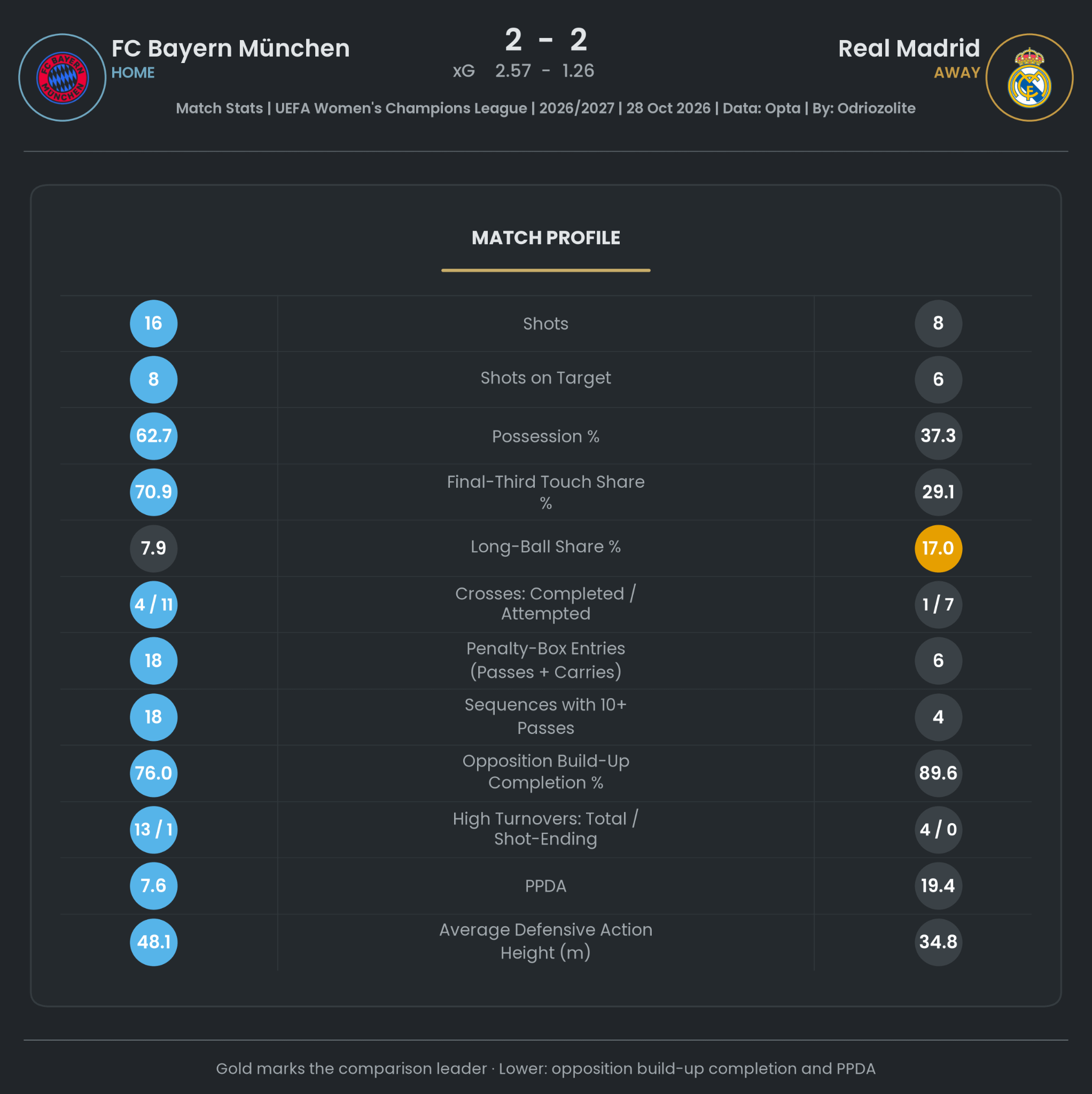
Scoring two early goals from their only two shots on target in the first half took away Madrid’s incentive to attack further. They only managed five shots after scoring their second goal of the game. The Spanish side dropped off into a compact 4-5-1 mid block with no pressure in the first phase of buildup. They were happy to concede possession, defend deep and hit Bayern in transition.
Apart from their goals, Madrid only managed to have one other shot in the first half. The German champions directed the proceedings and found gaps in Madrid’s passive structure quite easily but lacked the cutting edge in front of goal.
Let’s understand how the game panned out and which player stood out above the rest.

