The real impact of the 'Daly Brightness' podcast thumbnail
Podcast's clumsy decision to use Lauren James' sending off as episode promotion leaves familiar feeling for many fans
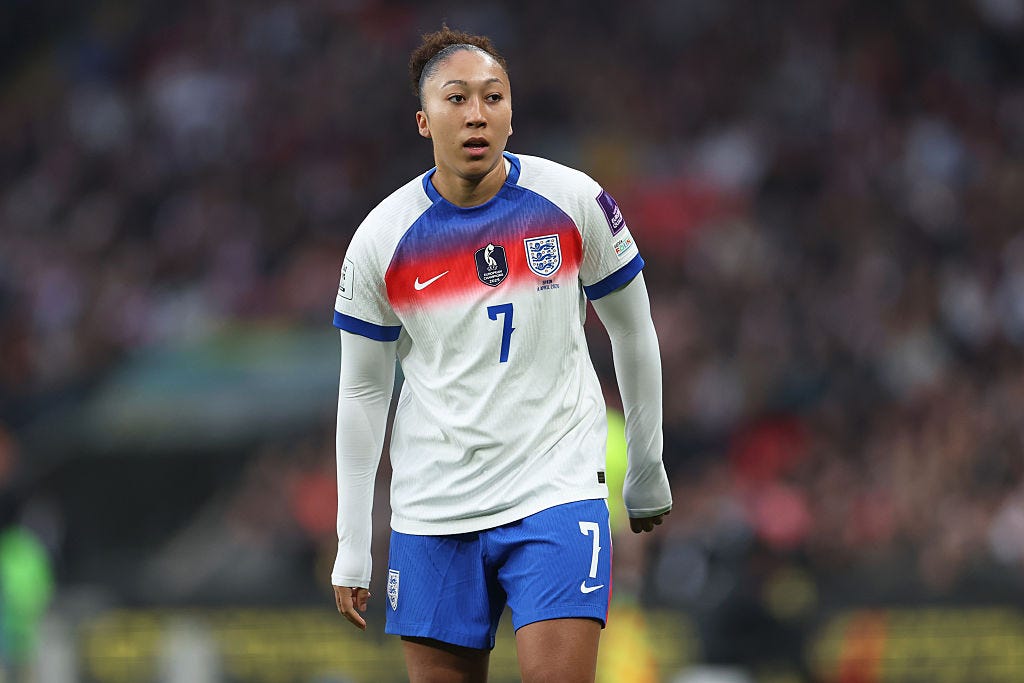
Last week, women’s football podcast Daly Brightness, hosted by Chelsea’s Millie Bright and Aston Villa’s Rachel Daly, was forced to issue an apology after posting an episode with a thumbnail image of Bright’s Chelsea teammate Lauren James stepping on an opponent during the 2023 Women’s World Cup.
The episode in question - titled ‘The Nigeria game broke us’ - featured Bright and Daly talking about some of the biggest matches in their career. James’ red card at the World Cup featured in around 30 seconds of the discussion. Both Bright and Daly referenced the game as being “one of the hardest games” of their career.
James was sent off for the incident on Michelle Alozie, which happened in England’s round of 16 clash against Nigeria. The Lionesses went on to win the game in a dramatic penalty shootout, but James was targeted with racist abuse after the game, something she has experienced throughout her career.
After many fans noted on social media the pointed decision to include the image of James as the podcast promotion image, Daly Brightness, which is owned by Gary Linekar’s media company GoalHanger, changed the thumbnail and issued an apology.
The statement said: “The Daly Brightness production team would like to apologise for the image used on one of today’s episode thumbnails.
“We always aim to consider the full context of the content we share, but we missed the mark on this occasion and are sorry for the upset caused.
“This was a production decision, and not something Millie and Rachel had any control over. We have removed the thumbnail from all platforms. Thank you for watching and listening.”
The problem with the Daly Brightness thumbnail was not that it was clumsy. It was that it was familiar for many women of colour.
The image was an odd editorial choice on its own terms, because the image had little to do with the bulk of the episode content. But, it also carried a weight that should have been obvious to anyone working in women’s football media. The photo depicts a moment that led to a wave of racist abuse towards James. Yet the podcast reused it as a chance for clicks.
That is what made the backlash to the podcast so immediate. It was from one of the most inflammatory moments attached to James’ public image, and one that had already led to extensive racist abuse.
When speaking to media after Euro 2025, England defender Jess Carter, who was the victim of racist abuse during the tournament, spoke of her fear around Lauren James taking a penalty during England’s quarter-final victory over Sweden, and the possible racist abuse that would follow if she missed.
She told ITV News in August: “It’s horrible to say but it’s almost like a sigh of relief when other players that weren’t black missed a penalty, because the racism that would have come with LJ [Lauren James] being the only one that missed would have been astronomical.
“It’s not because we want them to fail - it’s about knowing how it’s going to be for us [black England players] if we miss.”
James’ case matters because Black women in sport are so often understood through narratives of aggression. The recurrence of an image depicting a disciplinary moment as an illustration of a player of James’ calibre codes Black women as threatening before they are gifted.
James has experienced racist abuse throughout her career. When playing for Manchester United at just 19, to then becoming an even bigger star with Chelsea, its followed her her whole career journey.
Ahead of Euro 2025, the England team spoke about avoiding social media, with James herself saying that the online abuse "never really stops”. James and Carter aren’t alone, in the past year, Manchester’s Khadija “Bunny” Shaw has received online racist abuse as has Tottenham’s Jessica Naz, which led Spurs to abandon taking the knee before WSL games.
The racism Lauren James has faced is not simply online abuse. It also operates through media framing. For Chelsea manager Emma Hayes has explicitly described James’ treatment as racial profiling by both fans and the media. What is at stake, then, is not only what is said about James, but how the media is making her visible.
The media landscape rarely treats racialised women’s sports stars with complexity. They are scrutinised when they do not fit expectations, yet overlooked when it comes to celebration and narrative depth. They are frequently positioned as outsiders to the imagined default of women’s sport and read through assumptions about culture or belonging before simply being athletes.
Last year, a report by the charity Women in Sport labelled the media as a limit to Black girls accessing sports, arguing that the Eurocentric images projected of sports players are fundamentally damaging to girls of colour. If all we see of Black women in the WSL and beyond are stories of their abuse and discrimination, we risk a deeply negative perception of access to football for girls of colour, particularly Black girls.
The treatment of Lauren James cannot be dissolved into a generic story of ‘women of colour in sport’ if that phrase obscures the particular workings of anti-Blackness within the WSL. Black female footballers are so often the target of racial violence and discrimination, especially where the language of aggression and physicality is concerned.
Racial abuse is becoming commonplace in a game deemed progressive and welcoming. Media platforms need to challenge the narratives, not reproduce them for engagement. It feels so obvious to say, but white women in women’s football have a duty to create a positive space for women of colour. The women’s game is on the back foot compared to the men’s, but it is in an early enough position of growth to rectify the same institutional errors.


