


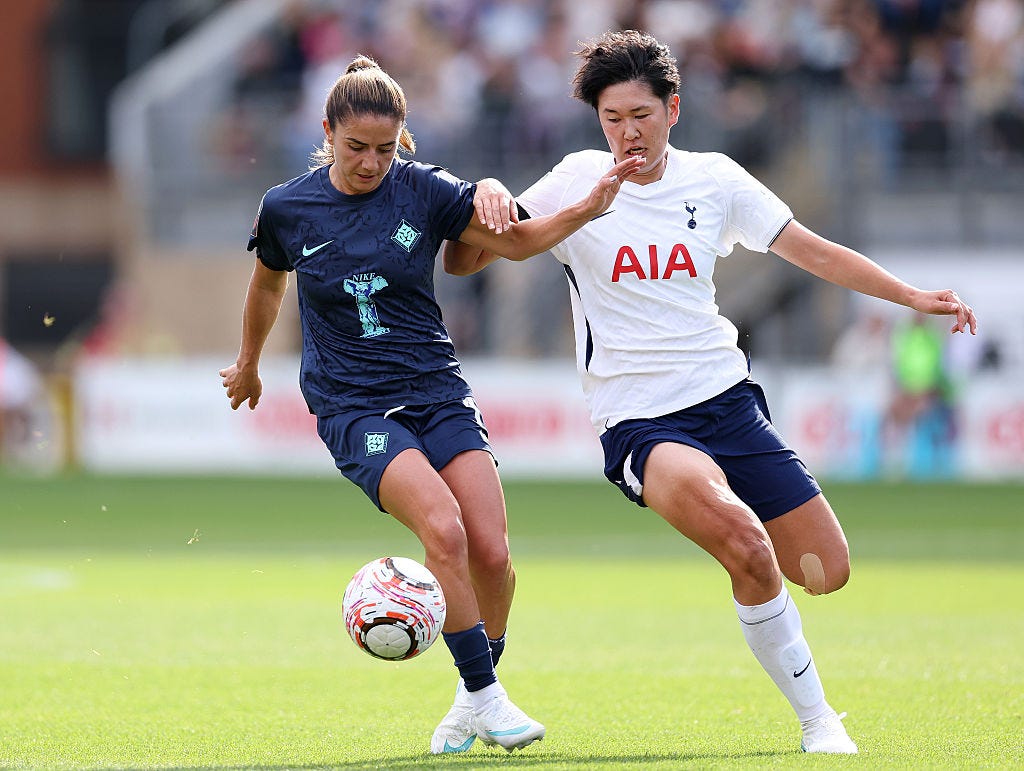
After five weeks of the WSL season and one head-to-head, London City Lionesses and Tottenham Hotspur sit third and fourth, respectively. London City are on 12 points, and Spurs are on 10.
Sure, the recent 6-1 win for London City made the difference between the two sides look enormous - and on the day it probably was - but both still have a strong case for challenging the established top four this season.
Tottenham want to overwhelm teams
Tottenham’s attacking structure is built around getting as many players as possible involved around the opposition box; they generally build in a 4-2-3-1, with both fullbacks encouraged to push forward.
Their double pivot lacks a proper holding midfielder. Drew Spence tends to provide a little more security, with Signe Gaupset as the more mobile presence, but in the end the natural instincts of both players bring them both forward more often than not.
On the left, Kirsty Hanson provides width, while the underlapping movement of the fullback and of the attacking midfielder can create the rotations that allow Spurs to get around the opposition. On the right, Olivia Holdt naturally moves into the inside channel rather than behaving like a traditional winger, almost acting like an added No.10.
Cathinka Tandberg provides a more traditional option up front. This means the depth is often attacked by the players around her rather than by the striker herself.
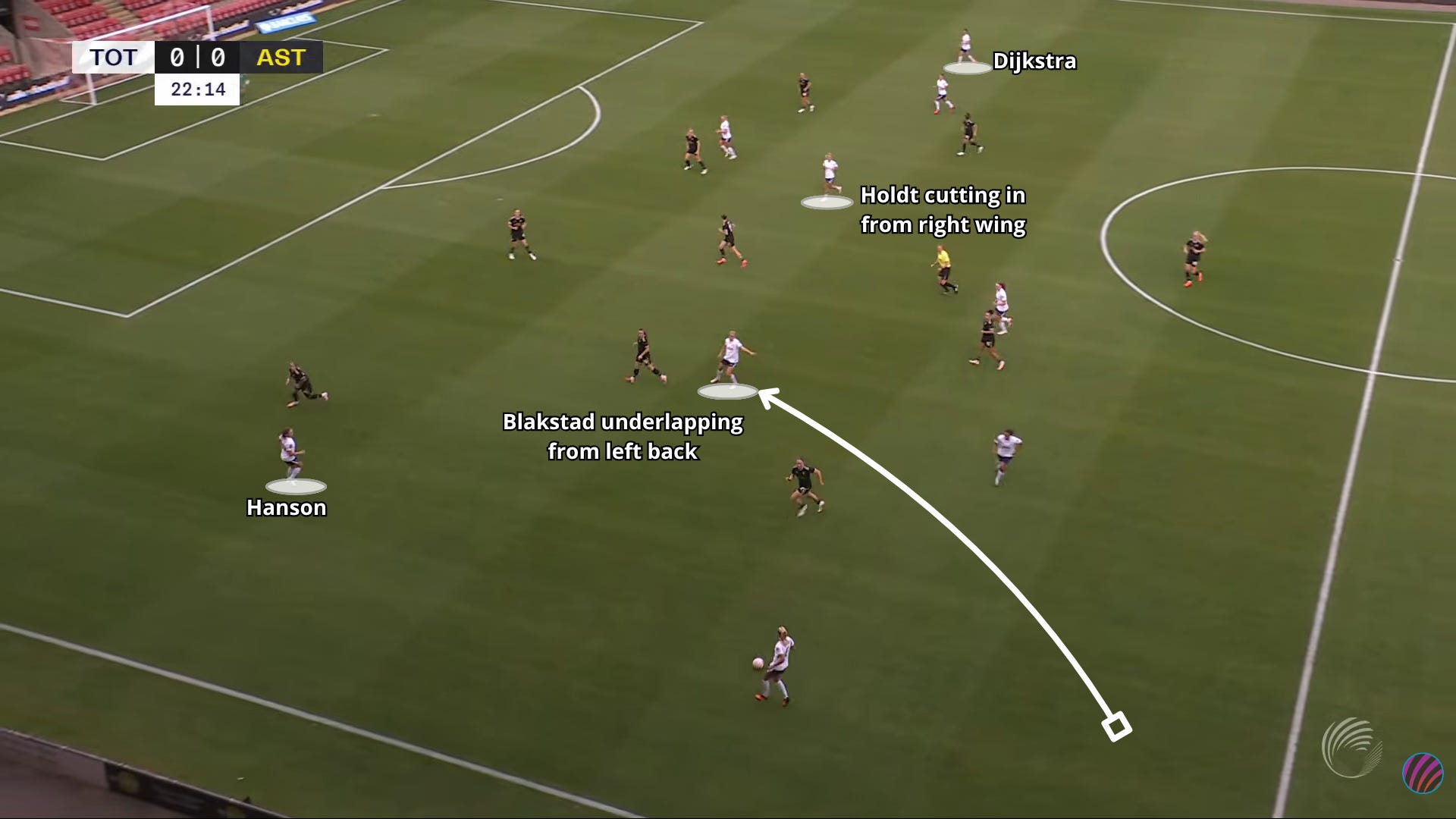
But when so many players are committed forward, losing the ball in the wrong area can quickly turn a potential chance into a defensive problem. This high-risk, high-reward philosophy is further emphasised by their aggressive pressing. Spurs can push at least five players forward, while the fullbacks and centre-backs are willing to step out when forwards receive the ball to their feet to keep the opposition pinned back.

