


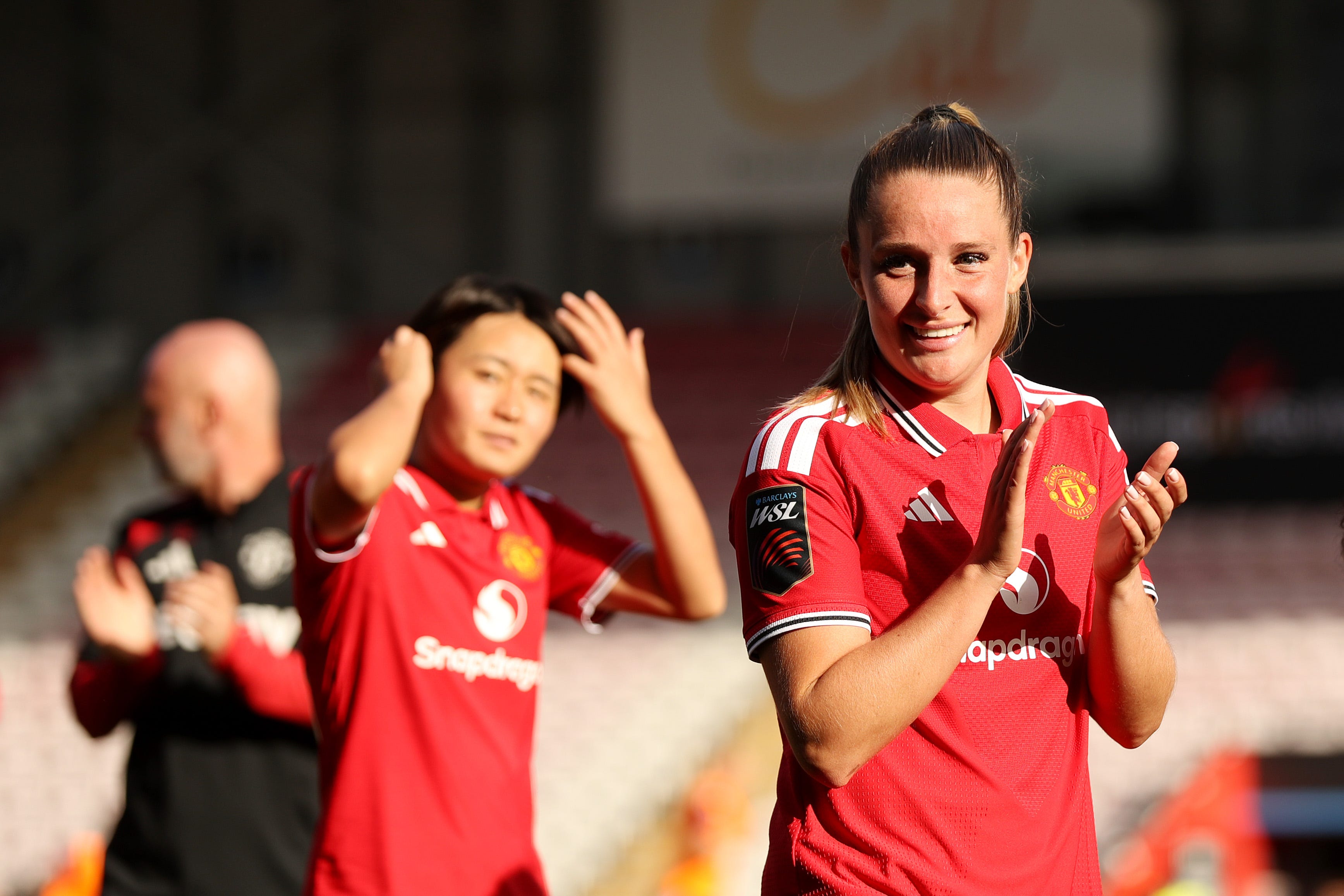
Manchester United Women made it four wins in a row after a 1-0 victory over Liverpool in the Women’s Super League on Saturday.
It was the first clean sheet of the season for Eva Olid too, with a single goal from Julia Zigiotti Olme early on proving enough for the three points. It was a closely fought game, with both teams having chances to score, but it was United that came out on top this time.
Here are five things United fans can take away from the game.
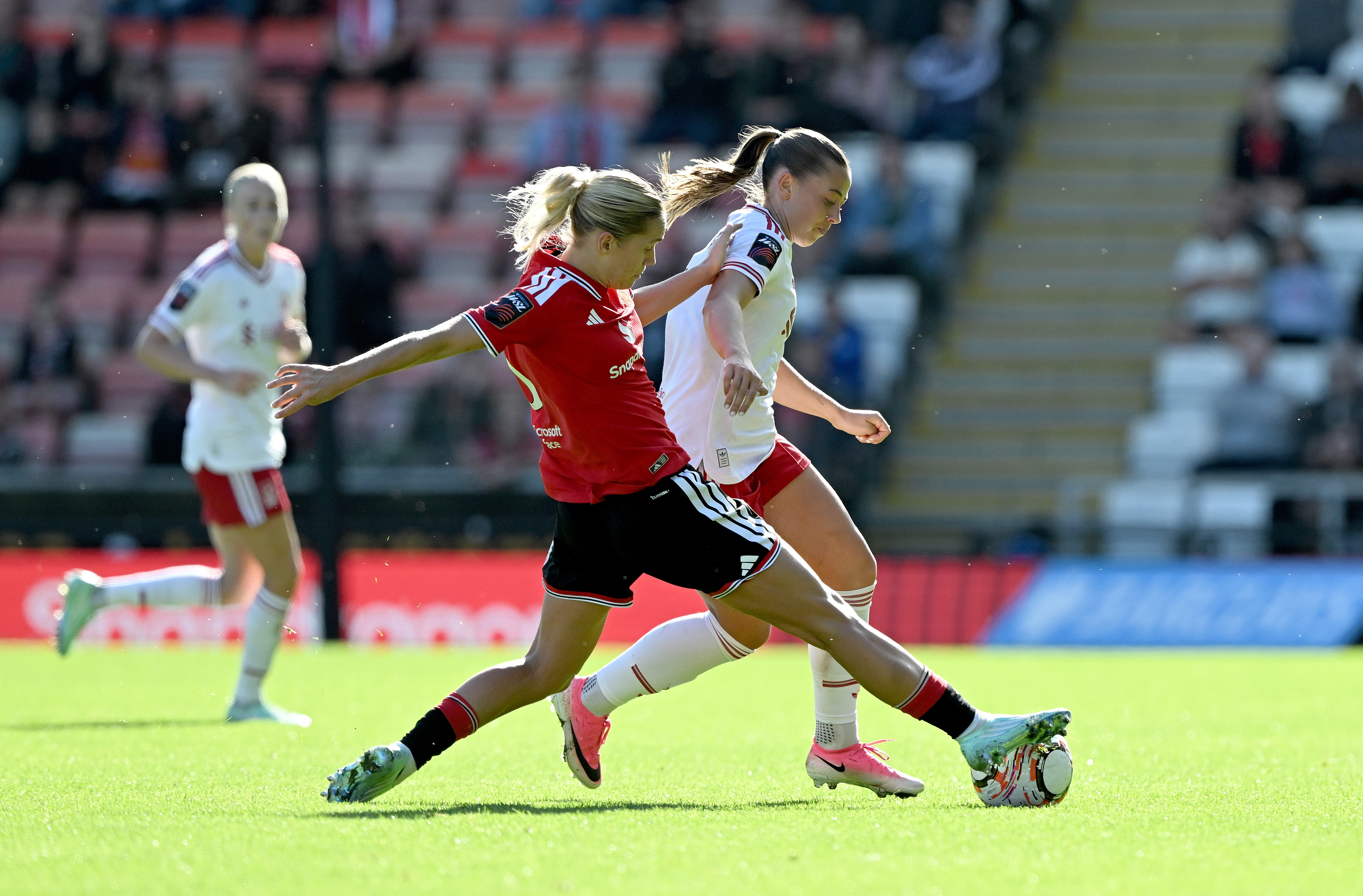
Last-ditch Lundkvist
Hanna Lundkvist has been in the starting XI following Jayde Riviere’s calf injury against London City Lionesses on opening day, and on Saturday she looked the part. Lundkvist had the most defensive contributions of any player (13), won six of 11 ground duels and was perfect in the air. Lundkvist’s defensive quality was a big factor in United keeping a clean sheet, with the full-back showing aggression in the tackle.
Lundkvist also made a crucial goal-saving intervention in the second half, tracking Beata Olsson’s run inside Maya Le Tissier before cutting out Alice Bergström’s low cross at the last moment. The interception also found a United player and allowed them to counter.
Her performances mean that Olid now has two excellent full-back options once Riviere recovers from injury. It’s the right kind of problem for United to have.
Tullis-Joyce to the rescue
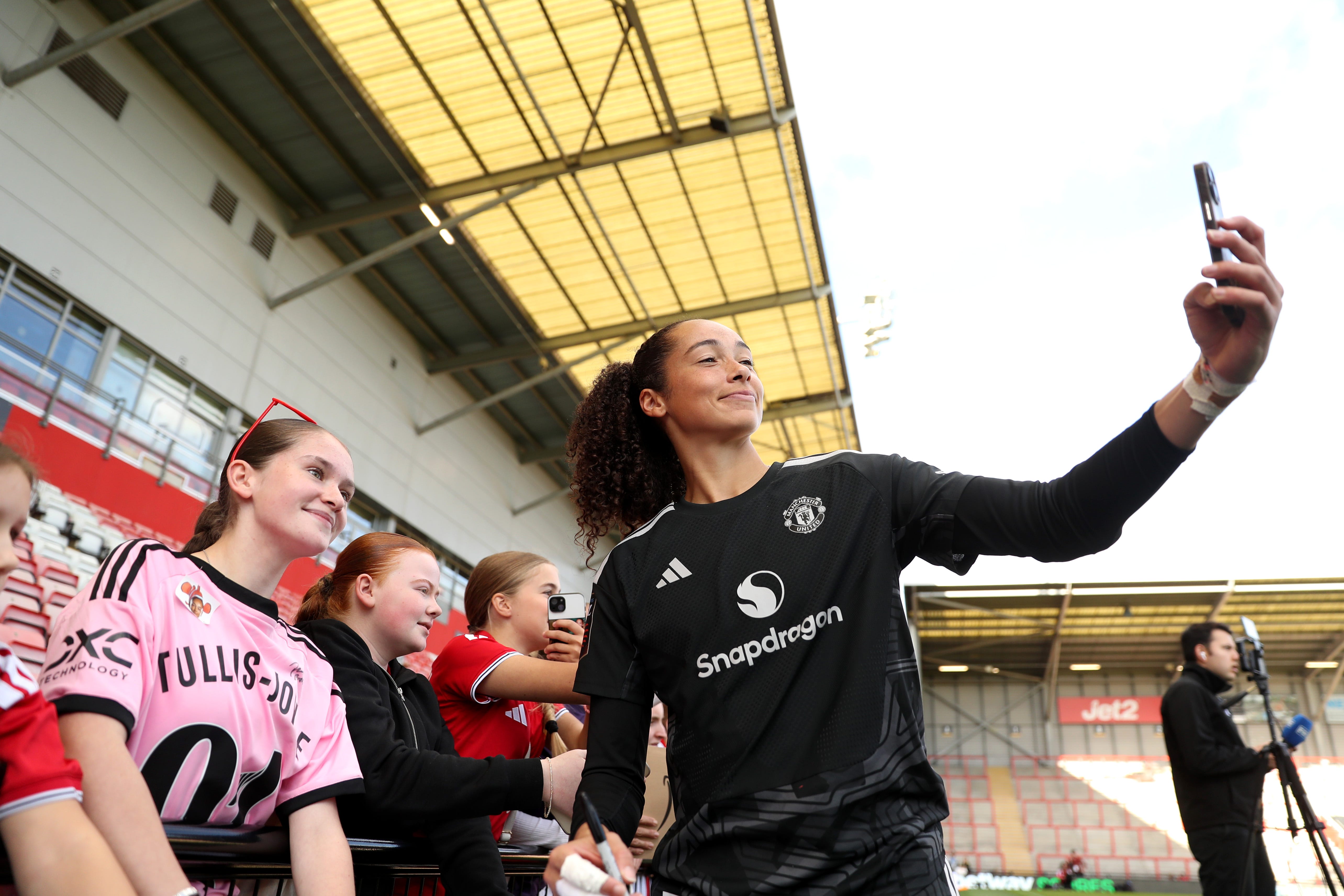
Another huge factor in the clean sheet was goalkeeper Phallon Tullis-Joyce, who, for me, produced a player-of-the-match performance. She made eight saves, setting a record for a Manchester United keeper in the WSL.
Two of those eight saves came in a brilliant double stop in the first half, denying Cornelia Kapocs before reacting quickly to keep out Olsson from the rebound and preserve United’s lead. She also commanded her area well, winning both her aerial duels in the game.
There were early question marks over Tullis-Joyce and her suitability for this United team under Olid, with a bigger emphasis on playing out from the back. While a technically skilled goalkeeper might become necessary for United’s style to flourish in the future, the most important skill a goalkeeper needs is the ability to keep the ball out of the net.
Tullis-Joyce certainly did that on Saturday and showed why she is still one of the best shot-stoppers around.
Terland ups her level
The performance of Elisabeth Terland went under the radar against Liverpool. She may not have scored herself, but her overall game looked a step up from previous performances this season.
She led the press at the right times, knowing when to trigger and when it was better to hold the line. The United goal came from Terland initially pressing the full-back on the ball and before flustering Liverpool goalkeeper Keating. It forced an error: a pass straight to Zigiotti Olme in the space behind Terland.
Terland’s overall hold-up play was also much stronger, as she was able to hold the ball and lay it off to the runners from midfield.
Olid told The Cutback: “They came to press high, the idea was she would be moving between the lines to try to find that second ball and from there we could attack, and I think especially in the first half that worked really well.”
Despite not getting her goal, it was a much more complete centre-forward performance from Terland and it looked to me like the team benefitted from it.
Final-third issues
An area still to improve under Olid is United’s composure in the final third. United had slightly more possession than Liverpool throughout the game (51-49%), but had fewer touches in the opposition box (15 to Liverpool’s 23).
The lack of composure was also shown in the shot count, with Liverpool registering eight shots on target from 15 attempts, compared with United’s three on target from nine.
This isn’t a new problem. Looking back over the last 12-18 months, United have at times lacked real composure and structure in front of goal and don’t have the individual quality to bail them out. Getting to the final third looks organised and structured, but that structure seems to disappear once United get there, with passes missing the target and rushed shots either missing the goal or lacking power.
The more technical forwards in Jess Park and Ella Toone are yet to find their form and it’s starting to show when United’s attacks break down.
In the post-match press conference, Olid said: “Now it’s about scoring more goals, because we can do it. We arrive a lot in the final third and I say to them, be more calm and find the free player, find the space to then finish successfully.”
Regaining their resilience
The overall performance felt like the United of the last few years: hard to break down, with a goalkeeper ready to make the big stops when an opponent does get beyond the final defensive line.
Olid said after the game: “Yeah, we need to keep that [defensive structure] because they were doing it so well in the past.”
United really had to dig in towards the end of the game, when they had no real outlet. The defenders had to cover each other, helped by midfielders and forwards who all contributed defensively. A good defence provides the foundations of a winning team, and the new attacking style can be implemented within that over time.
Olid has been adaptable enough to go back to more of what these players are best at, which is being hard to beat, and that has shown in the results. Ultimately, the run has lifted some of the early-season pressure heading into the international break.
