WAFCON 2026: Michaely Bihina’s penalty heroics take Cameroon past Morocco to set up unthinkable final
One of the most unpredictable WAFCONs of all time stayed true to form in the semi-finals, as Cameroon knocked out favourites Morocco on penalties.

Moulay El Hassan Stadium, Rabat
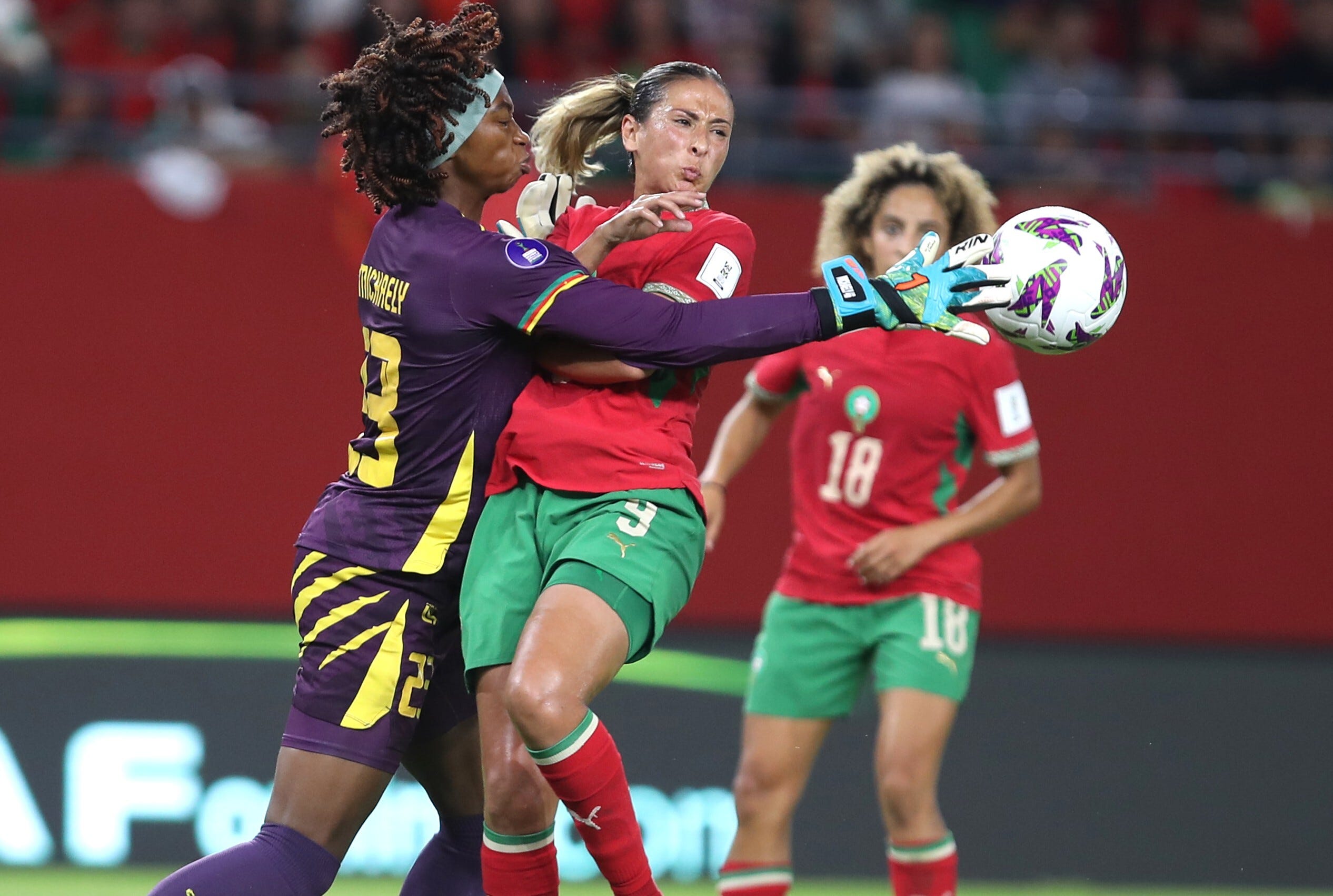
Michaely Bihina wrote her name in Cameroon’s footballing folklore on Wednesday night, saving four penalties across extra time and the shoot-out to help her country reach their first WAFCON final in 10 years.
Cameroon defeated hosts Morocco 3-1 on penalties after a goalless 120 minutes in Rabat, crushing the Atlas Lionesses’ dreams of reaching a third consecutive WAFCON final on home soil.
Bihina saved a 118th-minute penalty from Fatima Tagnaout to keep her side in the tournament, before keeping out spot kicks from Kenza Chapelle, Maryame Atiq and Sakina Ouzraoui to prolong Cameroon’s hopes of a first-ever WAFCON title.
Prior to the match, both camps had claimed that the pressure would be on the other. Cameroon manager Valentine Nguele said the hosts had the greater weight of expectation on their shoulders having made each of the last two finals, and it showed during the shoot-out.
Morocco had the better of a poor 120 minutes, dominating possession in the early going and applying pressure with the crowd’s support. They nearly took the lead within 15 minutes when Sanaâ Mssoudy’s header struck the post.
That would be the closest either side came to a goal in open play. Chances were at a premium, with the shot count reading 4-1 as the teams headed in goalless at half-time.
Cameroon’s half-time team talk proved to be fruitful as they looked better on the other side of the break, helped by the substitution of captain Colette Ndzana, who was brought off after a torrid 45 minutes at left-back.
Nguele’s side also had a more defined attacking plan, helping spark the game into life towards the end of 90 minutes. The visitors grew in stature toward the end of the second half, while Morocco’s forwards looked more threatening as the action bounced from one end to the other. Prior to her penalty miss, Tagnaout looked especially lively on the counter.
There were chances for both teams as late as stoppage time, but the scoreline remained unchanged. Sakina Ouzraoui would have been most disappointed with that as she stormed into the box and looked to have a clear shot from close range after sitting a couple of defenders down, but got her feet tangled up and failed to fire.
Morocco re-established their control in extra time and their endeavour was rewarded when Ouzraoui won a controversial penalty. Cameroon centre-back Maéva Nyadjou swung her arm back while attempting to retain possession, catching Ouzraoui in the mouth.
Tagnaout stepped up to take it, but Bihina – the hero of their quarter-final win – denied her.
The near-20,000 crowd ramped up the noise for the shoot-out as they cheered each of the Moroccan takers’ names and broke out in deafening whistles when an opponent stepped up. Bihina, unfazed, rose to the occasion.
The Benfica goalkeeper made three saves in a row, sending a smattering of Cameroonian fans into delirious celebration.
What defined Morocco’s match?
Threat on the wings.
Almost everything good that Morocco did in the first half came down their right wing. Ghizlane Chebbak often drifted across to create overloads, Hanane Aït El Haj linked up nicely, and Ouzraoui showed clever movement to consistently leave her marker in the dust. The three of them combined to send some dangerous balls into the box as well, but the final touch didn’t quite come.
Having had that avenue closed down by an improved Cameroonian defence in the second half, Morocco took some time to recalibrate. Ultimately, it took the introduction of Tagnaout on the left for Morocco to start causing real problems again.
In extra time, things were refreshed once more with Ouzraoui moving to the left, eventually winning a penalty simply by being in the wrong (or right) place at the right time.
Tagnaout’s inability to convert from the spot had echoes of Morocco’s late spot-kick against Senegal in last year’s men’s AFCON. Thankfully, Tagnaout did not attempt a panenka.
What defined Cameroon’s match?
A struggle to retain the ball.
Nerves surely played a part in this Cameroonian performance, as their shaky start continued throughout the first half. The defensive strategy of aimlessly booting the ball long under any amount of pressure destroyed any hopes of retaining possession, allowing Morocco to build spells of pressure.
Cameroon’s passing looked a lot better in the second half, especially in midfield. Monique Ngock was exceptional, building on her rock-solid defending with reliable play on the ball. Fellow midfielder Achta Toko also did her part, while substitute Fatima Komé got into some good positions but didn’t release her final ball well enough.
Towards the end of the match, Cameroon started to get a little too stretched in possession and lost their defensive structure, allowing Morocco to counter. Fatigue likely contributed to their inability to move the ball well in extra time, forcing them to cling on for penalties.
Something you might have missed
This was Cameroon’s 11th semi-final at WAFCON — the best record of any nation bar Nigeria, whom Cameroon defeated in the quarter-finals of this year’s tournament.
The Indomitable Lionesses will now move on to their fourth final and first in a decade, hoping to clinch their maiden WAFCON title. It would be an incredible story for a side that initially failed to qualify for the tournament before receiving an invitation.
What next?
Morocco will be in action in the third-place play-off on Saturday, but Cameroon’s return to the Moulay El Hassan Stadium on Sunday night will be the big one as they take on Malawi to crown a brand-new WAFCON champion.


