WAFCON 2026: Morocco stave off South Africa’s challenge to keep home title hopes alive
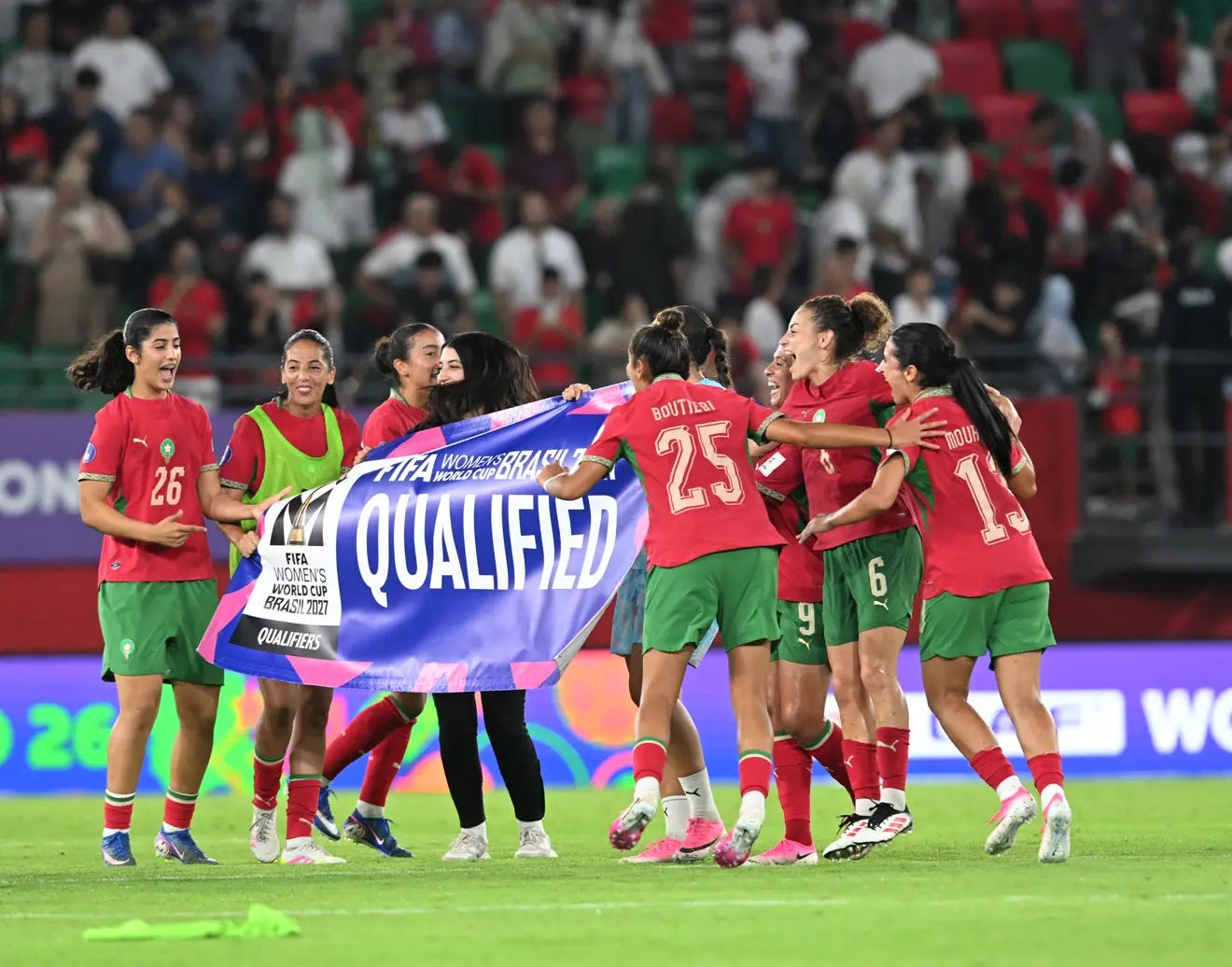
Morocco secured their spot at the 2027 World Cup with a 2-1 win over 2022 champions South Africa.

Moulay El Hassan Stadium, Rabat
Hosts Morocco secured their place in the WAFCON semi-finals and with it a spot at the 2027 Women’s World Cup after defeating South Africa 2-1 in Rabat on Saturday night.
A near-capacity crowd greeted the players as Morocco and South Africa took to the field for the second quarter-final at WAFCON 2026. A repeat of the 2022 final, this blockbuster matchup came earlier than expected due to South Africa’s near-disastrous group stage campaign.
Banyana Banyana found themselves dead last with just one point from two games, having suffered a shock defeat to Tanzania before barely staying in the competition with a dramatic late comeback against Côte d’Ivoire. A win over Burkina Faso alone was not enough to ensure progression, but a favourable result in the other game took Desiree Ellis’ side into the last eight, albeit in second place.
As they reacquainted themselves with the typically raucous and antagonising Moroccan crowd that they had mastered just four years ago, Banyana Banyana seemed to step up their game. They went toe-to-toe with the hosts throughout, even enjoying some periods of front-footedness.
Chances of any kind were at a real premium, though. Morocco opened the scoring in the 31st minute with their second attempt of the match, and the fifth altogether. A well-worked passing move earned Hanane Aït El Haj time and space to whip in one of her trademark early deliveries. Sakina Ouzraoui applied a deft finish at the end of it, angling her foot in a way that looped the ball over Kaylin Swart and into the back of the net.
The decisive moment came just a couple of minutes into the second period. Winger Noxolo Cesane brought down Ghizlane Chebbak in the box with a silly challenge, gifting Morocco a golden opportunity to double their lead. Yasmin Mrabet had had two spot-kick attempts saved in the last group game, so she left the responsibility to Aït El Haj, who converted with conviction.
The goal came at a significant cost for Morocco, as their captain had to be stretchered off just a few minutes later after attempting to shake off what looked to be an ankle injury. That perhaps shook the team up, as they took their foot off the pedal and allowed South Africa to dictate proceedings.
Banyana Banyana took advantage and halved the deficit in the 67th minute. Striker Thembi Kgatlana made yet another run in behind before applying an ice-cold finish to Karabo Dhlamini‘s through ball. She was given offside on the field, but an excruciatingly long VAR check confirmed the goal.
It was all South Africa thereafter as they very nearly equalised immediately, and kept pushing anyway. Morocco showed their nous from the 74th minute onwards when goalkeeper Khadija Er-Rmichi called the medics on for what didn’t seem much of a serious injury, causing a vital break in play that allowed her side to regroup.
The Atlas Lionesses kept the game as choppy as they could thereafter, defending deep but also maintaining a bit of a threat on the break. They frustrated the South Africans, who couldn’t create another chance of note and had to accept defeat.
What defined Morocco’s match?
Fluidity in attack.
The Atlas Lionesses made a big call pre-match, dropping striker Ibtissam Jraïdi out of the XI for the first time this tournament despite her being the only squad member with multiple goals. Fatima Tagnaout took her place but went out to play on the wing, meaning Sanaâ Mssoudy came infield to form a loose front two alongside Chebbak.
The dynamic movement of the front four caused problems for South Africa’s back line, who had to take assistance from defensive midfielder Refiloe Jane in tracking Morocco’s two central attackers. Even so, they were pulled out of shape at times, most notably for the opening goal.
However, after Chebbak went off, the Atlas Lionesses seemed to lose most of their attacking threat. Of course, the nature of her departure might have had an impact, but they were eventually forced to revert to the standard formula by sending Jraïdi on.
What defined South Africa’s match?
Commitment to duels.
South Africa struggled to properly impose themselves when they were favourites in the group stage, but they faced no such difficulties coming in as underdogs here.
Ellis set her side up to adopt a player-oriented approach out of possession, in which winning individual battles was key. Her charges stepped up with a total tally of 18 tackles won at an impressively high 77.8% success rate. They also won the slight majority of duels, with the full-backs doing a particularly good job whenever they got close to the Moroccan wingers.
However, this tendency to be intense in the challenge perhaps backfired somewhat in the second half. For one, South Africa gave a needless penalty away. More importantly, though, they failed to build any sustained momentum in their search for an equaliser as they kept giving away cheap fouls. This allowed Morocco to constantly slow the game down and see out their win.
Something you might have missed
Thembi Kgatlana’s goal ended her eight-year WAFCON knockout drought.
Although the 30-year-old striker is arguably the very best player in this South Africa squad, she hasn’t had a headline moment in the continent’s premier tournament for a long time. After winning the Golden Boot at WAFCON 2018, she was ruled out due to injury in her side’s title-winning 2022 campaign. She then missed the last edition for personal reasons, so this was her first WAFCON knockout appearance in eight years.
Of course, the Tigres striker did star at a major international tournament, scoring two memorable goals to take her side further than they had ever been before in the 2023 Women’s World Cup. She will hope to do the same in Brazil next year, but there is still work to be done to ensure South Africa qualify.
What next?
Morocco will remain in Rabat and keep a keen eye on Sunday’s early kick-off between Cameroon and Nigeria, as that will inform them of their semi-final opponent for the Wednesday night clash.
South Africa, meanwhile, will have to swiftly put the disappointment of ending their run of nine consecutive WAFCON semi-final appearances behind them as they head to Casablanca. Banyana Banyana will be back in action on Thursday, when they will play for a World Cup inter-confederation play-off spot against the loser of the aforementioned quarter-final.


