


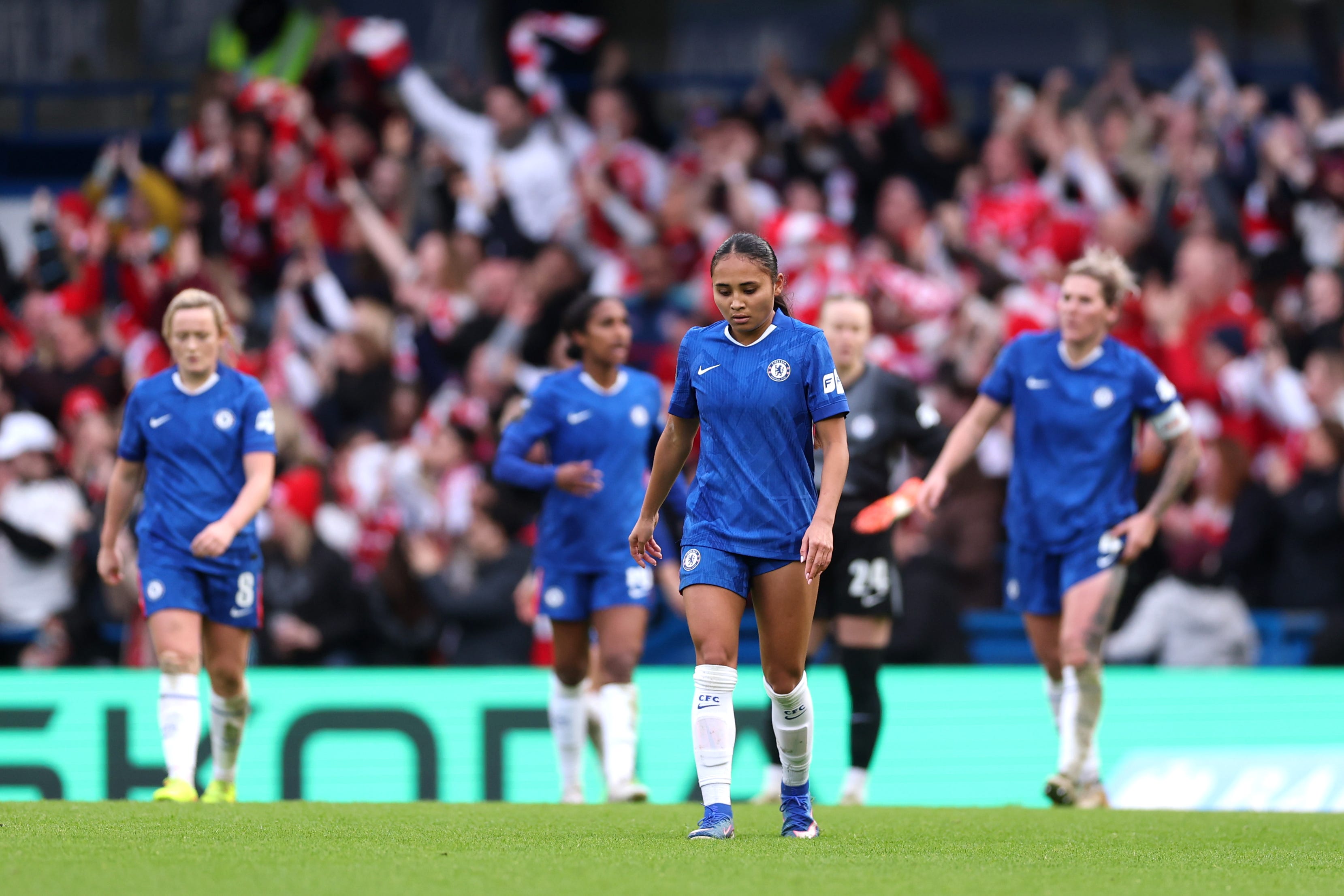
Arsenal secured a shock 2-0 victory over Chelsea in the WSL on Saturday.
It was the Gunners’ first league win at Chelsea since 2018 and their first WSL victory against the league holders since December 2023. It had been a long time coming, such is Chelsea’s recent dominance in this fixture.
Recent momentum heading into this game appeared to favour Chelsea, who had been buoyed by a confidence-boosting mid-week cup victory over Manchester City. While Arsenal came off a damaging defeat to Manchester United amid injuries, suspensions, and a congested schedule.
Yet the opening stages of this game defied expectations: Arsenal started aggressively and controlled the tempo early on. Chelsea only regained authority after the first fifteen minutes, at which point the match settled into a contest they were expected, and effectively required, to dominate. What followed, however, fell well short of those expectations.
Chelsea’s intentions
Chelsea’s initial setup hinted at a departure from recent outings. Rather than sticking with the 3-5-2 used in the Subway Cup semi-final victory over Manchester City, Sonia Bompastor opted for a 3-4-1-2, with Guro Reiten back in the starting lineup as a lone No.10 behind the Alyssa Thompson-Sam Kerr partnership up top. The approach appeared to be less about dominating possession and more about leaving the ball to Arsenal while looking to attack quickly and directly once it was recovered. The first half was defined by an early and deliberate search for verticality, either through Thompson’s runs in behind or Kerr’s ability to play with her back to goal and link play via layoffs and flick-ons.
In the build-up, Chelsea aimed to progress quickly, often using the wing-backs as primary outlets. Combinations between centre-backs, wing-backs, and the near-side forward were a recurring pattern, with one striker drifting wide and Reiten arriving late into the box as an added runner rather than acting as a pure playmaker. This setup also allowed one of the double pivot, usually Wieke Kaptein rather than Erin Cuthbert, to step higher and support attacks while the other remained more conservative.
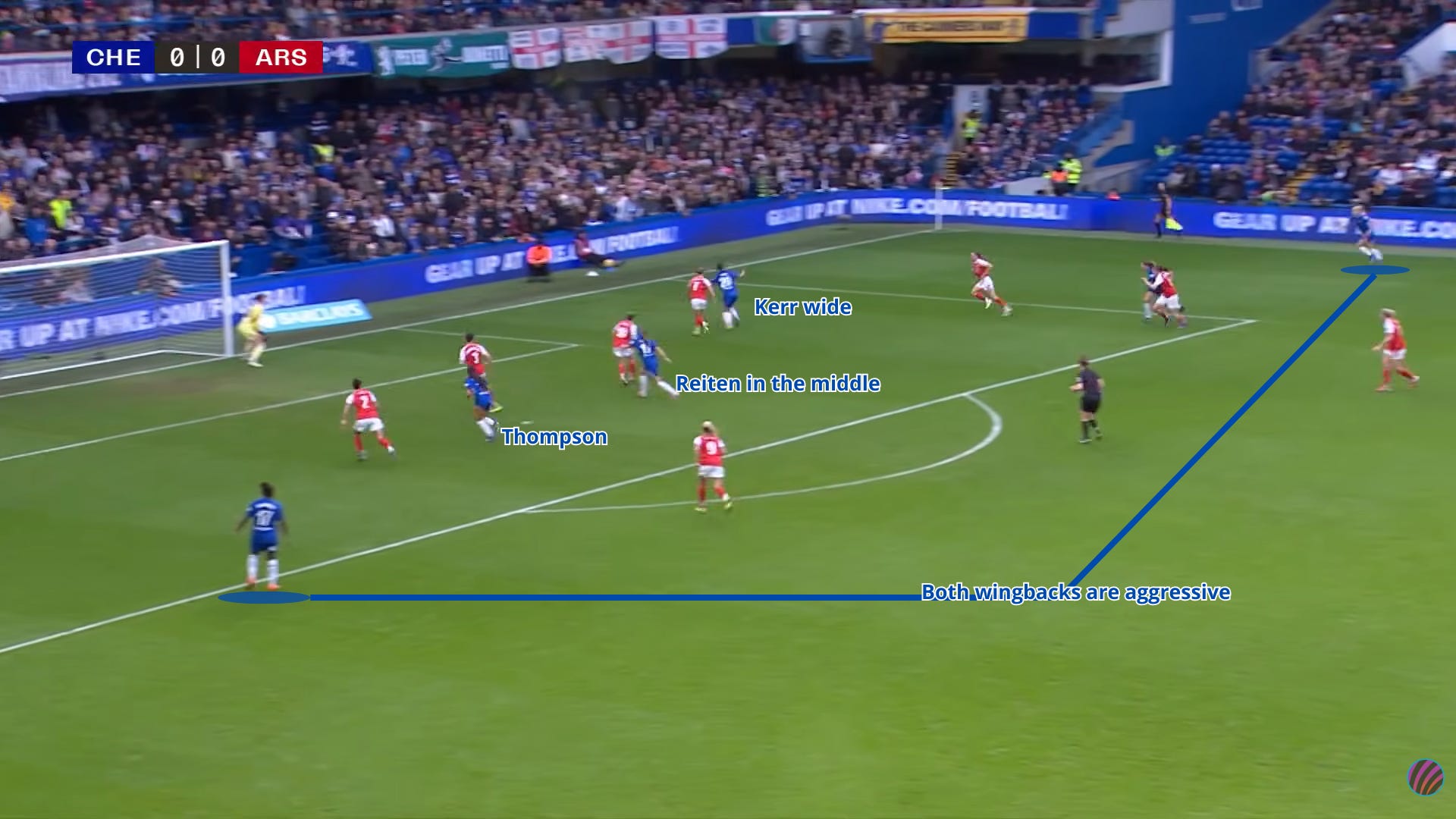
The team’s attacking focus leaned heavily on wide deliveries. Diagonal passes from the back toward a forward were frequent, aiming to create early crossing opportunities with multiple players attacking the box. While the midfield didn’t consistently support that phase as required, the strategy generated moments of territorial pressure but rarely translated into sustained or high-quality chances from open play. Only 0.08 xG came from open play in the first half, compared with 0.60 xG from set-pieces, which remained their most reliable source of threat. By contrast, Arsenal produced 0.61 xG entirely from open play during the same period. Chelsea were competitive but largely reactive, with their attacking output dependent more on second balls and dead-ball situations than structured possession or chance creation.
