Women’s Asian Cup 2026: Australia battle past defending champions China to reach final
The Matildas secured a 2-1 win in yet another hard-fought and bruising contest
Australia are one step closer to claiming a first Asian Cup title since 2010 after beating China 2-1 in Tuesday’s semi-final in Perth.
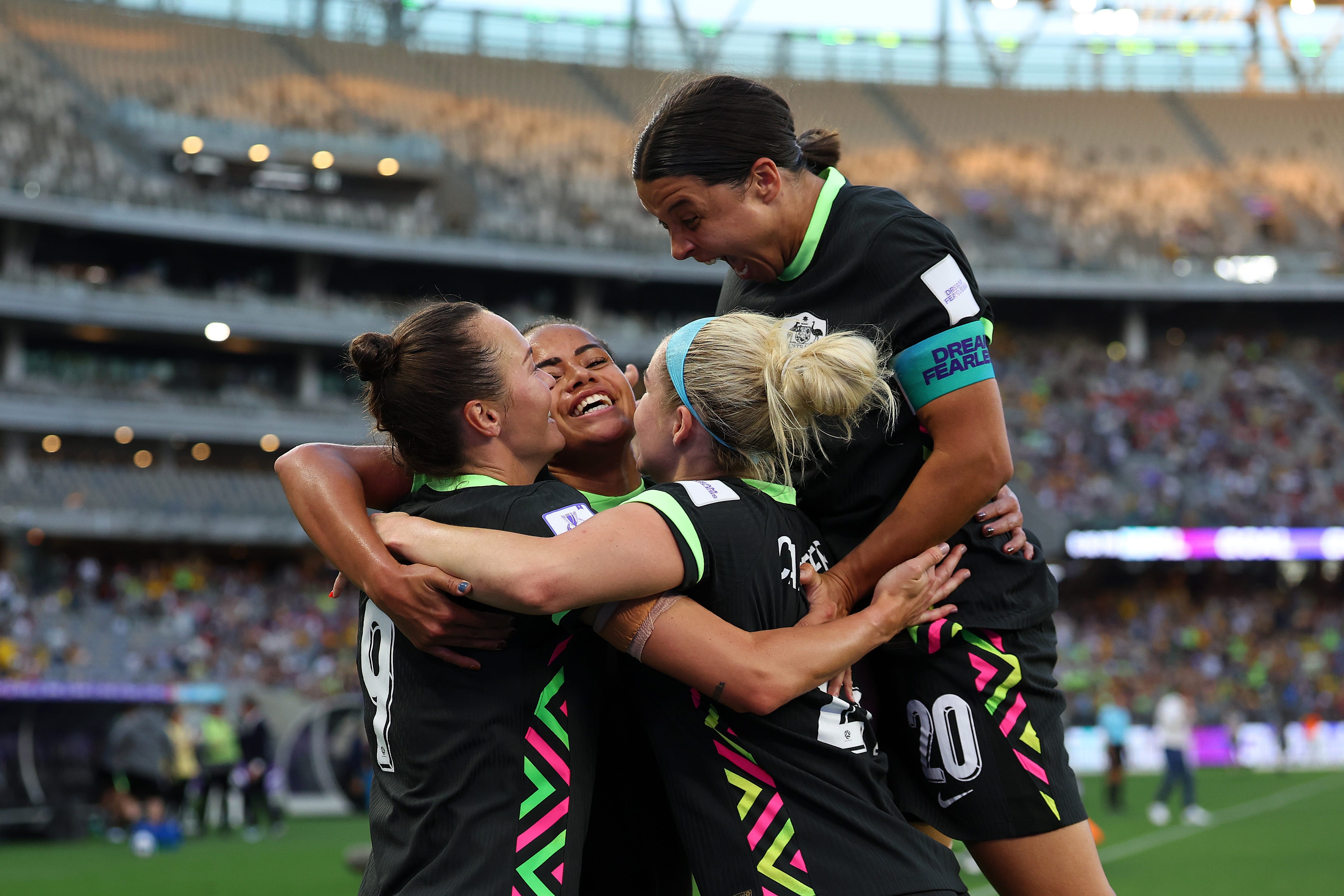
A first-half goal from Caitlin Foord and a neat finish from Sam Kerr in the 58th minute were enough to see past the defending champions, who had got back into the game thanks to a penalty from Zhang Linyan in the 26th minute.
It was an intense and end-to-end encounter, with China rolling out a high press that was able to disrupt their opponents’ build-up.
China’s tactics with the ball were simple yet effective as they looked to be very direct and use the physicality of their front two - Wurigumula and Ziqin Shao. The former looked particularly lively in both channels as she set up an early chance from the left and let fly from the right soon thereafter.
Just as they were gathering steam, Australia landed a counterpunch as the speedy Ellie Carpenter darted up the right wing and fed Mary Fowler, who flashed it across the box for Caitlin Foord to finish for the Matildas’ opener.
Less than ten minutes later, Zhang Linyan managed to break past the Australian back line and Mackenzie Arnold was forced to make a challenge in the box. The Chinese forward certainly made the most of the contact, but the decision was set once the referee pointed to the spot. The 25-year-old winger stepped up and convincingly converted to make it 1-1.
The match had quietened down by then, with China toning down their press and settling into a compact block. That enabled the hosts to retain more possession, but also meant that chances were no longer so easy to come by.
The defending champions upped the intensity again after half-time, and took another hit on the break. This time, Kerr started the move with a lovely touch before feeding it out wide to Steph Catley, who waited for her old teammate to make the run in behind before feeding her. The Chelsea striker darted through the opposition back line and managed to get to the ball ahead of Peng Shimeng in the Chinese goal. Still with a lot to do after running onto a narrow angle, Kerr made the finish look extremely easy by simply passing the ball into the net through a pinpoint opening, restoring Australia’s lead before the hour mark.
China couldn’t build up any momentum to push for a second equaliser, as the Matildas managed to retain enough possession higher up the pitch to see out the game all the way into stoppage time. A bit of rearguard action was required, but it was nothing the hosts weren’t used to after their previous matches. They held onto their one-goal lead to spark yet more scenes of celebration in Perth at full-time.
What defined China’s match?
Intensity.
China’s game plan was clear from the offset — get stuck-in out of possession, and be very direct when getting the ball. The statistics reflected this as they made 15 tackles with an 80% success rate, played 77 long balls and won the majority of the aerial duels.
The Steel Roses certainly had their moments, especially early on in the match when they managed to get into a fair few promising positions after disrupting Australia’s build-up. However, they just couldn’t quite apply the finishing touch in most cases, and ended up conceding first. Their directness in possession did help them equalise, but it also meant that they couldn’t establish much control on the game at any point.
Ultimately, the flip side to China’s approach proved costly. They conceded both goals on the counter attack, and seemed to run out of energy late in the second half as they looked unikely to find a second equaliser. The defending champions should certainly be proud of their efforts, but they will have to settle for another top four spot at this tournament.
What defined Australia’s match?
Attacking on the break.
This certainly wasn’t the ideal game from the Matildas. China’s front-footed intent tested their defence both in and out of possession, and certainly made life uncomfortable. The fact that their passing accuracy was only 76.3% at the end of the match is a testament to their opponents’ work.
To their credit, Joe Montemurro’s side quickly understood what they needed to do. They started to play forward, fast, trying various solutions and using different players as outlets to break China’s press. Carpenter’s marauding runs from right back looked the most promising early on, and it was indeed one such move that led to the opener.
The standout attacker undoubtedly was Foord. The Arsenal winger had a quiet tournament thus far, only registering one assist in four games, but stepped up big time on the big occasion. She produced an excellent first-time finish for the opener, and posed a consistent threat with her lively ball-carrying coming inside from the left flank. The 31-year-old forward also displayed great maturity and patience — besides precise passing — right before the winning goal.
Something you might have missed
Australia started with their fifth different midfield combination in as many games. This time, the main change saw Kyra Cooney-Cross get a long-awaited start, having only played six minutes all tournament in a substitute appearance against South Korea.
In fact, this was just her second appearance for club and country over the last two months. The Arsenal midfielder looked sharp as ever, though, doing a great job in a connecting role. She showcased her excellent positional intelligence and on-ball quality with clean pickups, passes and even carries through gaps.
Her partners played their parts too. Alanna Kennedy couldn’t quite add to her tally of five tournament goals, but she did well to dictate proceedings in the deeper areas. Katrina Gorry operated high, scrapping for second balls and providing a useful outlet at times with her clean touches.
Joe Montemurro and his staff certainly haven’t been left short of options in the midfield department through this tournament, but this might well be the trio they stick with if all is well ahead of the final.
What next?
Australia will play for their second Asian Cup title — and first on home soil — on Saturday at Stadium Australia in Sydney. They’ll know their opponents very soon as the second semi-final between South Korea and Japan takes place on Wednesday.
China’s title defence ends here, but they will grace the big stage at the 2027 Women’s World Cup along with all other semi-finalists.


