Women’s Asian Cup 2026: Mighty Japan stand in the way of Matildas' home dream
The two pre-tournament favourites will face off in what promises to be an epic conclusion to the 2026 Asian Cup
Stadium Australia, Sydney
After about 2,500 minutes of action across 26 games and 96 goals scored, it all comes down to this at the 2026 Asian Cup. Hosts Australia will take on Asia’s top-ranked side, Japan, in the final.
While it would be very tough to argue against the fact that these two are the AFC’s best national teams at the moment, they have only won three Asian Cup titles between them. Japan’s titles came in 2014 and 2018 — with wins over Australia in both finals — while the Matildas only triumph was in 2010 after they beat North Korea on penalties. The hosts did make the final when the tournament last came to their shores in 2006, but lost in a shoot-out against China.
This time around, there is incredibly little to separate the two sides. Japan have looked like the best team at the tournament pretty much every time they have taken to the field, but Australia have delivered in the big moments and will have home advantage.
An unexpected path for Australia
Had all gone as expected, this titanic showdown would have come in the second semi-final on Wednesday night. Japan did their part by dominating Group C and cruising past the Philippines, but Australia’s failure to top Group A pushed them to the other side of the bracket. It certainly didn’t make their draw any easier though, as they instead had to battle their way through two incredibly tough contests against North Korea and defending champions China.
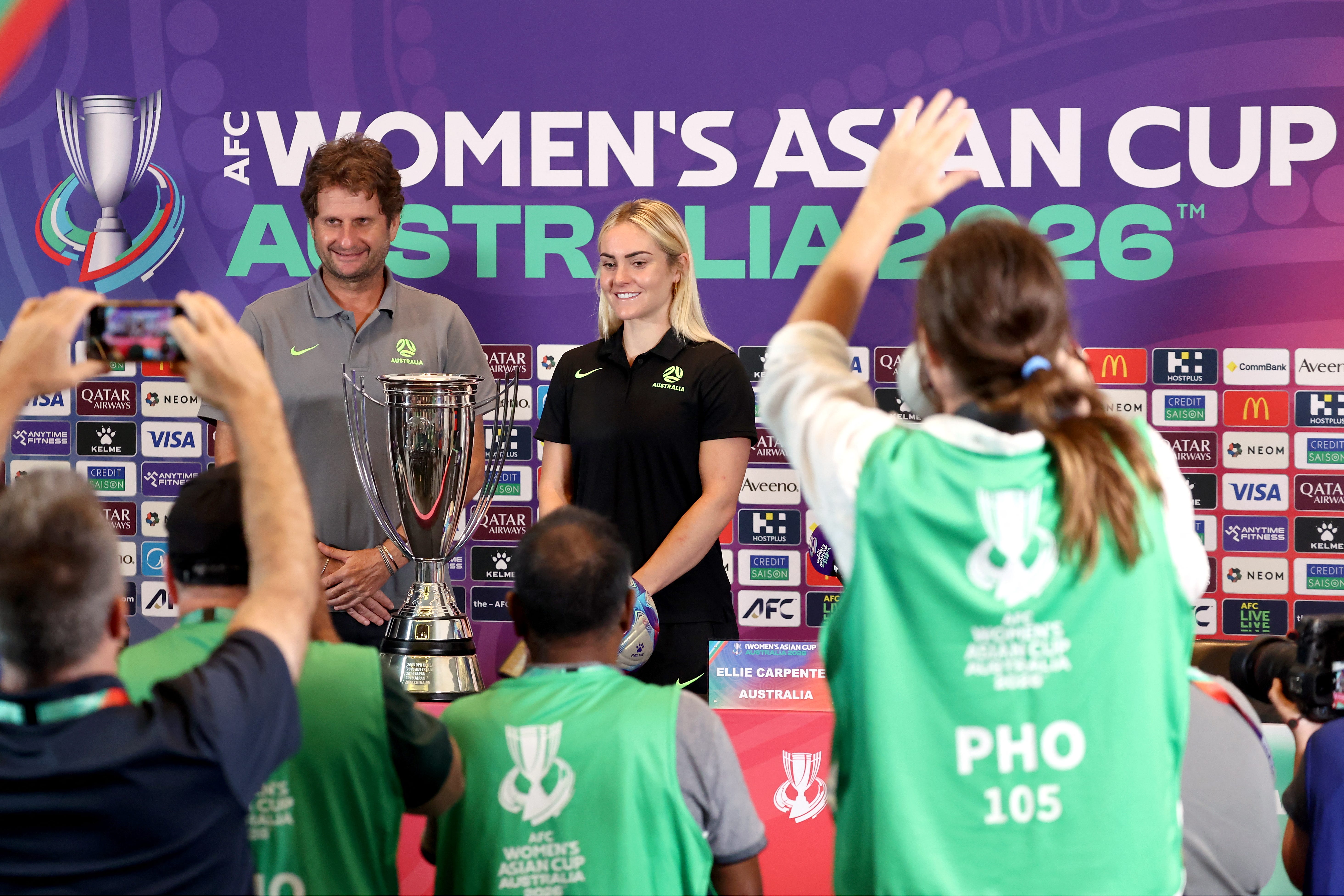
On the bright side, this tough route might have better sharpened the Matildas ahead of this contest. Right-back Ellie Carpenter seems to think so, as she said in the pre-match press conference, “that’s really set us up well for tomorrow night, we really have that momentum and that never-say-die attitude.”
Head coach Joe Montemurro echoed those thoughts, adding “we’ve found a level of adaptability, we’ve found a level of understanding that when things aren’t going the way we planned, we can change and we can find a way.”
His side definitely showed that in previous knockout matches, with Sam Kerr in particular leading the way with gritty all-round forward play to go with her undoubtedly clinical finishing in front of goal. Others have also stepped up in big moments including surprise team top-scorer Alanna Kennedy and semi-final standout Caitlin Foord, but the collective has done an equally good job of digging deep and defending when the moment has called for it.
Of course, there’s a lot more riding on this occasion as well. Carpenter pointed out that this could well be the last major tournament for some members of the squad, and quite possibly a last opportunity for this golden generation to finally win a major title. Certainly, the opportunity of playing a final at home has to be seen as a once-in-a-lifetime experience.
The Matildas do have a good deal of experience in this regard from the 2023 World Cup, with Carpenter noting, “we love the big pressure moments and we felt that, at the World Cup, that we grew into that tournament, and I think for this tournament tomorrow as well we’ll be ready for the occasion.”
Japan’s unchecked dominance
Japan are the only team to have won all their matches at the Asian Cup so far and lead the way in pretty much all the important metrics, including goals scored (28) and conceded (1). They have scored multiple goals in all games and frankly are yet to meet their match. Many hoped that South Korea would give them a stern test in the semi-final, but Japan overpowered them in a dominant 4-1 victory.
Even so, head coach Nils Nielsen shot down any suggestion that they might be the favourites. “That question about who’s the favourite in the final — it’s like asking a bee to explain to a fly why honey is better than shit”, he quipped. “We are talking about the final in a major tournament — both teams can win, they have 50% chance of winning”, he added.
On a more serious note, the former Denmark head coach shared his perspective on why his side had looked so good thus far. He cited their self-belief as a key factor before saying, “One of things that they have are the Japanese qualities, that they can find each other even if you turned out the light in the stadium.
“They can play faster than almost any team in the world.” He also credited their team spirit and collectiveness, saying, “they try to make each other better. Sometimes, many of the people watching can forget half their names because it’s not about them — it’s not about the individuals — it’s about the team.”
Nielsen concluded by alluding to their nickname, “you know what Nadeshiko is? It’s a flower — a beautiful little flower. If you see it, you just have to stop, and look at it and smell it and think, ‘Wow, what is that?’ That’s Nadeshiko — that’s Japanese women’s football, and that’s what I’m proud of.”
Familiar faces in the dugouts
The final is set to produce the most intriguing tactical battle of the tournament, which could well be made all the more complex by the personal relationship between the coaches. The two head coaches have spoken highly of each other’s work and qualities, but other familiar faces include ex-Matilda Leah Blayney, who is currently an assistant coach in the Japanese set-up.
Japan will look to keep more of the ball and match the attacking excellence they displayed against South Korea, where their combination play dazzled the opposition defence and created consistent openings. Australia, for their part, will first look to disrupt their opponents by coming out with a proactive approach, after which it will all go down to who adjusts to the situation better and faster to find the right solutions.
The Matildas have already shown their ability to defend in different shapes over the course of this tournament as well as their attacking threat on the break. So, they should back themselves to neutralise their opponents’ threat and get at their defence, which has yet to be stress tested in a pressure situation.
Either way, a fitting final is in store for viewers in the stands and on televisions around the world alike. Sydney’s Stadium Australia is expected to be packed for this huge fixture, which will kick off at 8 PM local time (9 AM UK).
The final will be broadcast on the Asian Cup YouTube channel to viewers outside of Australia.


