Women’s Asian Cup 2026: Japan crush South Korea to set up final showdown with Matildas
Pre-tournament favourites Japan delivered commanding 4-1 win to advance to Asian Cup final

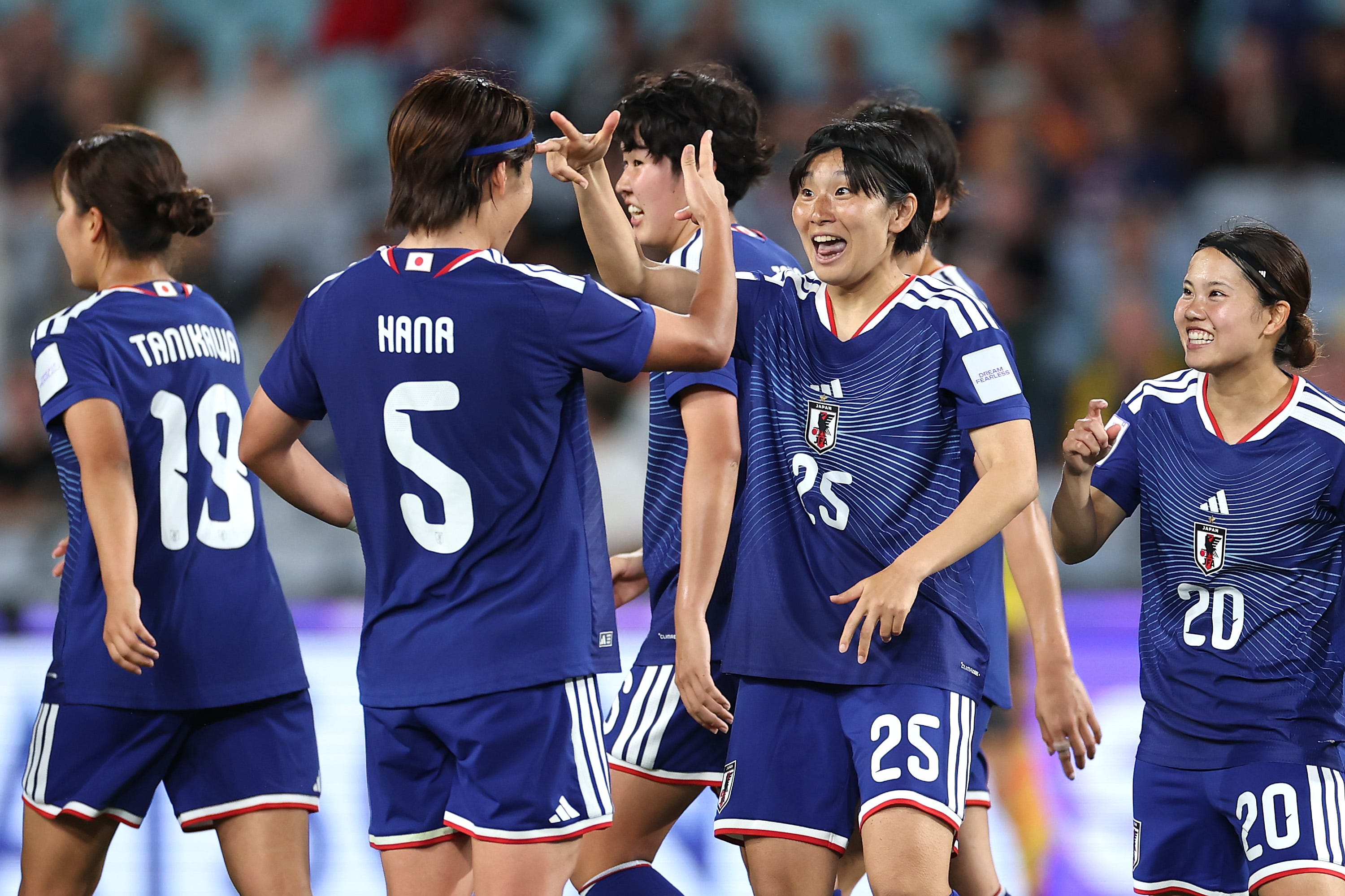
Japan are through to the 2026 Asian Cup final after a dominant display in a 4-1 victory over last edition’s finalists South Korea.
The two-time winners are widely regarded as the best team in Asia and were one of the two clear tournament favourites alongside hosts Australia, but their relatively easy route to the semi-final led some to question whether they would be sharp enough against top-quality opposition.
Head coach Nils Nielsen dismissed those concerns in his pre-match press conference by pointing out the world-class teams that his side had faced in recent fixtures, besides noting the high standards they maintained in training.
His players walked the walk and then some, as they started dominantly, stress testing South Korea’s defence. They could well have taken the lead just seven minutes in when Maika Hamano flicked the ball into the path of Hana Takahashi at the end of a lovely move. Her shot was saved but fell right to the feet of Yui Hasegawa, who just couldn’t quite react quickly enough to turn it into the gaping goal.
She didn’t have to rue that missed chance for long as Japan took the lead less than 10 minutes later. Fuka Nagano won the ball inside the box and rolled it into the path of Riko Ueki, who coolly slotted it in.
Korea came close to an immediate response as Park Soo-Jeong just missed wide after letting fly from outside the box, but they remained on the back foot for the most part. The lively Hamano made it 2-0 soon after wriggling past a couple of defenders out wide on the right and squeezing a well-placed finish past the keeper at the near post.
Japan continued to dictate proceedings and could easily have scored a third before half-time had it not been for an offside or a VAR-assisted handball call, but they remained unfazed. Just as South Korea started to grow something of an attacking threat after the hour mark, the third goal did come as Saki Kumagai headed Momoko Tanikawa’s corner home.
South Korea’s efforts were finally rewarded in the 78th minute when Kang Chae-Rim pulled one back with a swivel and excellent finish, but they received an instant response as Remina Chiba capped off a fantastic team move on the break to restore Japan’s three-goal lead. The game remained quite stretched thereafter, but the scoreline stayed unchanged at 4-1.
What defined South Korea’s match?
An inability to get a foothold in the game.
South Korea had been one of the most impressive attacking sides at the tournament leading up to the quarter-final. Their fast passing play caused problems for all sorts of opponents from the likes of Australia to the Philippines. In this match, they struggled to get anything going.
South Korea saw less than a quarter of possession in the first half, with only 8% of the game being played in their attacking third. They tried everything from dropping into a deeper block and looking to counter, to stepping up and pressing high, but nothing seemed to faze their opponents.
Head coach Shin Sang-Woo seemed to be burning through his backup plans as half-time approached, as he made two separate substitutions before the break and added another one before the start of the second half. His side gradually improved thereafter, but it was too little and too late by the time they scored in the 78th minute.
What defined Japan’s match?
Collective excellence.
Nielsen admitted that Japan’s first four games had been very different to what he was expecting in this one. He said they could almost exclusively focus on attacking in those early fixtures, but this semi-final would require a more all-round display.
The team delivered just that. Their high press and counter-press worked to destabilise the Korean build-up from the off, while their passing play and attacking somehow looked even sharper. They were particularly adept at slicing their way through the middle, putting together some lovely team moves featuring feints and flicks to dazzle the opposing defenders and spectators alike.
Wingers Maika Hamano and Aoba Fujino looked particularly excellent as they rewarded their coach’s faith in selecting them ahead of the in-form Kiko Seike. Their world-class control and dribbling troubled the Korean defence both in transition and settled play, with the former capping her performance with a wonderful goal, while the latter’s strike was ruled out for a handball in the build-up.
On the whole, this was almost as close to a perfect team performance as they come. Apart from the goal conceded that ends Japan’s tournament clean sheet streak and general looseness in defence late on, there is nearly nothing for them to be remotely disappointed about.
Something you might have missed
Riko Ueki is now the tournament’s outright top-scorer after netting her sixth goal tonight.
The West Ham striker didn’t feature in her side’s opener against Taiwan, but went on to score a hat-trick in the 11-0 demolition of India before adding a goal each in subsequent games. Her clever movement and understanding with fellow forwards have cemented her spot as the team’s first-choice number nine.
Ueki was Japan’s top scorer at the last Asian Cup with five goals but finished second behind Wang Shuang in the overall standings. The only players who can realistically stop her from going one better are teammate Kiko Seike (4 goals) and Australian duo Alanna Kennedy (5) and Sam Kerr (4), but she certainly is the golden boot favourite going into the final.
What next?
Japan will face Australia in the Asian Cup final for the third time in the last four editions of the tournament. Japan emerged victorious in both 2014 and 2018, but the Matildas will have home advantage this time. A record crowd is expected at Sydney’s Stadium Australia on Saturday night.


