Women’s Asian Cup 2026: Hamano stunner seals Japan’s third title
Heartache for the Matildas as Japan claim trophy with 1-0 win in Sydney
Stadium Australia, Sydney
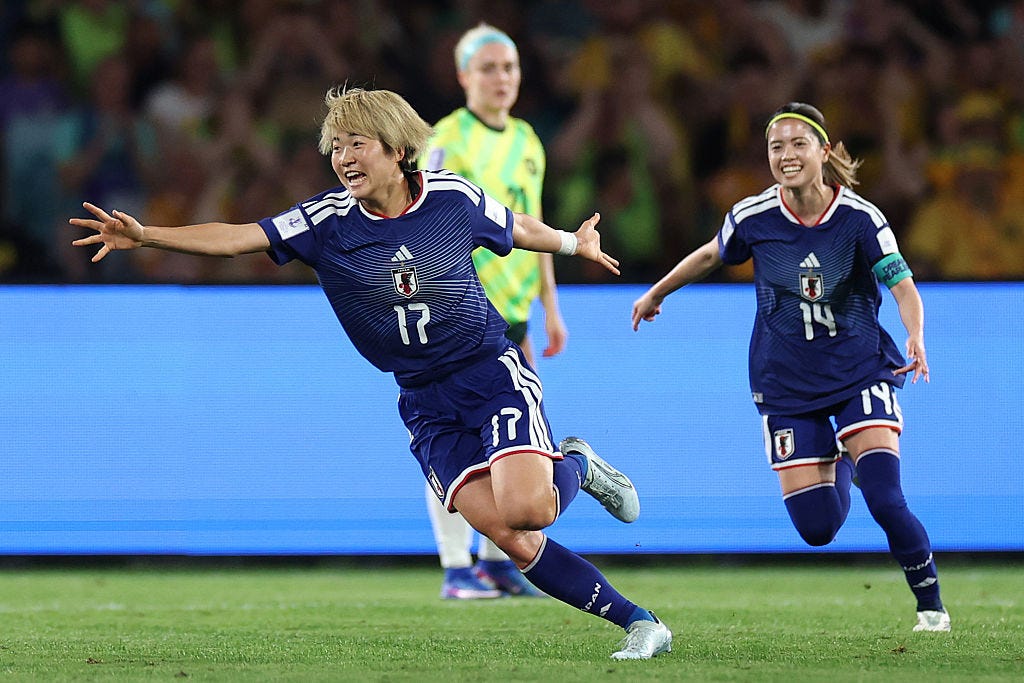
Japan are champions of Asia for the third time in the last four editions of the AFC Women’s Asian Cup, after defeating Australia 1-0 in the final in Sydney.
Maika Hamano’s curling effort in the first half was enough to secure victory for Nils Nielsen’s side. The Matildas battled to find an equaliser, especially in the last 10 minutes of the game, but the hopeful balls and crosses into the box weren’t enough to find a way through the Japanese defence.
Both head coach Joe Montemurro and right back Ellie Carpenter were keen to emphasise the need for Australia to start with intensity in the pre-match press conference before Saturday’s final, and the players delivered as they took to the field.
Australia had more possession in the opening exchanges and fashioned the better openings, including a clear shot for Caitlin Foord from inside the box which she hit straight at the keeper.
Japan made their plan to attack down the wings quite clear from the off, but they struggled to get their typical passing play going. It was over 15 minutes before they put together their first long sequence of sustained possession, but it yielded rich rewards as Hamano scored with a stunning long-range strike at the end of it.
To their credit, Australia did not let their heads drop and instead upped their attacking impetus thereafter. The pace, strength and clever movement of Sam Kerr and Foord continued to trouble the Japanese back line in open space, with the latter getting the best chances. She was gifted one in the 35th minute when Ayaka Yamashita played it to her feet out wide, but she couldn’t find the target from a narrow angle. Kerr set her up for a swivelling finish inside the box on the stroke of half-time, but she pulled it wide.
The hosts increased their control of possession before half-time, but gave up a couple of big chances after the break. Tournament top scorer Riko Ueki was on the end of both, but she missed the header wide and couldn’t beat Mackenzie Arnold with a left-footed effort. Australia grew back into the ascendancy thereafter and consistently threatened, but clear-cut chances were at a premium. The most open one fell to left back Kaitlyn Torpey, who allowed the keeper to make an easy save.
The best chances came in the last five minutes. Some nice combination play on the right allowed Carpenter to break into the box and square the ball, after which a series of three shots were all somehow blocked. The flying full back created another golden opportunity in the 89th minute with a cross to the head of team top-scorer Alanna Kennedy, but Yamashita managed to get both hands to the effort and hold on.
The record crowd of nearly 75,000 remained raucous and continued to bolster the Matildas until the final whistle, with balls relentlessly going into the box. The kitchen sink was thrown in stoppage time as Arnold went up into the box for a corner, but in the end, it just wasn’t Australia’s night.
What defined Japan’s match?
Adaptability.
That was the keyword for head coach Nielsen going into the match, as he pointed out that the beauty of tournament football lies in the fact that every knockout match is a blank slate. The differentiating factor here, he believed, would be the teams’ ability to adapt to different situations and find the best solutions.
His players certainly did that on the biggest of nights at Stadium Australia, even though the tempo of the match certainly didn’t follow the pattern they would have liked. Twenty-year-old centre back Tōko Koga was a standout as her interventions often helped diffuse dangerous situations created by Australia’s directness, but before long, it was the team as a collective defending deep after they got a lead to protect.
The Japanese defence hadn’t faced a serious stress test all tournament, though they did look somewhat shaky towards the end of their 4-1 semi-final victory against South Korea, when the result seemed beyond doubt. They faced their fair share of pressure and then some tonight and rose to the occasion with a whopping 37 clearances.
In possession, Japan had to adopt a different approach tonight. They seemed to recognise the futility in trying to go through the centre against a midfield that could outmuscle them, so they instead channelled their attacks out wide. The wingers were excellent again, with Hamano particularly standing out, not least thanks to her goal. Their crosses and deliveries into the box could well have yielded another goal, but just the one proved to be enough on the night.
What defined Australia’s match?
Tactical tweaks.
After Japan’s crushing semi-final win against South Korea (who had topped Group A ahead of the Matildas), the mood among Australian fans was somewhat downbeat. Of course, they were delighted to see their team in a final on home soil, but the question plaguing everyone’s minds was just how they could stop this Japanese juggernaut.
Montemurro didn’t seem so fazed about this in the pre-match press conference, claiming his side had identified a couple of weaknesses in their opponents. Indeed, he seemed to act on that analysis in his tactical choices, as Australia came out with a new system in possession.
The speedy Foord, who had troubled previous opponents down the wing, was asked to come well inside and form a front two alongside Kerr, with Mary Fowler just behind them. In this setup, Australia looked to play forward quite quickly with direct balls from the back getting their forwards to stretch their legs in the channels. They were clearly able to create openings and chances through this approach, so all that was missing was the finishing touch.
Crucially, the Matildas also tried to find different solutions as their opponents dropped deeper, switching to a front four to send more numbers forward. They even threw the full-backs well forward in the second period and posed a relentless threat in many spells, but just fell short when it came to the final finish.
Something you might have missed
One of the biggest concerns going into the game from a Japanese standpoint was how they would live with the physicality of their opponents, who were bigger and faster on the whole. The players were more than up for the challenge, though, as they ended up narrowly taking the edge on the statsheet.
Japan won 51.4% of duels in this match, despite losing the majority of aerial duels. While many players couldn’t make up for their height deficits, they planted their legs firmly on the ground under pressure, and were not shy of using their bodies to push into opponents when the situation allowed. They were also excellent in defensive duels, completing 13 tackles with a very high 84.6% success rate.
What next?
Japan and Australia will join the four other direct qualifiers from the Asian Cup at the 2027 World Cup in Brazil.
The next Asian Cup will be held in Uzbekistan in 2029, for which all 11 other nations will need to qualify. While glory on home soil eluded Australia today, they will get their next chance at the 2032 Summer Olympics in Brisbane.


