Women’s Asian Cup 2026 quarter-finals: Australia and China fight their way forward; South Korea and Japan dominate

The four Asian Cup semi-finalists are the first teams to seal qualification to the 2027 World Cup, having got the job done in a variety of different ways in the quarter-finals.
Australia 2-1 North Korea
The headline quarter-final between hosts Australia and Group B runners-up North Korea kicked off the Asian Cup knockouts.
The Matildas scored within 10 minutes after Sam Kerr forced a high turnover out wide and passed the ball across to the edge of the box. Although it didn’t reach her intended recipient, Alanna Kennedy arrived onto the scene and capitalised by rolling it away from the defender before finishing with aplomb. That was her fifth goal of the tournament, making her the joint top-scorer.
Australia spent most of the match on the back foot, though, as they faced consistent pressure from Ri Song-ho’s side. Their defence held quite firm in the first period, and crucially, they managed to double their advantage right after half-time thanks to another high turnover. This time, Kerr was the beneficiary but also had quite a bit of work to do with her finish, though she made it look easy in typical fashion.
North Korea’s passing play grew quicker and slicker in the second period, and they soon started to consistently enter the box. They made it a one-goal game in the 65th minute as Chae Un-Yong capped off a lovely team move, spurring them on to push for the equaliser. The three-time champions certainly had their chances, but they couldn’t find a way past Mackenzie Arnold for the second time, and just about fell short at the end.
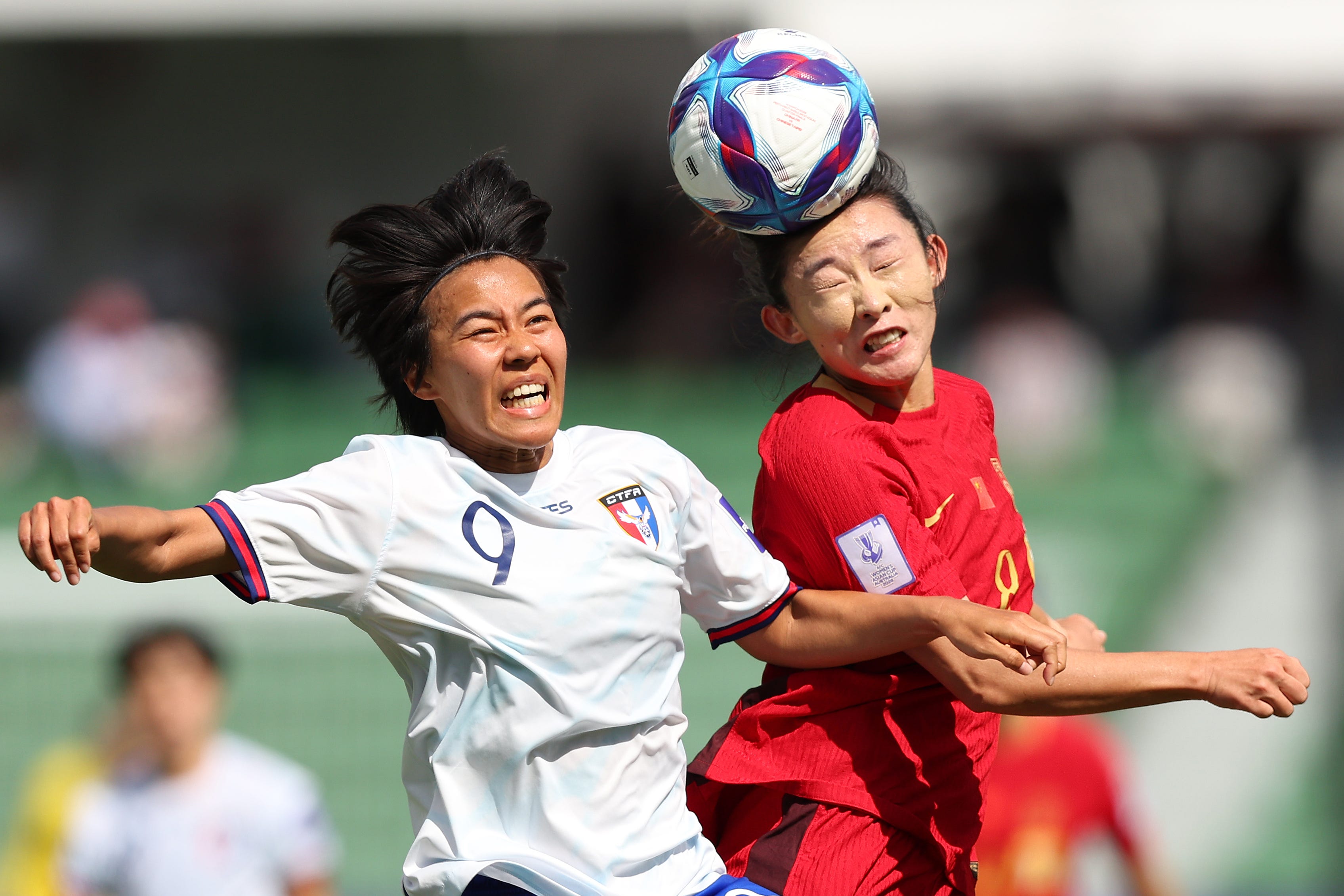
China 2-0 Chinese Taipei
Two of the most successful sides in Women’s Asian Cup history faced off in the second semi-final in Perth. Chinese Taipei’s heyday had come around 1980, while China were the defending champions having taken their total to nine tiles in 2022 — thrice more than any other side.
Given the two teams and nations’ histories as well as the gravity of the occasion, this was expected to be a tense affair. The off-field dimension was just as in focus, particularly because former men’s national team coach Chen Kuei-jen was removed from the stadium in the last group game for leading “Taiwan” chants rather than referring to the team by their designated diplomatic name for international sports, Chinese Taipei.
Chinese Taipei were the clear underdogs on the pitch, and they set up accordingly by dropping into a very deep block almost from the get-go. China’s chances were very limited for the first half-hour, but they were celebrating in the 35th minute when star forward Wang Shuang expertly guided a header into the back of the net. However, an offside in the build-up ruled the goal out.
Ante Milicic’s side subsequently came even closer to scoring, but Cheng Ssu-yu held firm in goal with some assistance from its frame as the Group A winners mounted increasing pressure towards the end. Ultimately, no goals were scored after 90 minutes as Taiwan squandered the precious few chances they got, so the game went to extra time.
Barely over a couple of minutes into the third period, China took the lead through group stage standout Shao Ziqin, who showed great control and accuracy to finish from close to the edge of the box. The Steel Roses remained dominant for the rest of the match, having a penalty saved in the 114th minute but quickly going on to insulate their lead through an own goal after a break. With that, the defending champions came away with a hard-earned 2-0 win.
South Korea 6-0 Uzbekistan
Uzbekistan were put through the wringer in their first-ever Women’s Asian Cup knockout match by a relentless South Korea side.
The Taegeuk Ladies were pushing and creating chances from the get-go, and needed only nine minutes to break through via Son Hwa-Yeon. Ko Yoo-Jin doubled her team’s advantage in the 20th minute, but they showed no signs of letting up and forced Maftuna Jonimqulova to make a number of smart stops. Her resistance was broken again before the hour mark when Park Soo-Jeong found the back of the net after a corner. Ji So-Yun, Lee Eun-Young and Jang Sel-Gi also got on the scoresheet later on as the Uzbek defence grew tired and lost concentration, with the game all but over.
The stats made for ugly reading for those of an Uzbek persuasion. They saw less then 20% of the ball, barely managed to spend more than 10% of the game in the attacking third and were outshot 26-1. Nevertheless, they will have to reset ahead of the play-in match.
Japan 7-0 Philippines
Japan took on the Philippines on a sunny Sunday afternoon in Sydney to round off the quarter-finals.
Japan were the clear favourites and absolutely dominated proceedings from the off, but couldn’t quite get off to a flying start as their South Korean counterparts had done the day before. Despite keeping 86.5% possession in the first half and spending over 70% of it in their attacking third, they couldn’t find a way past the Philippine defence and young goalkeeper Nina Meollo until the stroke of half-time. They then scored not one but two goals from corner kicks, with Mina Tanaka turning in the first after a scramble on the goal line, and Toko Koga quickly following up with a commanding header.
The two-time champions were able to take their foot off the pedal somewhat after the break, though they continued to dominate possession and territory. Their substitutes added some fresh impetus, with Remina Chiba and Manaka Matsukubo striking in quick succession after the hour mark to further double their lead. Koga soon got her second of the night with another header — this time from the second phase after a corner — before Momoko Tanikawa and Riko Ueki capped off a resounding win for Japan.
Looking ahead: semi-finals and WCQ play-ins
Four of the five strongest teams at the tournament have advanced to set up two high-quality semi-finals.
Australia and China will kick off the final four in Perth on Tuesday. Both teams have been battle-hardened after tough quarter-final fixtures, so this should be an intense affair. The Matildas might feel like they have the slightest of edges between their home advantage and the absence of Wang Shuang, who will sit this game out due to accumulating two yellow cards across the last two games.
South Korea-Japan will take centre stage at Stadium Australia in Sydney on Wednesday. Japan are the highest-ranked team in Asia and have been billed as favourites from the off, but have yet to face an opponent of equal calibre. South Korea, on the other hand, have looked like one of the sharpest teams at the tournament and have big-game experience, so there may well be very little to separate the two sides.
The 2027 Women’s World Cup qualification play-in matches will take place on the Gold Coast on Thursday,. The two winners will earn the AFC’s remaining direct tickets to Brazil, while the losers will get a third opportunity in the inter-confederation play-offs. North Korea and Chinese Taipei have arguably been the next best teams in the tournament, but only one of them will advance straight to the World Cup since they are set to face off. Uzbekistan will have the opportunity to create yet more history later that day as they face the Philippines, who will be looking to return to the biggest stage after making their World Cup debut last time around.


