Business of Women's Football Insider: How dedicated stadiums are boosting team valuations
The inside track on all the big deals and business stories from across women's sport

Welcome to the latest edition of The Cutback’s Business of Women’s Football Insider newsletter.
This is where we fill you in on all the big deals and headline moments from the previous month, including media rights, sponsorship and more.
In this month’s issue: Brighton’s stadium plans, NWS franchise fees keel climbing, Champions League attendance wins.
Brighton break ground with plans for dedicated women’s stadium
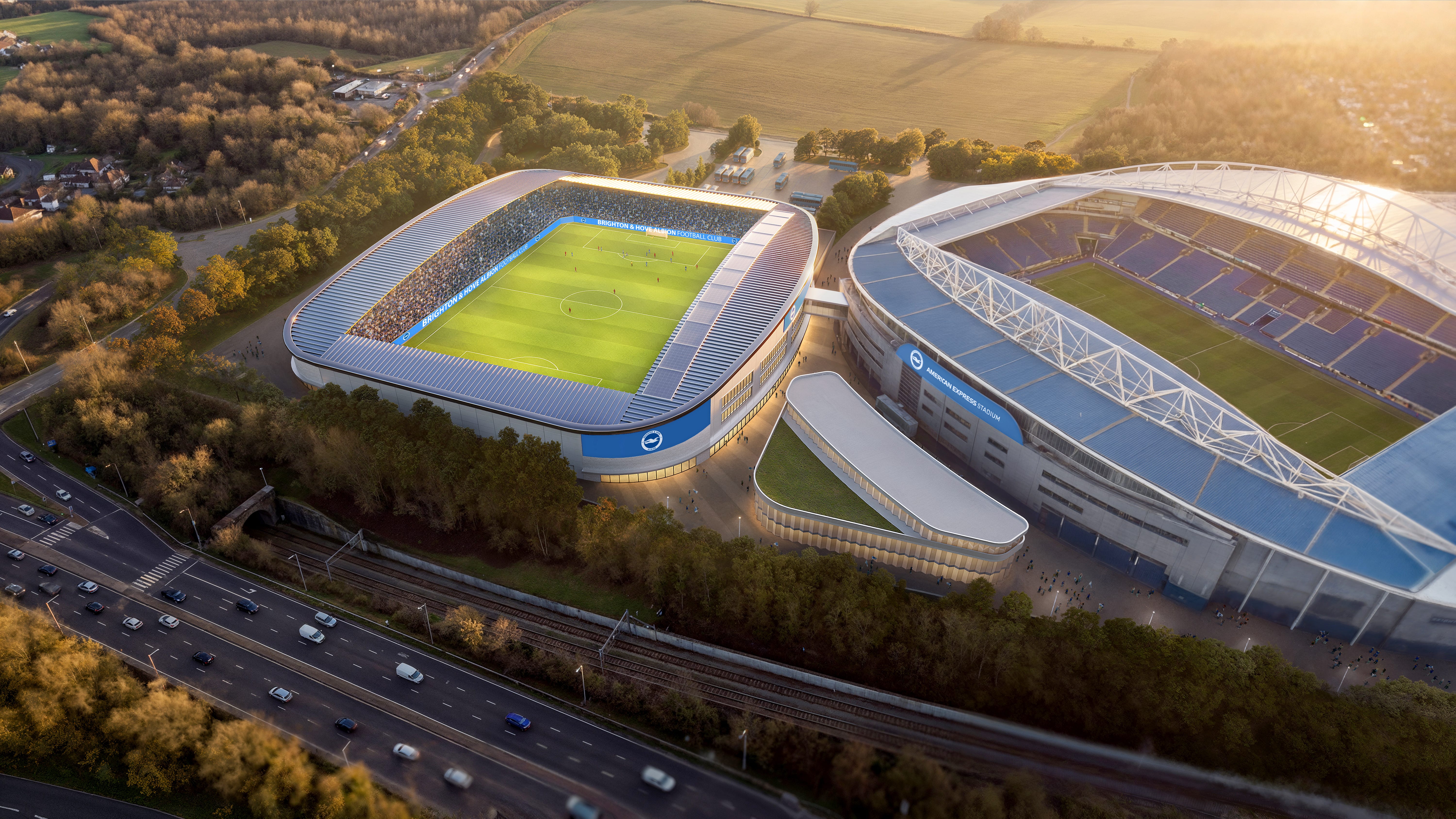
Brighton revealed detailed plans for a new stadium specifically built for its women’s football team at the end of April, making it the first multi-gender European football club to do so.
The new stadium will stand beside the American Express Stadium in Falmer and is projected to have a minimum capacity of 10,000. It will be ready for the 2030-31 season should it receive planning permission from the relevant authorities at the first attempt.
The new stadium will give Brighton’s women a much better chance of reaching their commercial potential. The club has been borrowing Broadfield Stadium in Crawley since its promotion to the WSL in 2018 – meaning that Brighton residents must electively travel 20 miles inland to a commuter town every other Sunday in order to watch their team.
Brighton have also had to contend with the proximity of Lewes Football Club, which attracts peak attendances of around 2,500 for its women’s team, though the club’s current third-tier status has reduced their appeal.
Brighton have fluctuated between 2,000 and 4,000 attendees for WSL home games this season, but having a dedicated stadium in Falmer – a short four-mile journey north from the city centre – should boost that toward the 10,000 they are hoping for.
The location will also also make marketing the club’s women’s football team a lot easier, especially to key demographics. Falmer is home to the University of Sussex and the University of Brighton, providing a large potential audience of students to market tickets to. Additionally, Brighton has the largest concentration of LGBTQ people in the UK, with an estimated 1 in 10 residents in the Brighton and Hove area identifying as part of a community that is also well-represented in women’s football on and off the pitch.
Brighton described the 10,000 capacity as the “right sizing” for the club to grow into over the coming decades, perhaps offering a small window into how Tony Bloom and his ownership group – who are usually right about most things – believe domestic women’s football fandom will grow over that period.
Attendances for big women’s team peak well above 30,000, making Brighton’s new stadium look a touch small to some. But Brighton have likely made a smart decision to limit the cost of building and maintaining their new stadium, while also focusing on filling their stadium on a regular basis – described by plenty of broadcast execs as one of the WSL’s biggest problems.
The WSL is currently beset with issues surrounding kick-off times, stadium sharing and unwanted clashes with men’s fixtures – all of which are widely thought to be contributing to stagnation in attendance growth. Pending council approval, Brighton won’t suffer from any of those issues.
Another reason why Brighton might have done this? A dedicated stadium makes Brighton’s women’s team a lot more valuable should it ever be spun off and sold to an American investor.
Columbus smashes through the $200m barrier as NWSL rakes it in
Sports Business Journal reported on 21 April that the Haslam Sports Group-led consortium will pay a record $205 million expansion fee to bring an NWSL team to Columbus, with more than $300 million expected to be invested overall once infrastructure and staffing are included.
The Columbus investment group consists of Jimmy and Dee Haslam – owners of the NFL’s Cleveland Browns and Major League Soccer’s Columbus Crew – insurance firm Nationwide and Dr. Pete Edwards, who also holds a minority stake in the Crew. The club is due to begin competing in 2028.
SBJ also reported that the team will play at ScottsMiracle-Gro Field – the soccer-specific stadium built for the Crew in 2021 – and that the owners plan to build a dedicated training facility at McCoy Park and make stadium upgrades, including a new locker room. All of this will be funded by Columbus City Council and Franklin County, who also funded the stadium in the first place before leasing it back to the Crew for $10 a year.
In total, the new NWSL team will benefit from $50 million in public money for the new facilities and upgrades, not including the $314 million it paid to build the stadium.
The NWSL is now raking in franchise fees as it sells scarcity and the promise of women’s football becoming a billion-dollar revenue business at some point in the future. The limited opportunity to buy into women’s football is making the NWSL hot property for existing sports investors, family offices and medium-sized funds looking to make their money work. All of them will regret not investing six years ago, when Angel City secured a franchise slot for just $2 million.
Fees are escalating quickly. The Denver Summit’s $110 million franchise fee was paid in January 2025, while Bay FC and Boston paid $53 million each to buy into the league in 2023. Columbus has moved the price again and, should the NWSL expand again, that number will no doubt keep climbing.
Deloitte says women’s sport will be worth $3bn in 2026
The Haslams don’t put $205 million into women’s football based on gut feeling. They listen to consultancy firms like Deloitte, who published a wide-scale report earlier in April that calculated the elite women’s sports market to be worth just over $3 billion in 2026, up from $2.41 billion in 2025 and $692 million in 2022.
In the sports category, football (or soccer) remains the largest sport in the model, accounting for a projected 35% of total revenue in 2026, meanwhile North America (read: America) accounts for a projected 54% of revenue by geography.
It’s these kinds of reports that get the initial attention of investors when they’re looking to move money into sport, but Deloitte’s report also provided some guidance for those running leagues and teams.
The report says that sponsorship, marketing and media sales strategies in women’s sport shouldn’t blindly follow the template set out by men’s sport, and describes a market still fuelled by sponsorship money and the ‘halo effect’ of women’s sport rather than broadcast rights fees.
Brighton might also have been listening. Deloitte says dedicated stadiums and training facilities are a significant factor in boosting team valuations in the US as they provide buyers with a real estate investment as well as a sports team.
UWCL semi-finals provide much-needed attendance wins
The Uefa Women’s Champions League’s semi-finals produced the sort of gates the competition needed after some of its quarter-finals underdelivered in the stands.
Barcelona once again sold out the Camp Nou for their second leg against Bayern Munich, after doing so for their home quarter-final against Real Madrid. In turn, Bayern broke their competition attendance record for the first leg against Barcelona by attracting 31,000 fans to the Allianz.
Arsenal drew almost 27,000 fans to the Emirates for the first leg of their semi-final against Lyon on April 26, up from 18,087 for their home quarter-final against Chelsea in March. Lyon brought over 22,000 to the Groupama Stadium for their 3-1 second-leg win that dumped Arsenal out on aggregate.
All four clubs priced adult tickets from around £15/€15, with Barcelona in particular driving sales with significant promo offers to fill the stadium.
The competition’s latter stages now consistently draw better in Spain and Germany than they do in England. Manchester United drew only 7,513 for the quarter-final first leg against Bayern at Old Trafford on 25 March, shortly before bringing 30,000 to the stadium for the Manchester derby the following Saturday.
Insiders across the women’s game point to a variety of factors for the UWCL’s comparative lack of success, but the consistent line coming out of clubs in England revolve around later kick-off times not being ‘family-friendly’.
This is, of course, a cultural issue specific to England. Later kick-offs seem to fit family life in Spain just fine. Maybe English parents just need to chill out?
NWSL drops plan to switch to a fall-spring season
The NWSL has decided to keep its current March-to-November calendar until at least 2030, ending a debate over whether the league should switch to a fall-spring season aligned with Europe’s major leagues, Fifa’s international calendar and, from 2027, MLS.
The decision came on 29 April after reports that a board vote was expected later in the month – a board that had previously voted against change in 2024.
An Autumn-Spring season would have also brought the NWSL in line with global transfer windows. The NWSLPA, the league’s players’ union said that a majority of players opposed the switch citing concerns over winter weather, shared venues, stadiums without roofs, training conditions, travel and player welfare.


