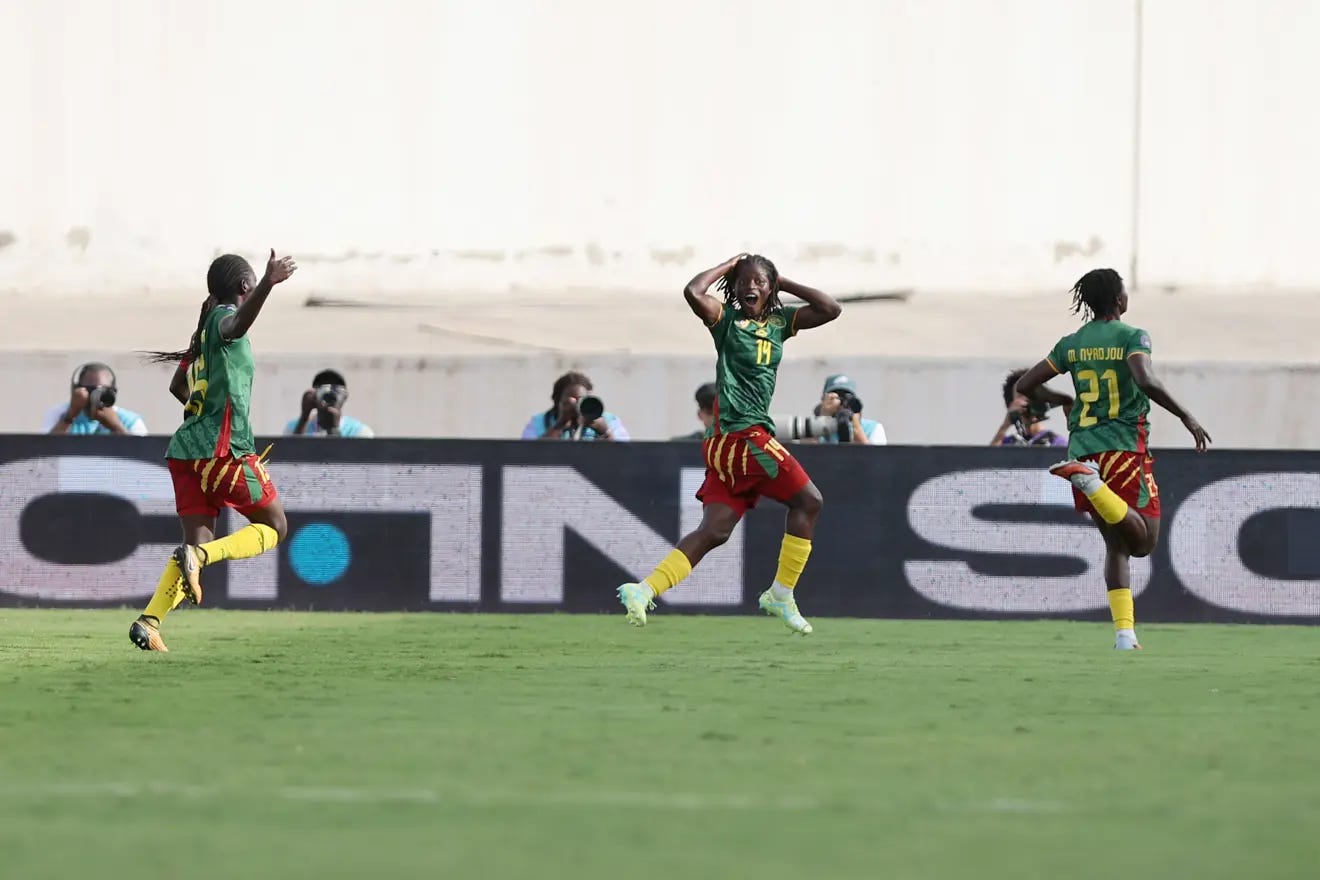
WAFCON 2026: Ten-time champions Nigeria out after quarter-final defeat to Cameroon
Nigeria’s title defence ended in the first knockout round, marking their first-ever WAFCON exit before the semi-final stage.

WAFCON 2026 delivered yet another incredible upset with Nigeria losing 1-0 to Cameroon in Casablanca on Sunday. The result ends Nigeria’s hopes of claiming an 11th WAFCON title and also marks the first time they have lost at the quarter-final stage of the competition.
Cameroon’s victory sees them secure a spot in next Wednesday’s semi-final against Morocco and a place at the 2027 Women’s World Cup. Nigeria will now face the playoff route to next year’s tournament in Brazil.
Nigeria faced this quarter-final match up because they had finished second in Group C, recovering from a shock loss to Malawi in their opener. Cameroon, on the other hand, were the only team to seal a knockout spot after the first two group games – despite only being in the tournament thanks to its late expansion from 12 to 16 teams.
The Super Falcons started this game on the front foot, but Cameroon quickly grew into it to make it an even contest. Cameroon opened the scoring in the 19th minute with their first shot, a stunning direct free-kick from Maéva Nyadjou that was drilled right into the top corner.
After going behind, Nigeria stepped up a gear and pushed for an equaliser, quickly creating a couple of good chances. Gift Monday came closest as she was on the end of a great cross from captain Rasheedat Ajibade, who had moved to the right wing in Justine Madugu’s attacking shakeup. The Washington Spirit forward failed to get clean contact, allowing Michaely Bihina to make a save.
Ajibade’s deliveries continued to cause problems for the Cameroonian defence, but they were otherwise largely untroubled until half time. It was all Nigeria after the break, though, as Cameroon’s failed attempts at launching counters only ended up inviting waves of pressure. Bihina looked unbeatable in goal, almost single-handedly preserving her side’s lead at times.
The Super Falcons changed their attacking formula again after the hour-mark, committing more numbers forward. This decision quickly backfired, as Cameroon were now able to get out on the break consistently.
As a result, Cameroon were able to consistently release the pressure in the last half an hour. Nigeria still managed to create a couple of big chances, with the pick of the bunch coming in stoppage time when Esther Okoronkwo raced past a defender and went through on goal, but missed wide with her finish.
Ultimately, Nigeria simply couldn’t find a way to goal, having to resign to an incredibly uncharacteristic WAFCON knockout defeat.
What defined Cameroon’s match?
Stellar performances from the last line of defenders.
This has to be classified as a smash-and-grab win for Cameroon. They scored with their only shot of the first 73 minutes, and were on the back foot for the most part thereafter. Their defensive block wasn’t the most sturdy, and while their intent in playing forward quickly on the break was admirable, it didn’t give their back line much rest either.
However, the Indomitable Lionesses did just about enough to keep Nigeria out. The centre-backs will go down as heroes with a team-high four tackles each and 15 clearances between them, while Nyadjou also scored the all-important goal. The full-backs and defensive midfielder Monique Ngock provided useful support at times, but goalkeeper Bihina was rightly named player of the match.
The Benfica shot-stopper made nine saves and was confident claiming crosses throughout the game. Her performance only made things more frustrating for the Nigerian attackers, as she looked simply invincible.
What defined Nigeria’s match?
The lack of a clinical box presence.
Although superstar striker Asisat Oshoala scored the opening goals in both of Nigeria’s group stage wins, she was on the bench for this encounter after going off early in her side’s last group game. Madugu chose to start with Monday leading the line, but she could only manage one attempt and was brought off after the hour mark.
The Super Falcons still did not turn to Oshoala, instead introducing the hero of last year’s final, Esther Okoronkwo. While she is quite a well-rounded attacker with good passing and approach play, the AFC Toronto star doesn’t possess the same sort of box presence that the ex-Barcelona striker does.
Oshoala only appeared a couple of minutes into stoppage-time, leading many to suspect that her fitness concern might be more serious. She was there when Nigeria had their best chance of the match at the very death, but Okoronkwo’s decision to go herself left her as a mere spectator, and she could only watch the shot trickle wide.
Something you might have missed
After Cameroon lost in the final round of WAFCON qualifying last November, they had no shot at making the World Cup as of last November. And yet, here they are, in the final four of the tournament and on the plane to Brazil.
Of the four teams invited to this WAFCON as a consequence of its late expansion to 16 teams, Cameroon are the last ones standing. Indeed, they have been the best of the bunch, as Mali were eliminated from their group and Kenya finished bottom of Group A. Côte d’Ivoire looked impressive as well, but could not make it past Algeria in the first quarter-final.
Valentine Nguele’s side are now one game away from reaching their first final since 2016 in the most incredible of circumstances. In any case, we are sure to have a first-time champion this year.
What next?
Cameroon will face hosts Morocco in Rabat at the Moulay El Hassan Stadium on Wednesday night, aiming to end the hosts’ run of final appearances.
Nigeria also have one more match to play as they will take on South Africa in Casablanca on Thursday. A spot at the World Cup’s inter-confederation play-offs is on the line, and with it, the Super Falcons’ record of appearing at every Fifa World Cup so far. Either way, at least one of the last two WAFCON winners will not make it to Brazil next year.
*Stats from Scoresway.


