The Business of Women's Football Download
A snapshot of the big deals and business stories that have happened across the women's game across the last month
Welcome to the latest edition of The Cutback’s women’s football business newsletter.
The Business of Women’s Football Download will tell you about all the big deals and headline moments from the previous month, including media rights, sponsorship and more.
In this month’s issue: Fifa Champions Cup, NWSL salary cap, Deloitte Football Money League and the PWR
1. Fifa Champions Cup delivers the goods for broadcasters
Fifa’s new Women’s Champions Cup delivered exactly what everyone wanted from it: a short, fun event with plenty of novelty.
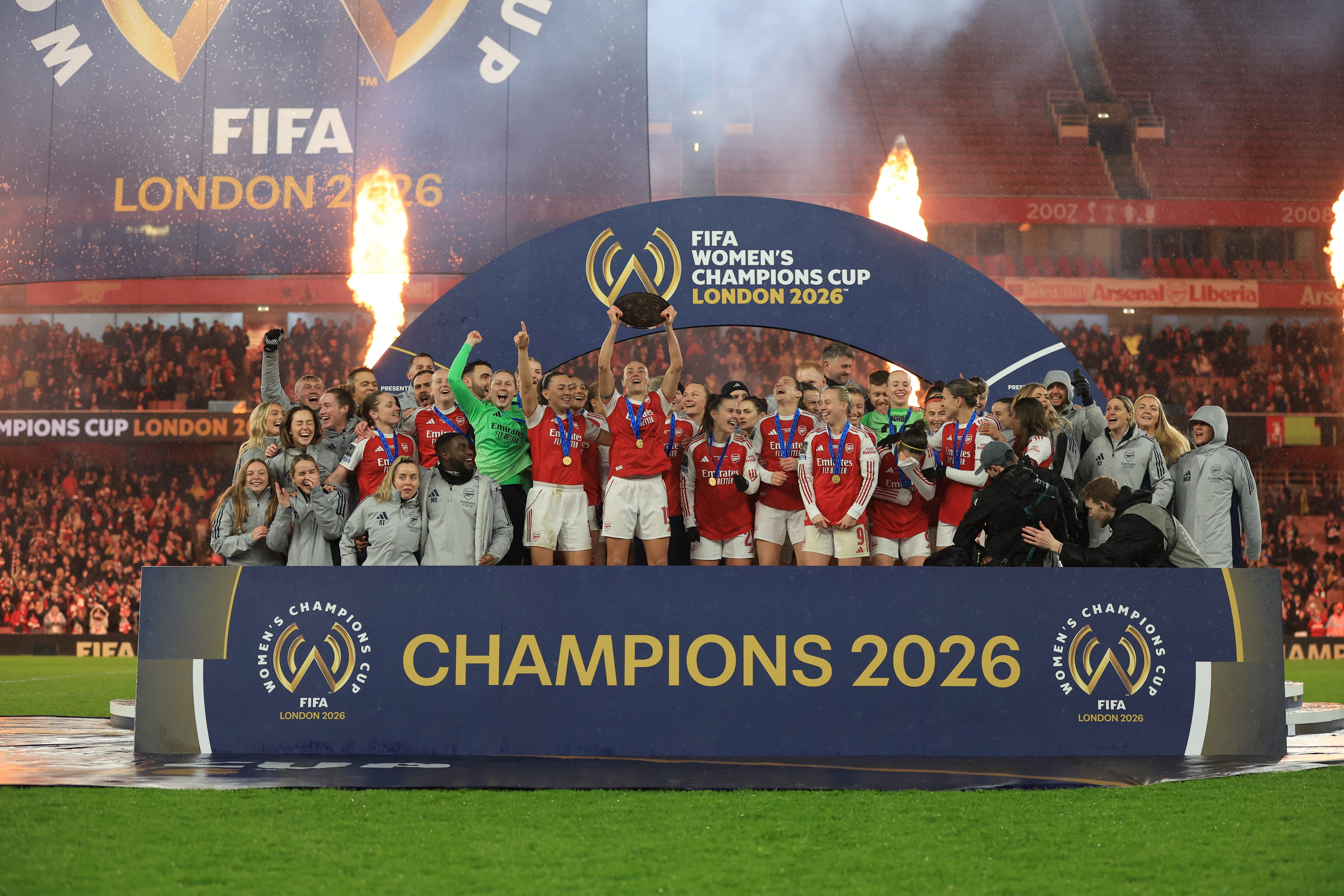
The inaugural edition of the Champions Cup in London produced a high-quality final between Arsenal and Corinthians at a near-full Emirates Stadium, with Arsenal winning 3–2 after extra time to become the first holders of the trophy.
From a media point of view, the tournament gave Fifa valuable exposure and broadcast partners a taste of what the 2028 Women’s Club World Cup could deliver. Sky Sports carried every match live in the UK and Ireland, with semi-finals at Brentford’s Gtech Community Stadium and the third-place playoff and final at the Emirates, all in shoulder programming slots around men’s domestic football.
Fifa also extended its relationship with DAZN as principal global broadcaster for the competition, while FIFA+ continued to provide coverage in markets without a local partner.
In Brazil, the tournament underlined how quickly women’s football gains traction when there is local interest. Streaming outlet CazéTV secured more than 1 million concurrent viewers for the final, as Corinthians fans flocked to watch the stream. The numbers will assuage any concerns that next year’s Women’s World Cup might fall flat with Brazilian audiences.
However, not everyone is happy about Fifa’s expanding influence in women’s club football. English clubs and the WSL have already warned that a month-long Club World Cup in the Gulf during the European season could be “catastrophic” for domestic calendars, commercial partners and player welfare, echoing arguments made during the build-up to the men’s 2022 World Cup.
2. Kang’s ambitions
The Champions Cup delivered for broadcasters, but the lack of major sponsorship investment led to another act of philanthropy from one of women’s football’s most powerful figures.
Kynisca, the investment and advisory vehicle created by Washington Spirit owner Michele Kang, secured a berth as the presenting sponsor of the tournament just a week before the tournament began, after Fifa struggled to attract a partner.
The move drew plenty of pointed questions from this publication’s very own Flo Lloyd-Hughes, as well as from The Guardian, about the potential conflicts of interest that might occur should a Kang-owned club play in a Kang-sponsored tournament.
Kang owns the Spirit in the NWSL and has majority stakes in French champions Lyon and the WSL’s London City Lionesses. Through Kynisca, Kang positions herself as a strategic investor and development partner for the women’s game, but her dalliance with sponsoring competitions in which her clubs could feasibly compete is cutting it very close to conflict-of-interest territory.
Though Kang has positioned herself as a philanthropist and investor, her influence on the women’s game is now comparable to Nasser Al-Khelaifi’s influence in men’s football. Al-Khelaifi is the chair of Paris Saint-Germain, global broadcaster beIN Sports and the European Football Clubs lobbying group, which now has an equal say over the governance and finances of men’s European club football.
That concentration of roles has led to Al-Khelaifi being on both sides of negotiations over broadcast rights in the Middle East, France and elsewhere, while also being able to influence competition formats and steer political outcomes – not least the quashing of the European Super League breakaway attempt and the resulting reforms to the Champions League. It has also made it difficult for domestic stakeholders in France or Europe to challenge his interests when those clash with their own.
Kang is operating on a much different scale to Al-Khelaifi, but her growing influence in women’s football has led to a single person wielding a lot of power in a sport that doesn’t have very much of its own.
3. Rodman stays in the NWSL as cap debate heats up
Trinity Rodman will remain in the NWSL after signing a new three-year deal with Washington Spirit that makes her the highest-paid women’s footballer in the world. Multiple reports put the value of the contract at more than $2m a year including bonuses, surpassing her previous four-year agreement worth around $1.1m a year.
The contract is the first to use the league’s High Impact Player rule, introduced in December to allow clubs to exceed the $3.5m dollar team salary cap by up to $1m when signing or retaining a small group of designated stars.
The rule, widely dubbed the ‘Rodman rule’, is built around a set of commercial and sporting criteria that determine eligibility. Rodman reportedly meets all seven criteria available to her, which made her the ideal test case when offers came in from Europe and the USL’s new Gainbridge Super League.
The NWSL Players Association has filed a formal grievance over the deal, arguing that the High Impact Player mechanism violates the collective bargaining agreement (CBA) and US labour law because it alters the salary-cap structure without union consent.
Commissioner Jessica Berman insists the league is on solid legal ground. She has pointed to CBA language that allows the NWSL to “reduce or eliminate the salary cap charge” for certain payments and has described Rodman’s deal as proof that the High Impact Player rule can help the league compete with Europe while preserving its overall model.
Just a few days ago, Gotham general manager Yael Averbuch told The Cutback that the east coast club would support an increase in the current cap.
Time will tell on both fronts. If exemptions become common in the NWSL, the balance between protecting franchise values and keeping the league competitive on a global scale will become harder for the league and its owners to manage. Rodman’s retention is a short-term win, but the longer-term effects could destabilise the most sustainable league in women’s football.
4. Mercedes’ WSL deal confirms women’s sports push
Mercedes-Benz signed a multi-year sponsorship deal with WSL Football that covers both the Barclays Women’s Super League and the second-tier Barclays Women’s Super League 2. The partnership includes presenting rights to a new promotion playoff between the third-placed team in WSL2 and the bottom club in the top division.
The agreement extends a deliberate push into women’s sport from Mercedes. The brand became an ‘Official Patron’ of the Women’s Open golf tournament in 2024 and from January this year it took on the role of Premier Partner of the WTA Tour, in what the tennis tour has described as the most significant commercial partnership in its history.
Securing an automotive sponsor of this scale is a big win for the WSL and for women’s football more widely. Car brands have historically focused their top-tier spend on men’s football, motorsport and golf. If Mercedes can show that investment in women’s properties drives awareness, showroom traffic and electric-vehicle adoption among more diverse audiences, it may open the door for competitors to follow and add a deep-pocketed new industry to a sponsorship mix dominated by financial services, insurance and retail companies.
5. Deloitte’s money league flatters to deceive
Deloitte’s latest Women’s Football Money League landed with headlines about Arsenal being “the richest women’s club in the world”. The problem, as we argued in our own piece here at The Cutback, is that the table was built on a dataset with a US-shaped hole and a flexible definition of ‘revenue’ that flatters European club structures.
Sportico’s work on NWSL finances suggests Kansas City Current generated about $36m in revenue in 2024, roughly $1m more than Angel City. Put those numbers alongside Deloitte’s, and both NWSL clubs would sit above Arsenal in the table, changing the story from WSL domination to something a little more nuanced.
Deloitte’s report remains useful as a snapshot of how a particular group of women’s football clubs are monetising their women’s teams. Until Deloitte can get hold of NWSL data it can rely upon, that’s all that can be said.
6. World Sevens Football adds Bloomfield in governance role
World Sevens Football has moved to bolster its credibility by appointing Claire Bloomfield as chief of football affairs and governance.
Bloomfield has spent close to two decades in the women’s game and will now lead W7F’s relationships with federations, confederations, leagues, clubs and player bodies. She will also oversee competition strategy and regulatory frameworks as the property expands.
W7F has staged two events so far, debuting in Estoril in May 2025 with Bayern München winning a tournament built around a $5m prize pool that helped the club shoot up the Deloitte Football Money rankings in 2026.
As W7F moves toward multiple events per year in different regions, Bloomfield’s task will be to embed the short-format 7v7 concept within the existing football calendar rather than in opposition to it. That means working through issues such as player workload, release windows and regulatory recognition at the same time as selling a commercial story built around fast-paced tournaments and a simple, global broadcast footprint.
7. English women’s rugby finds growth but no title sponsor
Women’s football has become the default for brands looking to differentiate their portfolios and find newer audiences – something that has made life very difficult for women’s rugby union and its commercial growth prospects.
English domestic club competition Premiership Women’s Rugby (PWR) has reported growth in both attendance and TV viewership this season, helped by a record-breaking Women’s Rugby World Cup on home soil and a domestic broadcast partnership with TNT Sports and selected matches on the BBC.
Despite that momentum, PWR executive chair Genevieve Shore recently told the BBC she was “very disappointed” that the competition still does not have a title sponsor after the departure of insurance company Allianz in 2023-24.
Shore said that her property’s situation feels “a bit chicken and egg”, requiring investment from sponsors to produce a better product, while also needing a better product to attract those sponsors in the first place.
PWR’s short-term strategy is to create events within its season that can attract large in-person crowds to give certain matches a ‘big game’ feel that, it hopes, will attract sponsors for next season. If that strategy is successful, UK women’s football will have a serious competitor in the sponsorship space come 2027.


Brazilian in women's sports here! Let me assuage your fear - our National Team has not fallen short with audiences for a couple of years now. Cazé and other numbers reflect. This WC is going to be HUGE! Book your tkts now ;)